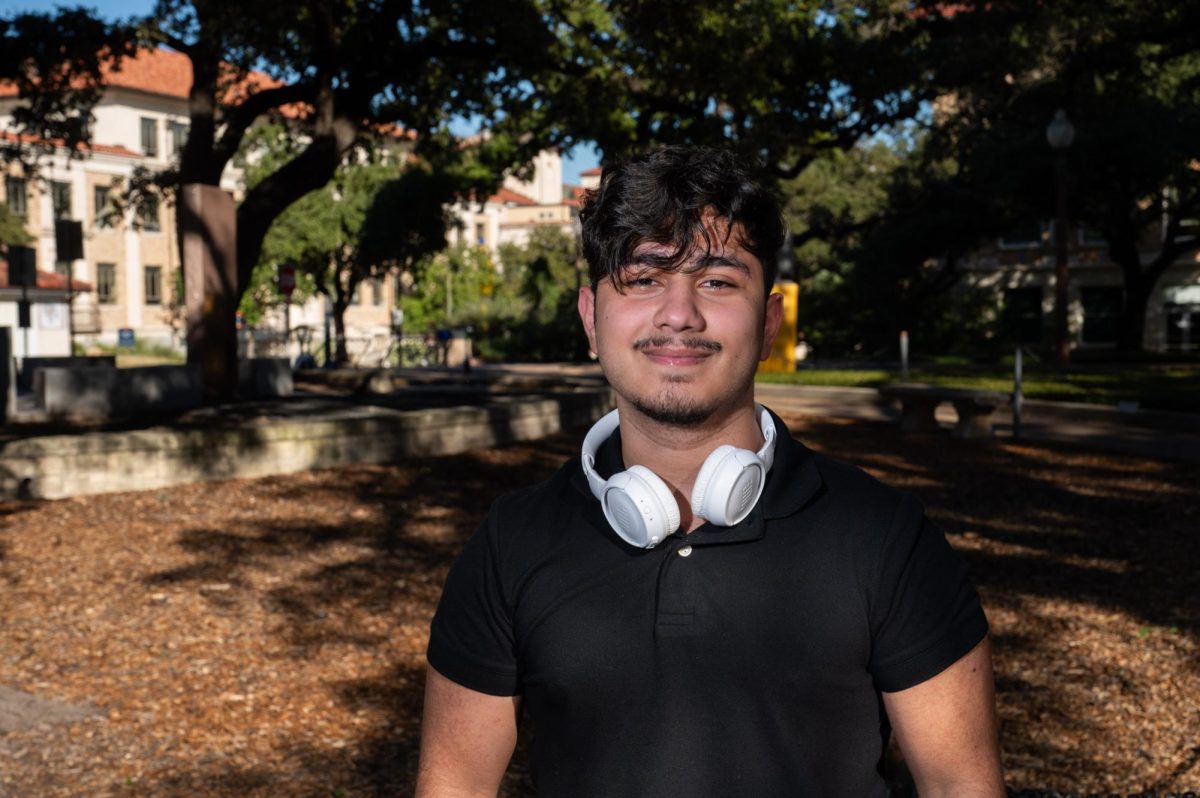
When engineering junior Jovdat Rahimli left his home country to attend UT, he realized he was one of only 10 other students on campus from Azerbaijan, a small country near Turkey. To bring the small community together, Rahimli established a chapter of the Azerbaijani American Youth Federation on Oct. 25, the first of its kind on campus.
Rahimli said when he started studying petroleum engineering at UT in 2022, he quickly saw parallels between Texas and his oil-rich homeland, where more than 90% of the country’s export revenues come from oil and natural gas. Just 10 years ago, only one Azerbaijani international student attended UT. Rahimli said he wanted to honor the slowly-growing community with a student organization.
“Our parents are watching us back from Azerbaijan,” Rahimli said. “(It) would really be great to show them that even though we are alone here, we actually could build a society and we can count on each other.”
The parent organization, based in New York City, aims to empower Azerbaijani youth in the United States and build community through shared identity. Founded in 2023, the parent organization works with various state agencies in Azerbaijan, including the Ministry of Education and the State Committee on Work with the Diaspora of Azerbaijan.
As president of the UT chapter, the first ever college chapter of the federation, Rahimli hopes to collaborate with the organization’s central office in New York and the Embassy of Azerbaijan in Washington, D.C. to host events about clean energy and the path to net-zero carbon dioxide emissions.
“I’m trying to learn some brand new skills here to go back to my community, give back to the industry and make it more environmentally friendly,” Rahimli said.
In October, the federation sent a letter to U.S. Secretary of State Antony Blinken to outline the role of Azerbaijan as an emerging energy leader ahead of a United Nations climate change conference hosted in the capital city of Baku.
While small, Rahimli said the Azerbaijani community at UT is increasingly connected to alumni of Azerbaijani heritage, some of which actively work in the energy sector. Rahimli said he is interested in fostering student interest in energy-related topics, while emphasizing diplomatic relations between Azerbaijan and the U.S.
Rahimli said his main goal by the end of the year is to build a strong social media presence to reach a wider audience beyond the Azerbaijani community. While the chapter has hosted small gatherings so far, Rahimli said they aim to begin formal meetings next semester.
Leyla Aslanova, president of the parent organization, immigrated to the U.S. when she was 12. Aslanova said she brings a different perspective as an Azerbaijani American — a “dual-identity” she said informs her approach to advocating for her community on the local and international stage.
“We are just youths who are eager to be with Azerbaijani Americans (and) those who come from Azerbaijan, even for the short term, (to) make sure that they’re welcome to our home,” Aslanova said.
Aslanova said the UT chapter of the federation is the first step in building the organization’s network of student-led chapters.
“At the end of the day, we’re Azerbaijanis, and that’s what I feel keeps us together because that’s what creates unity with people,” Aslanova said.