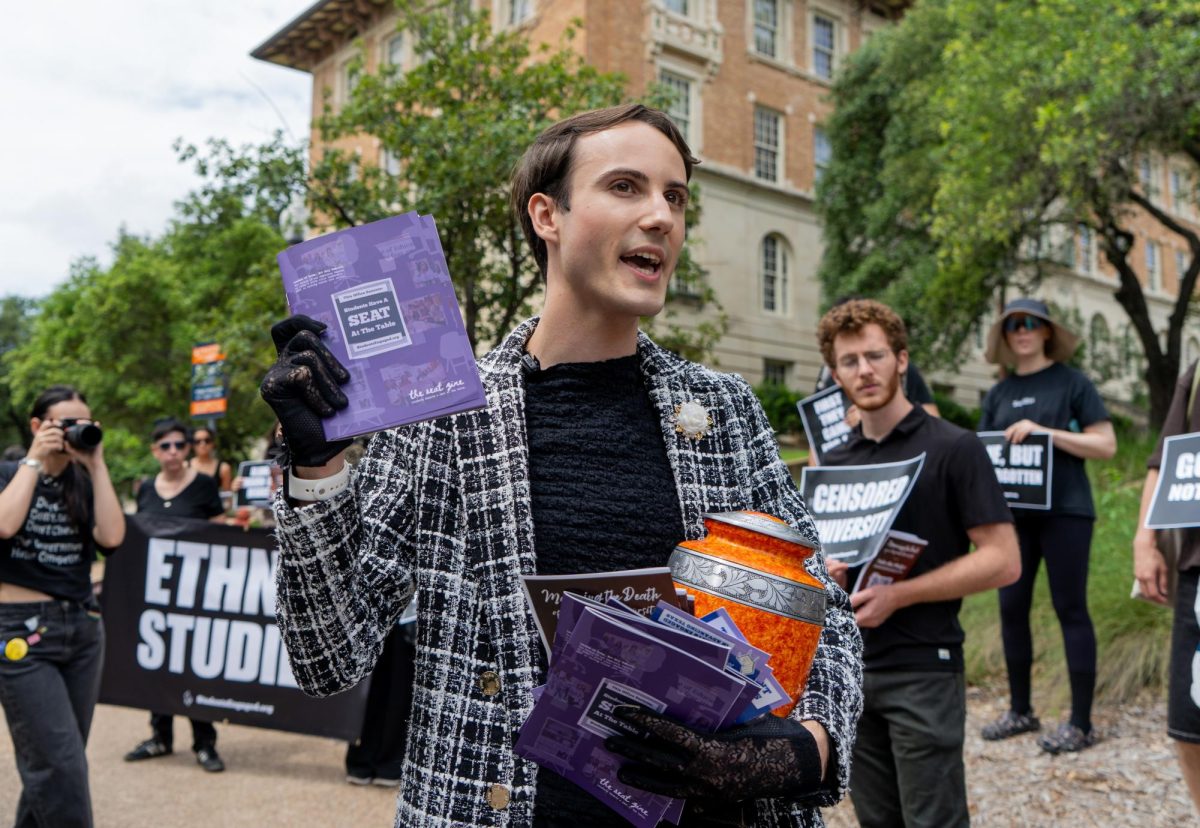
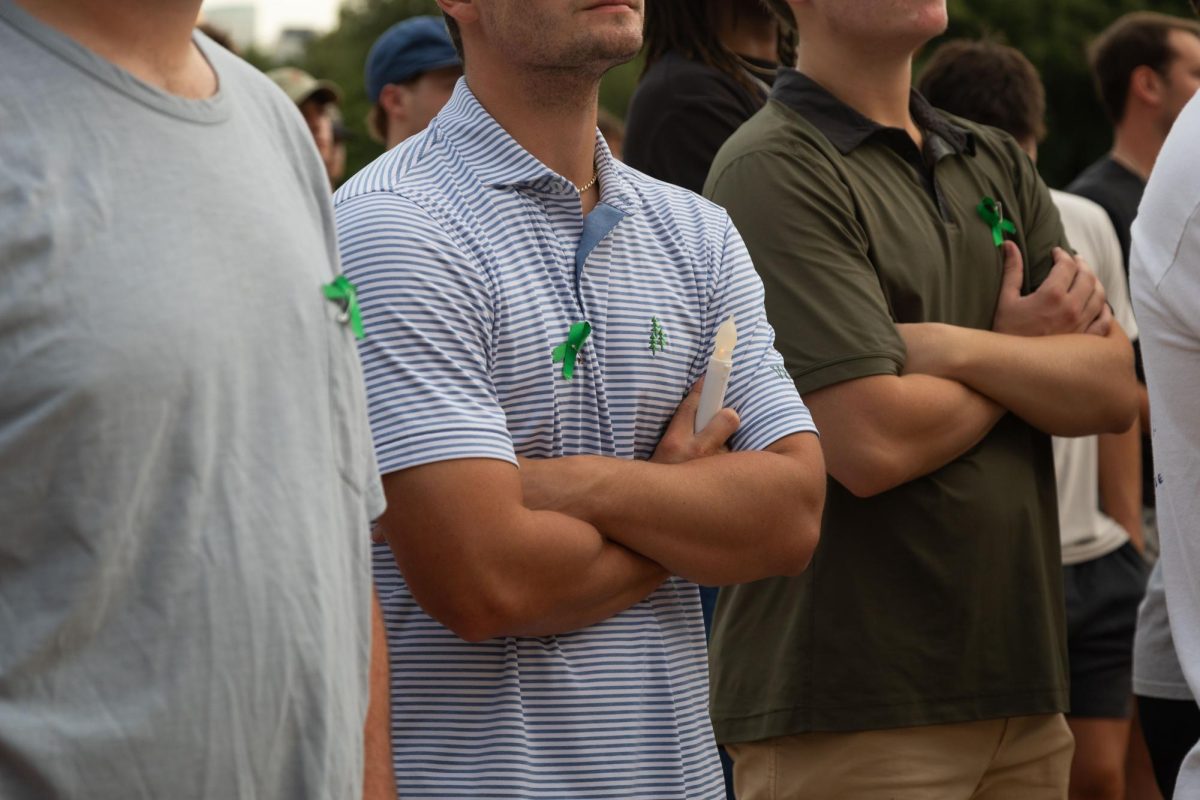
About 100 protesters gathered on the South Lawn on Thursday, chanting “Free, free Palestine” and “Disclose, divest, we will not stop, we will not rest.”
These chants are identical to the ones protesters chanted exactly a year ago on April 24, 2024. By that evening, local and state law enforcement had arrested 57 people. The arrests occurred after the Palestine Solidarity Committee, a suspended student organization, planned “The Popular University for Gaza” that day.
Thursday’s protest commemorated the first anniversary of UT’s crackdown on pro-Palestine demonstrations. Across two days last year, April 24 and April 29, law enforcement arrested 136 people. The University has since disciplined many students involved, suspending at least two.
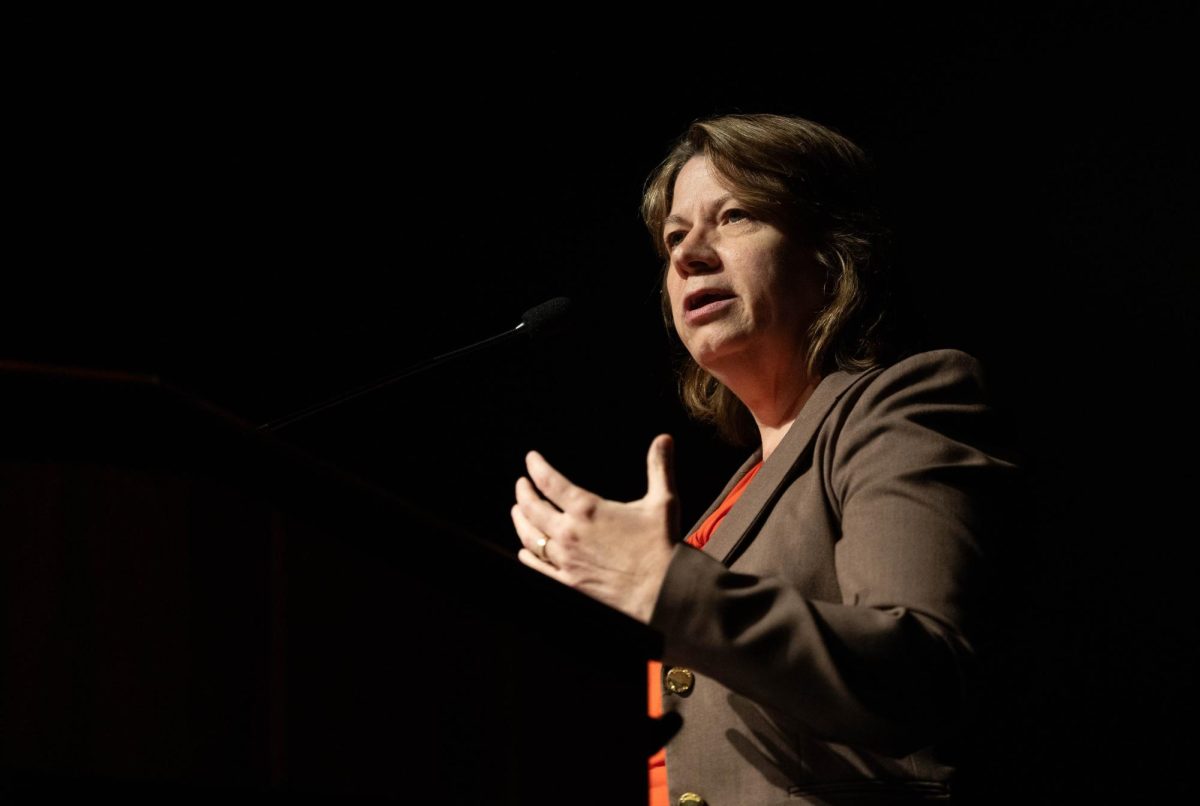
“Before April 24, 2024, we only could have imagined the lengths our University’s leaders would go to to suppress pro-Palestinian speech,” said Karma Chavez, professor of Mexican American and Latina/o studies, in a speech at the protest.
Students at Thursday’s protest noted the sharp decrease in pro-Palestine demonstrations at the University since last April.
“You don’t hear near as many people talking about the genocide that’s going on, even here at UT,” neuroscience senior Reece Jones said. “With the 100-plus arrests that (law enforcement) made, people are almost scared to talk about it or to do anything about it.”
PSC initially called for a protest on the Main Mall, but the Office of the Dean of Students cancelled it the day before. In a letter sent to PSC, the University cited that the Main Mall was closed for an event, and PSC’s interim suspension means it must “cease all activity” on campus.
Within hours of the cancellation, a coalition of UT student organizations, including Students for a Democratic Society, Underpaid@UT, and Young Democrats and Socialists of America, announced they would host the event on the South Lawn.
“From every corner of campus, organizations came together to make sure that when one (organization) is silenced, others can speak up in their place and make sure that students as a whole will not be silenced,” said Arshia Papari, the protest’s spokesperson.
Students and faculty reflected on the lasting impacts last year’s crackdown had on campus free speech and how the political climate surrounding pro-Palestine activism has changed since.
Since entering office in January, President Donald Trump has passed a series of executive orders targeting international students who participated in pro-Palestine demonstrations. The UT System confirmed at least 170 students have had their visa statuses changed across the system.
“With the deportations and detainments that we’re seeing for pro-Palestine activists, this is a way for us to come out and stand against that and show that we do have our freedom of speech on this campus,” said an attendee, who asked to remain anonymous out of fear for their safety.
Referencing Mahmoud Khalil, a pro-Palestine student activist at Columbia University and permanent resident who was recently detained, Papari said the coalition calls on the University to protect immigrant students.
“We are standing against that,” Papari said. “We will fight against that, and that’s something that all organizations hold priority for, and that often SDS, especially in our semester-long campaign to support these students and to support all immigrants who are being hunted and vilified at this moment.”