The Texas House passed an amended version of the Campus Protection Act, a bill restricting expressive activity on college campuses, on June 2.
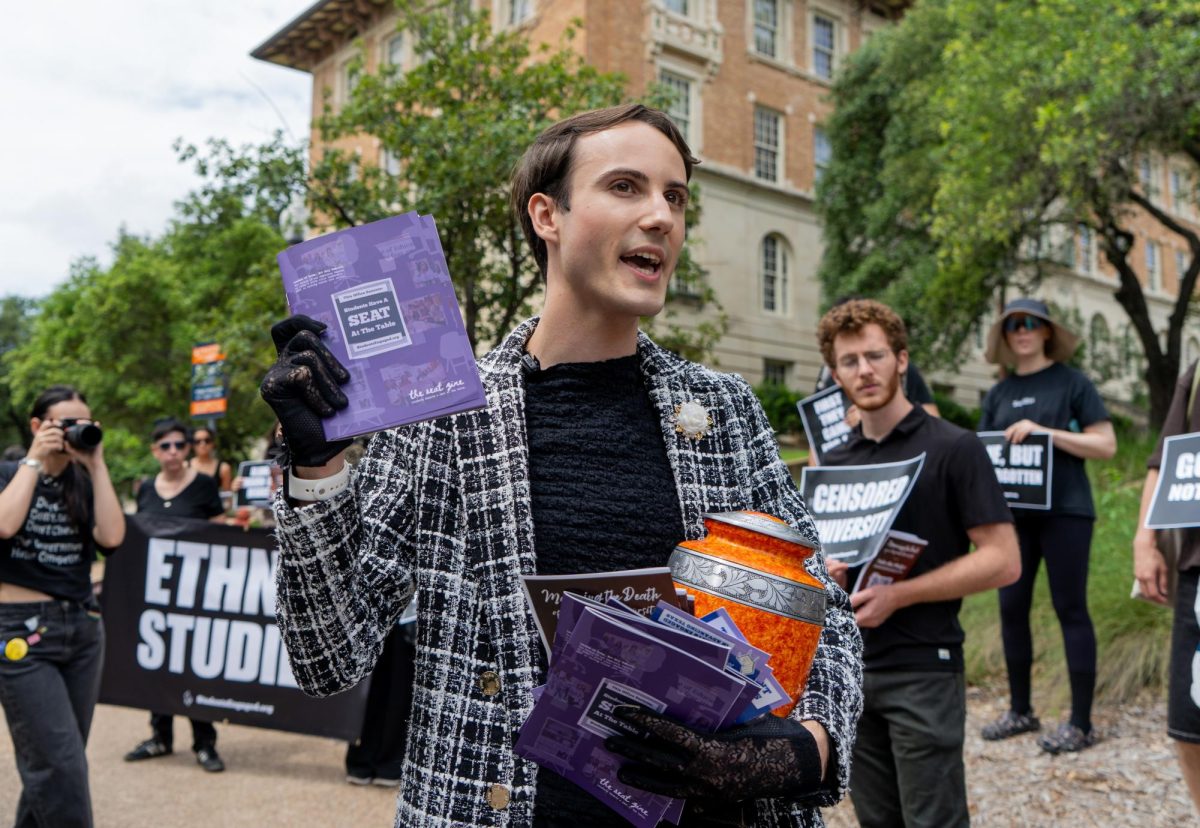
The bill, introduced by Texas Sen. Brandon Creighton, comes after law enforcement arrested 136 people in pro-Palestinian protests in April 2024. UT has since disciplined many students for their involvement, suspending at least two. The University is also facing multiple lawsuits from students and alumni over its handling of the protests.
Some restrictions in the Campus Protection Act are already enshrined in UT’s free speech policies, such as an explicit ban on encampments and limitations on amplified sound. Other sections of the bill walk back free speech laws surrounding expression on college campuses.
Most notably, the Campus Protection Act removes the “traditional public forum” status from public colleges and universities.
A traditional public forum is a common outdoor area where anyone can exercise their free speech rights. For example, Jester Plaza is listed as a common outdoor area at UT in its institutional rules on student services, making it a traditional public forum.
The 2019 law designating the outdoor areas of public universities as public forums, Texas Senate Bill 18, came at a time when conservative lawmakers were concerned conservative voices were being suppressed on college campuses, according to the Texas Tribune.
However, if the Campus Protection Act is signed into law, it would limit expression to only students and employees of the University, as opposed to any person regardless of University affiliation. If Gov. Greg Abbott signs the bill or does not veto it by June 22, the bill becomes law.
“This bill (creates) a two-tiered status for who can express themselves on Texas campuses,” said Caro Achar, engagement coordinator for free speech at the American Civil Liberties Union of Texas.
While the Campus Protection Act would remove the blanket traditional public forum status for the outdoor areas of public universities, individual campuses such as UT can still designate their own public forums.
University spokesperson Mike Rosen declined to comment as the University does not comment on pending legislation.
While the original version of the bill prohibited using masks, the amended version only prohibits “disguises” with the intent to conceal someone’s identity from law enforcement. Although this is a small change in wording, Achar said the distinction limits the possibility of discriminatory enforcement.
A blanket ban on masks would mean universities could question anyone about why they are wearing a mask, which could infringe on the rights of people who wear masks for religious or health reasons, Achar said.
“People are allowed to cover their face for a whole host of reasons,” Achar said. “In limiting (the use of masks) to ‘disguise,’ it reduces the number of ways in which enforcement can be not neutral or targeted. It doesn’t eliminate the possibility for discriminatory enforcement.”