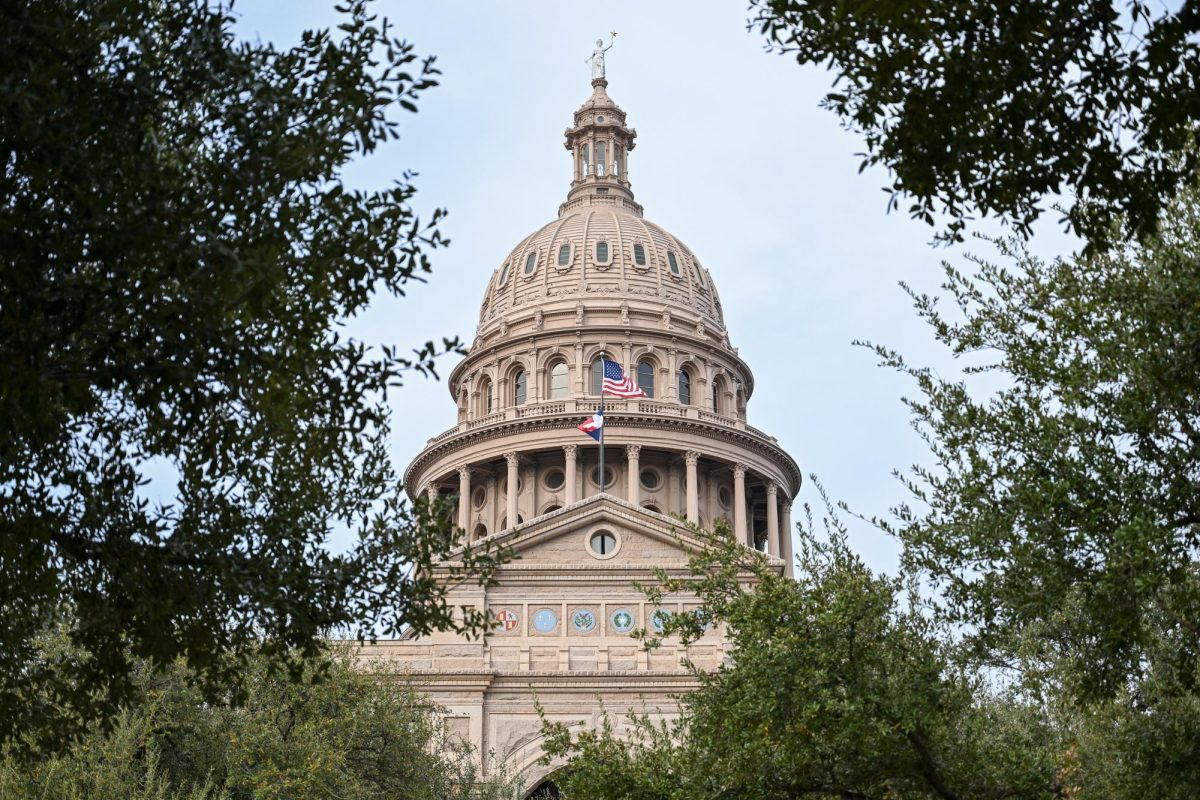
Gov. Greg Abbott signed three key bills on June 20 related to abortion and reproductive health care: Texas Senate Bill 31, Texas Senate Bill 33 and Texas Senate Bill 1388.
SB 31 allows physicians to perform an abortion on a pregnant person with a “life-threatening” condition. SB 33 prevents the use of government funds to facilitate abortion access. SB 1388 defines eligibility for funding from the Thriving Texas Families program, a statewide support network that promotes childbirth and healthy pregnancies as an alternative to abortion.
With increasing maternal mortality rates and thousands of Texans traveling out of state for care, these bills come as Texas experiences a “manufactured public health crisis,” said Lucie Arvallo, executive director at Jane’s Due Process, a nonprofit that helps minors access abortions confidentially.
Life of the Mother Act
SB 31, or the Life of the Mother Act, allows physicians to use their “reasonable medical judgment” to perform an abortion if a pregnant person has a life-threatening condition.
According to a report by the Gender Equity Policy Institute, maternal mortality rose 56% in Texas the year after Texas Senate Bill 8 passed, which banned abortion after the detection of a fetal heartbeat. The institute used data from 2019, the year before the pandemic, as a baseline and compared it to data from 2022, the first year following the 2021 ban in Texas. The national average rose only by 11% in that same time.
Texas House Rep. Donna Howard, a primary sponsor of SB 31, said it was “clear to anybody paying attention” that abortion restrictions negatively impacted those who experienced complications during pregnancy.
“Because of the horrific penalties for a physician who might intervene, there has been hesitancy on the part of doctors and physicians,” Howard said.
The bill allows physicians to use their judgment to perform an abortion before the patient experiences the effects of a life-threatening condition. Howard said that though the bill does not include rape, incest, fetal anomalies and accessibility, she will continue to work toward addressing those issues.
“I could not let perfect get in the way of the good,” Howard said. “The bottom line is (SB 31) saves lives.”
Thriving Texas Families program
SB 1388 makes abortion service providers ineligible to receive funding from Thriving Texas Families. The program provides counseling, housing and infant care supplies to pregnant people.
The bill amends Texas Senate Bill 24, which established the program in 2023 as a continuation of the Alternatives to Abortions program. SB 1388 defines an “abortion services provider” as a person who facilitates travel, informs or advocates for any abortion-related activity.
Those defined as “abortion services providers” would be unable to receive state funds through Thriving Texas Families, but these are groups that would not have typically applied.
Howard, who is a member of the Committee on Appropriations, said the program has lacked “transparency” and “accountability.” Thriving Texas Families received $140 million in the 2024-25 budget and $180 million in the 2026-27 budget.
“I don’t believe that this program has been one that can credibly be shown to have made a difference,” Howard said. “When it was still called Alternatives to Abortions, they didn’t even report anything about abortion — there was no metric to determine if their goal was to decrease abortions. There was no metric to show that that had actually happened.”
Restrictions on local funding
SB 33 restricts governmental entities, such as the city of Austin, from providing funds for child care, travel, food, lodging, counseling and “any other service” to help a person access an abortion. Mayor Pro Tem Vanessa Fuentes said it is an example of “state overreach.”
Fuentes said the city’s Reproductive Health Grant program, which was renewed in the city’s 2024-25 budget to support Austin residents seeking out-of-state abortions, will now have to be undone.
“This was a program that we, at the local level, put together in response to living in a state where we have one of the strictest abortion bans in the country,” Fuentes said.
Over 28,000 Texans traveled out of state for abortion care in 2024, according to a report released by the Guttmacher Institute on the third anniversary of the Supreme Court’s Dobbs v. Jackson Women’s Health decision, which overturned Roe v. Wade. This amount was the most of any other state and alone comprised almost one-fifth of the 155,000 people across the country who traveled out of state to receive abortion care.
Howard said that until different people are elected, it will be difficult to ensure greater access to reproductive health care.
Texas has historically been at the forefront of establishing reproductive precedent across the country, Arvallo said. She has no doubt Texas will continue to lead, despite anti-abortion legislation.
“We have an opportunity to build something truer to the vision of reproductive justice,” Arvallo said. “While that can be daunting, we all have a part to play.”