Students have likely heard the appeal before that we should engage in dialogue with each other because “we all basically want the same thing.” A quick review of research literature seems to suggest similarly. According to Ipsos, a global research company, 69% of Americans say most Americans want the same things out of life. This appeal is often used in discussions about American politics to seemingly leave all involved with the feeling that our political perils are but transitory.
Unfortunately for the country, a deeper issue lies at the root of surface political disturbances.
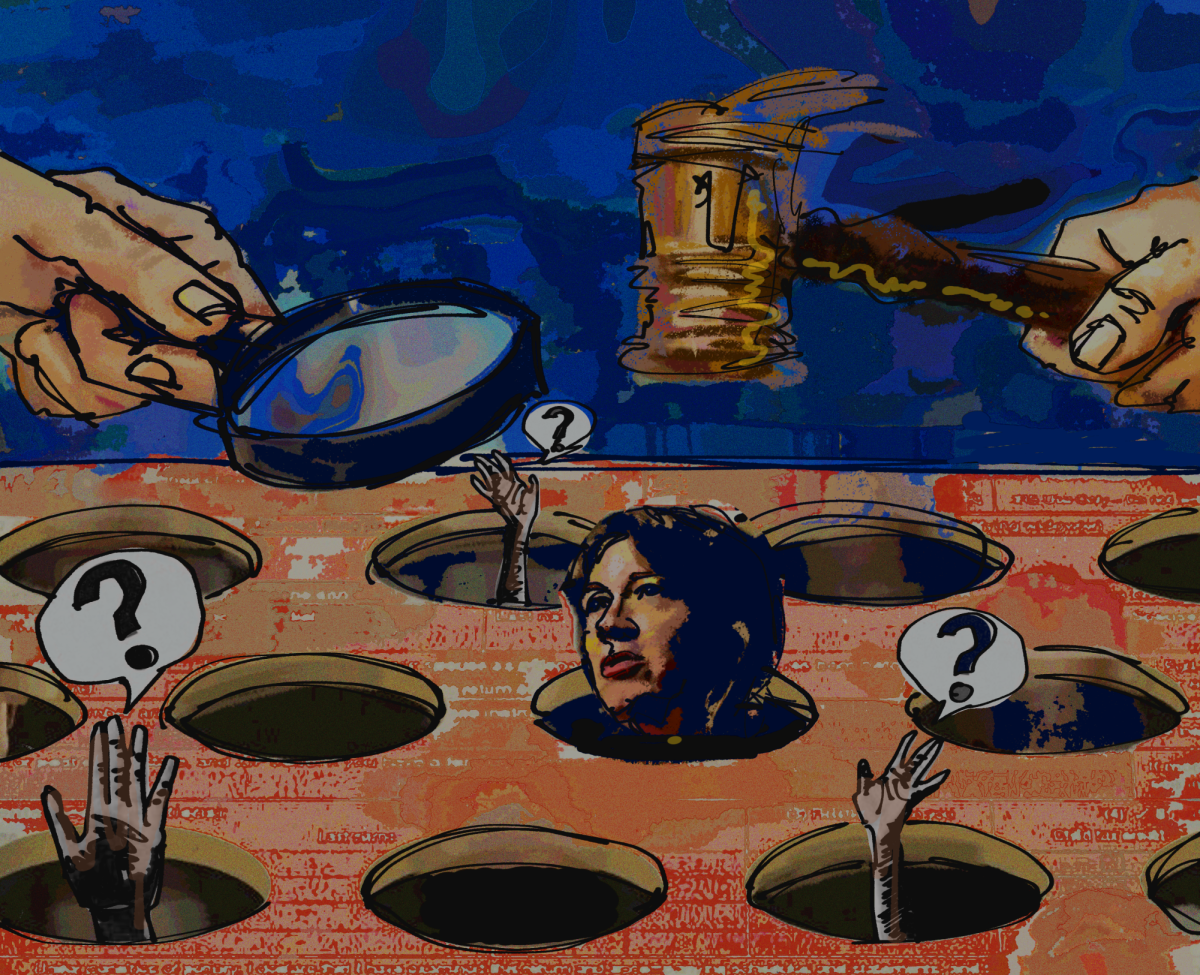
According to Gallup in 2024, 80% of U.S. adults say Americans disagree about fundamental values. This leaves the thinking individual with a key question: how can Americans say they want the same things yet disagree about what things are most important? Perhaps many Americans do want similar things on a surface level, but aspiring to live comfortably and have a strong economy is hardly the foundation of a national identity.
It is difficult, if not impossible, to form a national identity without some shared sense of right and wrong. Americans disagree on fundamental issues like LGBTQ+ rights and the place of religion in public life. On a divisive issue like abortion, the pro-life side views pro-choice advocates as supporting “legal murder,” while the pro-choice side views pro-lifers as wanting to take away women’s basic human rights. These disagreements are not merely political but influence the identities of individuals.
However, what is perhaps more notable than different views of right and wrong is the growing share of the population that believes right and wrong don’t really exist at all. A majority of U.S. adults say that right and wrong are situational, according to a Pew Research report. The nonpartisan Public Religion Research Institute explains that this notion is increasingly popular with younger generations. These philosophical viewpoints of Americans have real-world implications for American politics. A society without a clear view of what is right and what is wrong struggles to determine a shared sense of ethics. Without clearly defined and shared ethics, previously unethical behavior becomes morally grey. In a country with a reduced sense of objective morality, it ought not be surprising that a growing share of Americans perceive violence as the solution to political disagreements. It is hard to believe a society willing to use violence against some of its members is unified in its core values.
Former Senator and GOP nominee John McCain wrote in a 2017 op-ed to the Washington Post, “Our shared values define us more than our differences. And acknowledging those shared values can see us through our challenges today if we have the wisdom to trust in them again.”
What may have been true in 2017 does not seem to hold true in 2025. Ultimately, it is likely that the longer Americans pretend to desire the same things, the longer true value differences will increase division, heated rhetoric, and, worryingly, violence. Perhaps the solution to disagreement begins with acknowledging its existence.
Pate is an aerospace engineering and Plan II Honors freshman.