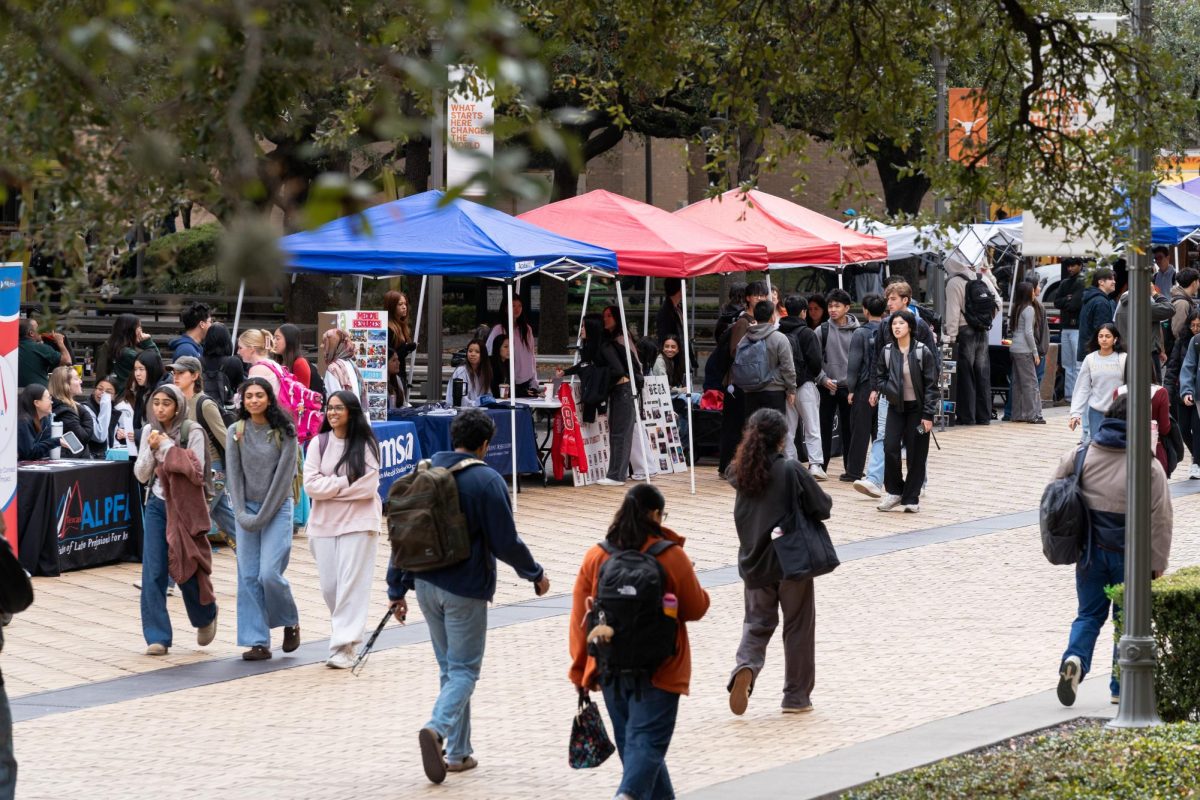
Every semester, students attend information sessions, filing into packed classrooms, huddling up outside interview rooms and spending long nights typing up responses to lengthy applications while rehearsing interview answers. Spring semester is underway, and with it comes recruitment season for many student organizations. For some underclassmen who have yet to find their place on campus, it’s the beginning of a long, competitive process.
From finance and investment teams to spirit groups, organizations promise mentorship, community, culture, professional development and access to coveted career pipelines. Each garner hundreds of applications each semester, but their selective recruitment processes allow for only a few to get in.
Navigating recruitment for the first time can feel overwhelming. While balancing academic coursework, interested students are often required to make time to attend information sessions, fill out written applications and pass several rounds of interviews.
“I knew nothing walking in as a freshman,” economics sophomore Lydia Xiao said. “I just saw people tabling, and I was naive enough to think that these forums are easy to get into because they all seem friendly.”
Chemical engineering sophomore Anshuni Kale said she joined Longhorn Racing, one of many competitive organizations, to prepare for her future.
“When you get to college, (big organizations are) all you know, (and) everyone is talking about … if you don’t get into one of them, then you’re not as likely to do as well as some people who are in those orgs,” Kale said.
The pressure involved with joining competitive organizations can also take an emotional toll on students, especially when receiving rejection with little explanation.
“I faced a lot of rejections from these orgs,” finance sophomore Aanya Niranjan said. “I think at times, it was demotivating because it felt like I couldn’t pinpoint what I was doing wrong, and it was hard to ask for feedback and receive feedback.”
Despite the rejections, some students view the recruitment process as a valuable experience.
“It was a good learning experience, though, because it resembles how (for) job searches, you can apply to a million and not even hear back from some,” Niranjan said.
For others, rejection made their priorities clearer, opening doors to other opportunities.
“I’ve definitely gained more experience from the org that I am in now,” Xiao said. “I don’t have that much stress now. I know what my focus is career-wise, and I know my priorities more.”
As recruitment season continues, some students encourage future applicants to remain confident in their abilities, reminding applicants that admission into organizations does not define their self-worth.
“If an opportunity is not meant to happen for you, there are other opportunities that are meant to happen for you, and it’s gonna happen eventually,” Kale said. “If it doesn’t happen all at once, don’t feel discouraged.”