Applications for the new Kay Bailey Hutchison Computational Energy Fellowship opened Jan. 5. Selected students will train to improve the safety and efficiency of energy systems in Texas and nationwide.
The program is a collaboration between the Oden Institute for Computational Engineering & Sciences, a research unit focused on computational science and engineering, and the KBH Energy Center, a hub bridging students across the University to teach about energy applications. The fellowship will train students in the latest technology and artificial intelligence systems.
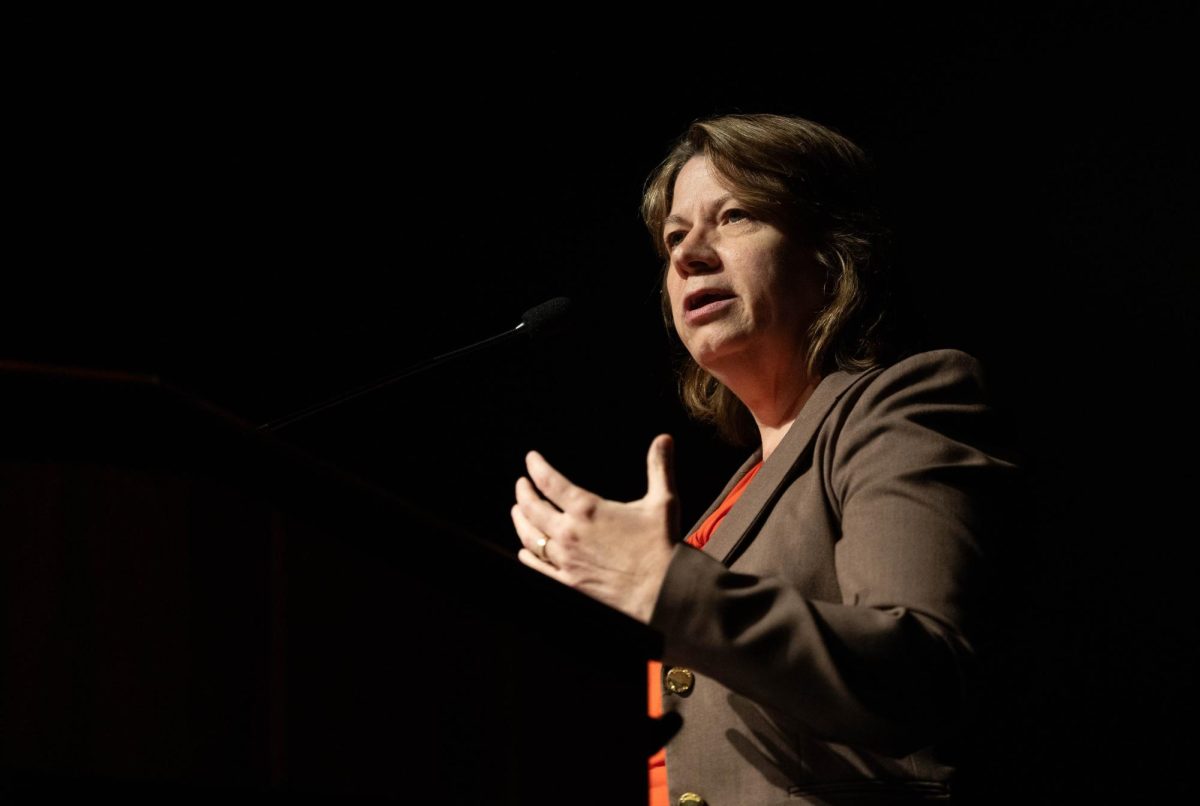
Karen Willcox, director of the Oden Institute, said the fellow will learn how to use digital twins, powerful computer simulations that replicate power plants, to test and improve energy systems before they are used in the real world.
“A digital twin is like a supercharged computer model … that is a representation of some kind of physical system,” Willcox said. “(It) becomes this really powerful decision-making tool where people could use it to run scenarios, decide when maintenance is needed, when parts might need to be replaced or just generally make decisions about how to operate the reactor in a (safer) and more efficient way.”
The fellowship is targeted towards PhD students and postdoctoral fellows, and will pay its fellows with a grant from the O’Donnell Foundation, Willcox said.
“We’re looking for students at the forefront of research, but also who have a real interest in mentoring and being a part of UT-Austin’s leadership in the energy sector,” Willcox said.
A large component of the fellowship will be mentoring students minoring in energy and helping connect these computational science resources to students in a variety of fields, said Kay Bailey Hutchison, former U.S. Senator, R-Texas, and founding member of the KBH center. The center houses multiple minors, such as the Energy Studies Minor and Energy Management Minor.
“Our purpose in the center is to show students all of the different energy potential careers,” Hutchison said. “That’s why we have an energy minor that will familiarize students with, if you want to be a lawyer, what the energy law possibilities are.”
Hutchison said she understood the importance of the energy industry from her time in the Senate, but was not aware of how integral it would become to the success of the U.S. economy in surpassing competing countries.
“I didn’t even know at the time (when) we started the center 10 years ago how essential energy policy would be in the future economy,” Hutchison said. “Energy is the key to staying ahead with all of this technological revolution, and we’re right at the forefront of that.”