A UT program offering law students practice working on juvenile cases celebrated its 50th anniversary, according to a Feb. 12 news release from the School of Law.
Established in January 1975, the School of Law’s Juvenile Justice Clinic, one of the 16 clinics the institution houses, gives students hands-on experience working civil cases involving people between the ages of 10 and 17, according to the school’s website. Cases can range from Class B misdemeanors, like possession of marijuana, to first-degree felonies, such as aggravated robbery and aggravated sexual assault.
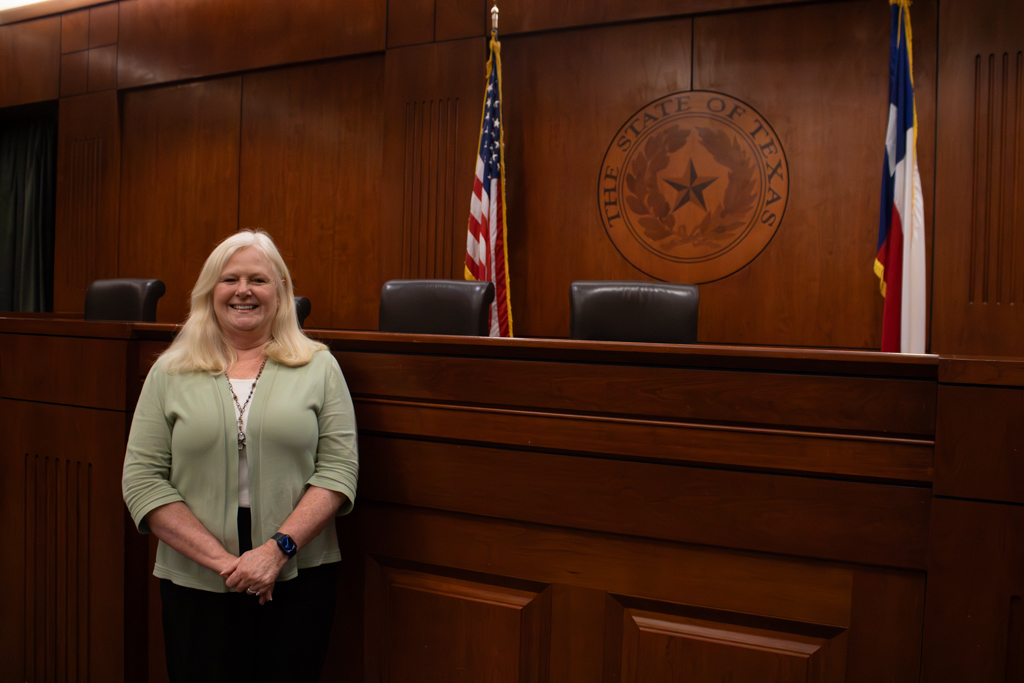
Pam Sigman, director of the Juvenile Justice Clinic, said the program is a partnership between the School of Law and the Travis County Juvenile Public Defender’s Office. Since its founding, Sigman said over 1,000 students have participated in the clinic, representing over 8,500 clients.
Students analyze legal proceedings the first five weeks of class and are assigned cases during the third week, Sigman said. Working under a supervising attorney from the Travis County Juvenile Public Defender’s Office, participants will handle up to four cases at a time and have the full responsibilities of a first-chair lawyer, she said. Students should have worked at least eight cases by the end of the semester, Sigman said.
“It is overwhelming, and it is kind of scary,” Sigman said. “Yet, they take it on, and they do it, and in three months or so. They are a lot more confident and comfortable going into a courtroom or talking with people.”
Students participate in a variety of scenarios. Some of these include detention hearings, where students will meet with youth and defend within hours or days, Sigman said. They will also help with filed cases, a process that may span weeks, she said. Students participate in all parts of the litigation process by interviewing people, questioning witnesses and presenting arguments before the court, Sigman said.
Karina Rodriguez Garcia, a third-year law student, said she has been part of the Juvenile Justice Clinic since beginning her law studies. Learning how to explain legal concepts clearly to youth and devoting enough time to answer their questions is important, she said.
“I’ve learned as a parent and a law student (that) when I have a task in front of me, that is all I’m concerned about,” Rodriguez said. “When I’m set to meet with a client for an hour and a half, they have my full attention for that hour and a half.”
Sigman said an increase in mental health awareness has changed the way law is taught. She tries to create an environment where students feel comfortable talking to her, she said.
“When I went to law school, nobody ever talked about how you felt about something, or whether you felt like you could do it … you just had to suck it up,” Sigman said. “You have to be resilient, and yet, it’s really hard work. Finally, there’s a recognition to that.”
Bill King participated in the Juvenile Justice Clinic during the 1978–1979 school year and later worked in the Travis County Juvenile Court. His experience in the clinic allowed him to gain a better sense of what it is like to work in the field outside of the classroom, King said.
“There’s nothing like sitting face-to-face with your client,” King said. “That’s something you cannot learn out of a book.”
Editor’s Note: This story has been updated to reflect accurate terminology for a first-chair lawyer. The Texan regrets this error.