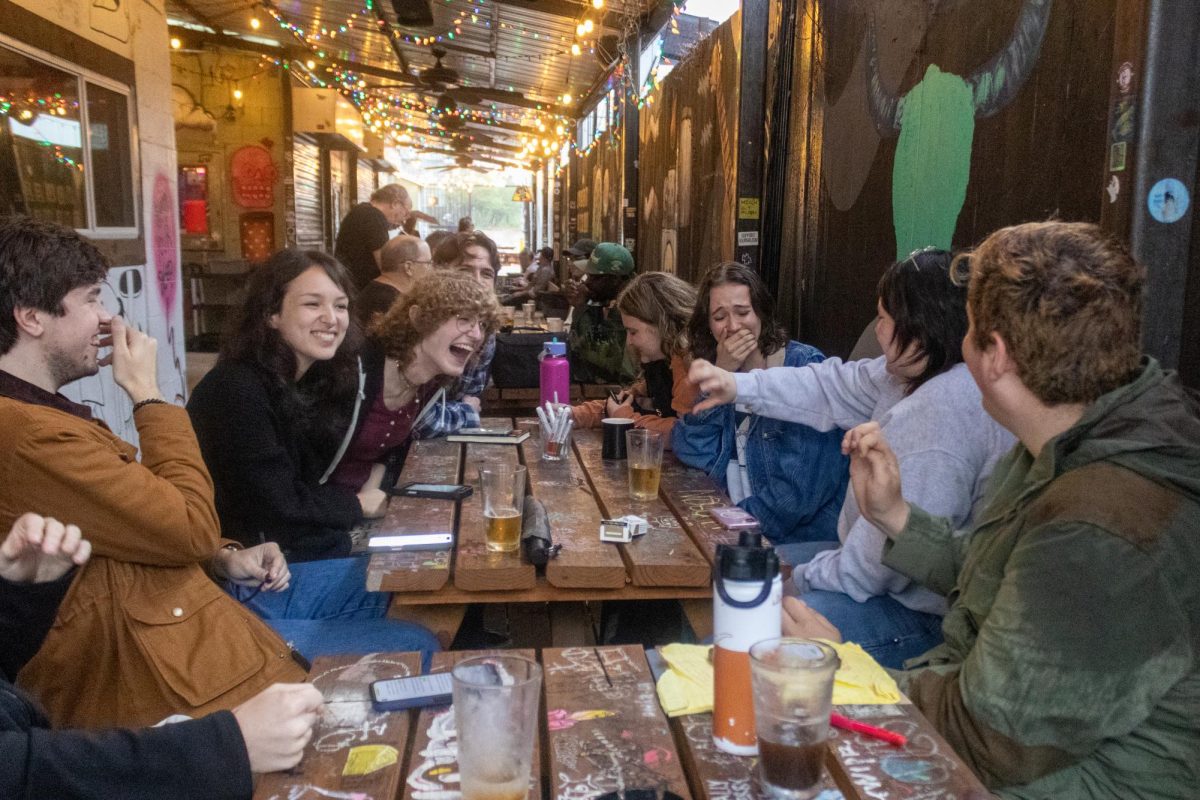
With five different majors and five different careers, five students share one collective goal of understanding the politics of Australia’s treasure.
The Great Barrier Reef May Term program, founded in 2022 and led by Rhonda Evans, director of the Clark Center for Australian and New Zealand Studies, provides an opportunity for students to speak directly with experts and public officials in Queensland, Australia, home of the Great Barrier Reef, to understand the politics of protecting the natural wonder. This May, the third 24-student cohort, including five first-generation students, will travel to Australia with the help of Evans’ first-generation scholarship of $5,000.
The cost of the May term placed it among the most expensive study abroad programs with a program fee of $6,160, inspiring Evans, a first-generation college student herself, to launch the first-generation scholarship in 2023, allowing all students to have the unique opportunity.
“It was all about trying to bring down the barriers for students,” Evans said. “To make sure that it was open to as many people as possible.”
This is the only program where participants can speak to representatives from different sectors that are impacted by the Great Barrier Reef, such as commercial fishing. Evans said it allows for a unique perspective on the tradeoffs involved in policymaking. This approach drew Grace Pantazopoulos, geosystems engineering and hydrogeology freshman, to apply as a means to combine her knowledge of resolutions to environmental problems with policies that directly affect their execution.
“The politics (are) equally as important,” Pantazopoulos said. “We can come up with all these engineering and scientific solutions to climate change or corals dying, but it won’t get implemented if policy doesn’t change.”
Pantazopoulos, a first-generation student, said she wrote her application essay with enthusiasm, thrilled at the chance to travel overseas for the first time in her life. Although she initially felt doubtful when calculating the costs, she said earning the program’s first-generation scholarship, among others, added to her gratitude for her ability to pursue an education.
“It’s definitely a privilege,” Pantazopoulos said. “Flying all the way to Australia is a crazy thing, and I’m very lucky and very fortunate to be able to have these opportunities.”
Cortlyn Null, environmental science sophomore and first-generation student, said she felt excited to see a program offering a trip to the Great Barrier Reef, given its importance to her career in environmental policy and her belief in understanding policy beyond the classroom.
“You can never fully understand the way policy shapes our world unless you go and see it,” Null said. “Being able to go and talk to these people about how it affects their daily lives and … businesses is the best way to understand exactly how environmental science shapes society and how policy impacts everyday lives.”
Not only will Null be able to visit a location she holds near and dear to her heart, but she will also fulfill a dream she did not think was possible.
“I never thought I’d be able to study abroad,” Null said. “I thought that was something reserved for people who come from a different socioeconomic background than I do … Being granted those scholarships that make it possible for me to have this experience is so meaningful.”