Slasher films have always flirted with comedy, where tension and absurdity often share the same blade. The sharpest ones understand that a well-timed scream or brutal kill often lands hardest when it results in laughter. With its seventh installment, the “Scream” franchise leans further into the joke, favoring self-aware winks over genuine terror.
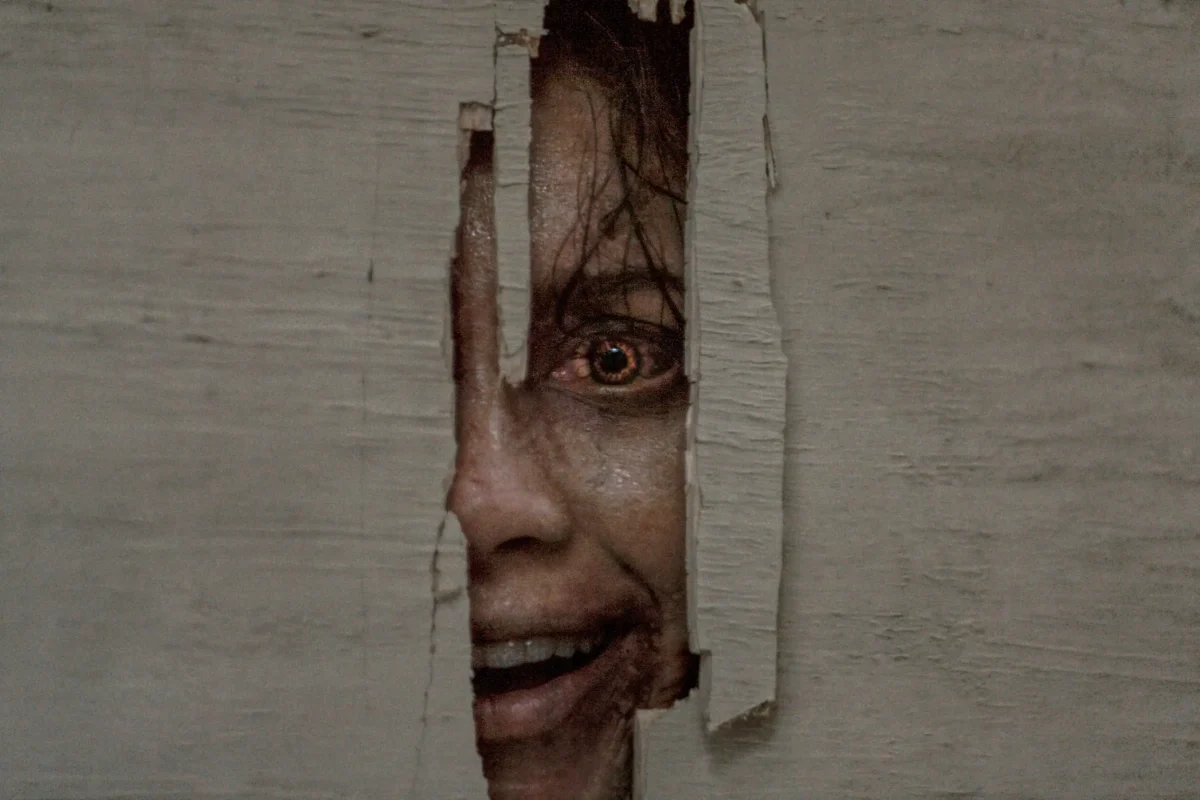
Directed by original screenwriter Kevin Williamson, “Scream 7” premiered in theaters on Friday, relocating Sidney Prescott and her family to Pine Grove, Indiana, where she attempts to outrun her past. The film revisits the Macher house — now an Airbnb — and reconstructs the original movie’s blueprint while introducing a Ghostface who uses AI to generate calls as Stu, one of the first killers in the series. The concept suggests reinvention, but the story retreats into familiarity, prioritizing recognition over risk.
Nostalgia drives nearly every scene. Rumors of Stu’s return hover over the narrative, while the plotline reframes the original killers as duplications. Instead of reinventing the masked killer, the script recycles familiar beats with self-referential dialogue and the looming idea of crafting a “Sidney 2.0.” The result becomes a repetition with updated software rather than escalation.
The story centers on Sidney Prescott’s daughter, Tatum Evans, whose desire to understand her mother’s past drives the emotional arc. As Tatum tries to learn her mother’s history, Sidney repeatedly shuts her down, creating a mother-daughter conflict that often interrupts rising tension.
Marco Beltrami’s score seldom syncs with the pacing, and soundtrack choices from Cigarettes After Sex, Beabadoobee and Turnstile clash with the franchise’s gritty slasher roots. Glossy lighting gives the film a streaming-era sheen, stripping away much of the original’s raw edge.
Returning veterans inject needed energy. Neve Campbell’s Sidney commands the screen with sharp screams and even sharper one-liners. Matthew Lillard channels Stu’s manic volatility through exaggerated vocal shifts and gleeful chaos, while Courteney Cox storms in with a memorable entrance as Gale Weathers, her news van plowing into the first Ghostface encounter.
Jimmy Tatro (“22 Jump Street”) surprises audiences as Scott, a horror-obsessed boyfriend thrilled to immerse himself in franchise lore and the in-universe “Stab” films — fictional movies that dramatize the original Woodsboro killings. In contrast, Isabel May (“Young Sheldon”) struggles to anchor the narrative as Tatum. Flat line delivery drains urgency from pivotal scenes, and Sam Rechner (“Heartbreak High”) never convinces as either romantic lead or viable suspect playing Ben Brown. Their chemistry feels stiff, their exchanges dry enough to provoke unintended laughter.
As a whole, the film operates as a parody of the original, which itself parodied horror conventions. Devoted fans will appreciate callbacks to multiple killers, bedroom window fake-outs and returning faces. Yet each spike in suspense stalls for another earnest mother-daughter exchange, dampening momentum. When Tatum declares, “I’m Sidney fucking Prescott’s daughter,” the theater answered with audible laughs, underscoring the film’s tonal imbalance. The line champions legacy over identity, undercutting her supposed arc of self-discovery.
No sequel can replicate the charm of Wes Craven’s original. While the AI angle gestures toward innovation, its presence feels impersonal in a franchise built on human motive and satire. Seven entries deep, the series edges toward self-parody. This installment entertains most when expectations drop and absurdity takes center stage. The laughs outnumber the scares, and perhaps that has become the franchise’s sharpest weapon.
2.5 slashes out of 5