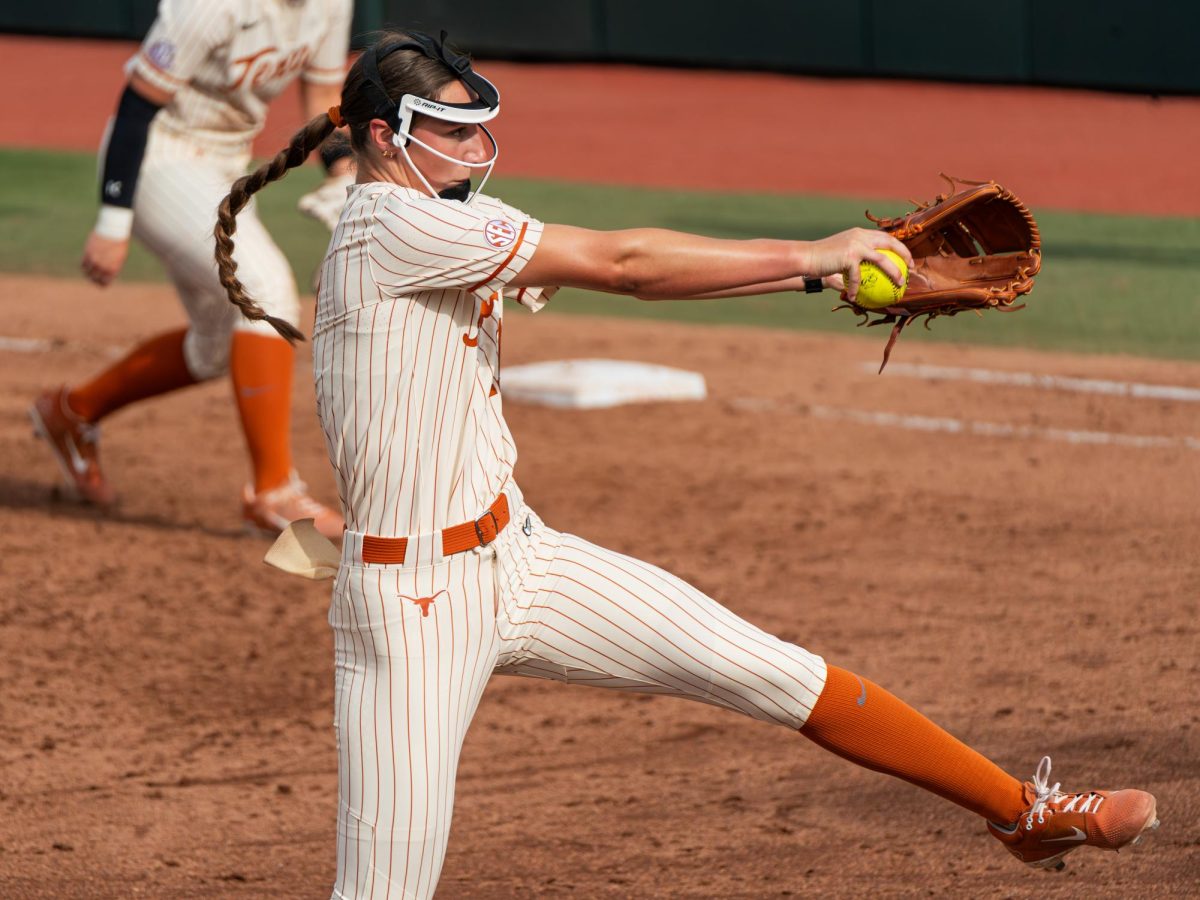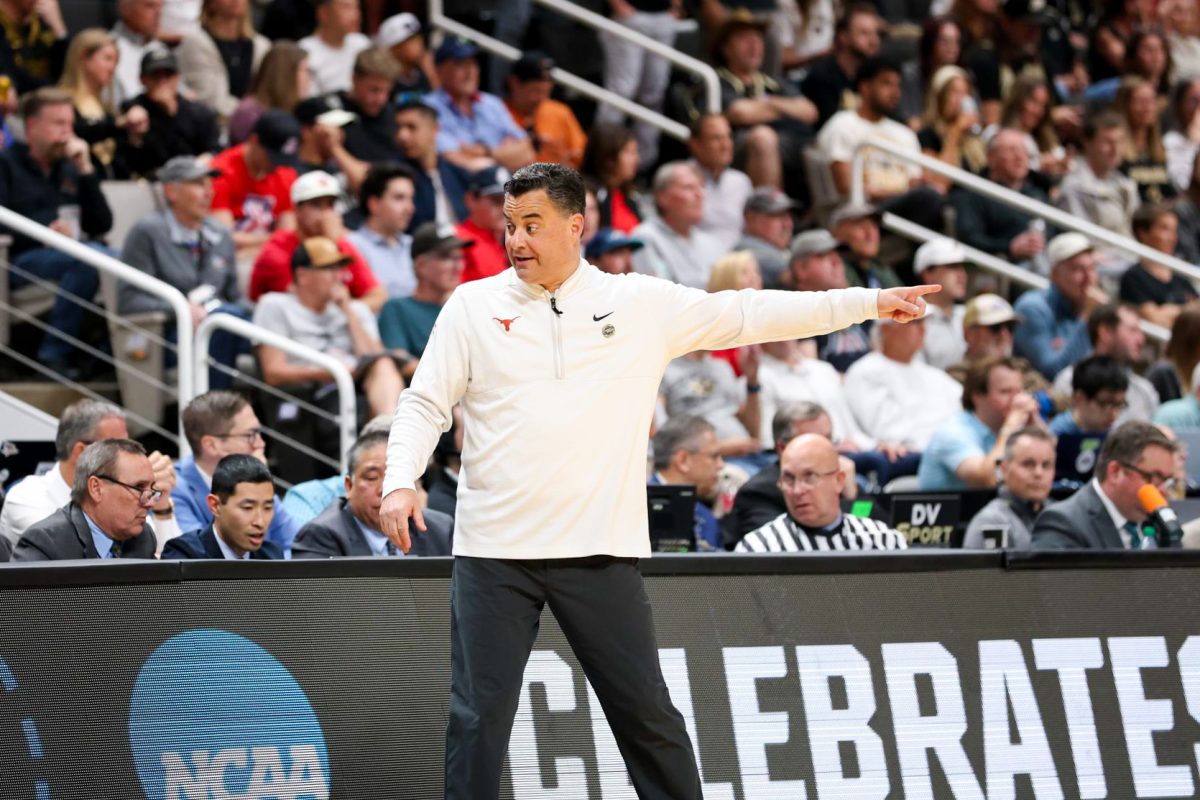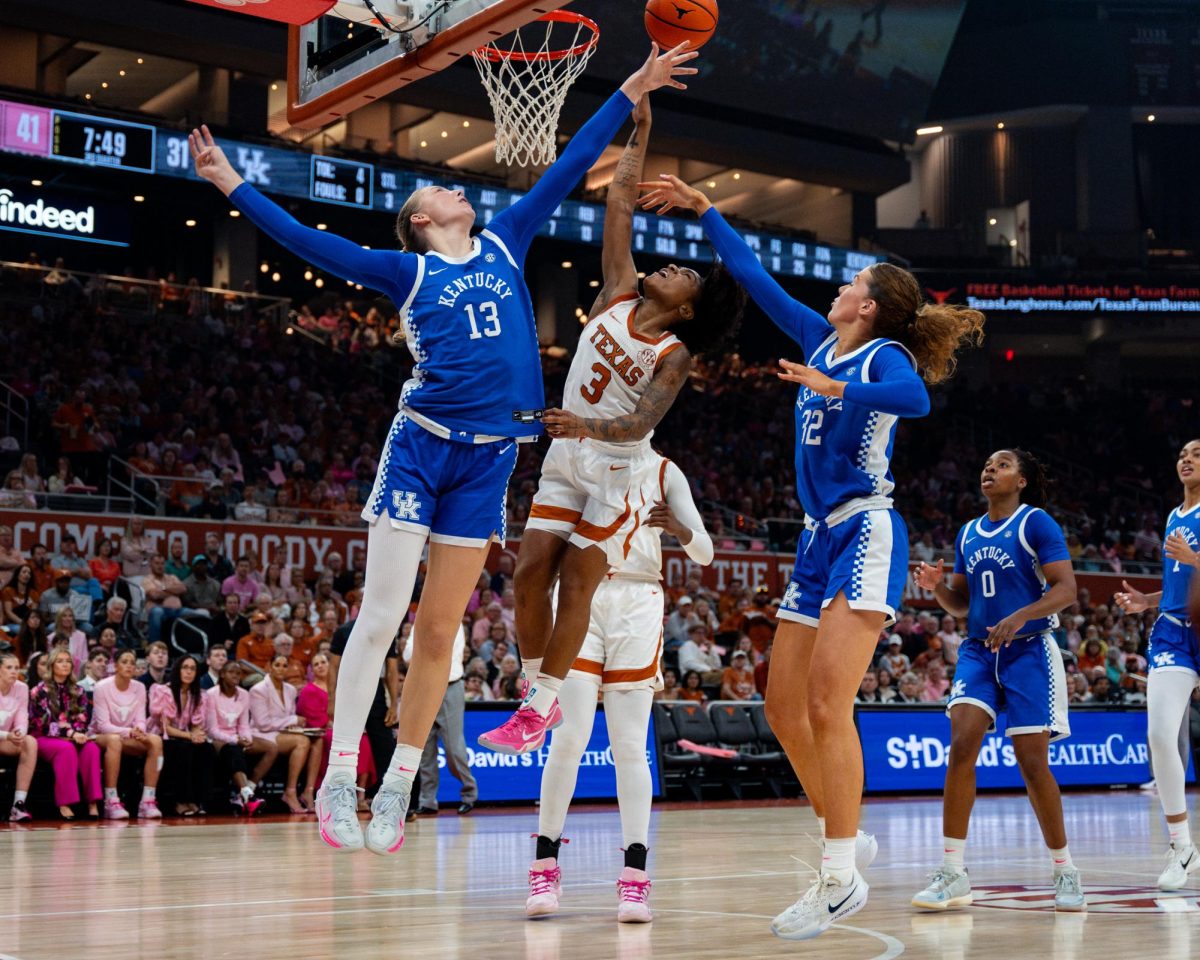
Across Texas athletics, performance monitoring has become an increasingly visible part of daily training.
From volleyball to basketball, data collection tools are now embedded in practice environments. Programs use wearable devices that track heart rate, movement and workload to help evaluate physical strain and recovery.
Texas uses monitoring through Catapult systems — wearable devices athletes wear during practice.
“We’re currently using Catapult systems through St. David’s Medical, which we have a contract with, and they do a lot of, in layman’s terms, kind of GPS tracking, load management and stuff like that,” said Rob Lazare, Texas’ assistant director for equipment operations.
Catapult systems are commonly used across collegiate and professional sports. The wearable units, often fit into compression vests, collect data on acceleration, total distance covered and overall workload during practices and games.
“They got the Catapults … basically anytime they’re doing the 20-hour rule. So anytime the 20 hours that counts toward the athletic week, they’re basically in Catapults,” Lazare said.
The NCAA’s 20-hour rule limits countable athletic activities to 20 hours per week during the season. According to Lazare, athletes typically wear the tracking devices during those structured sessions.
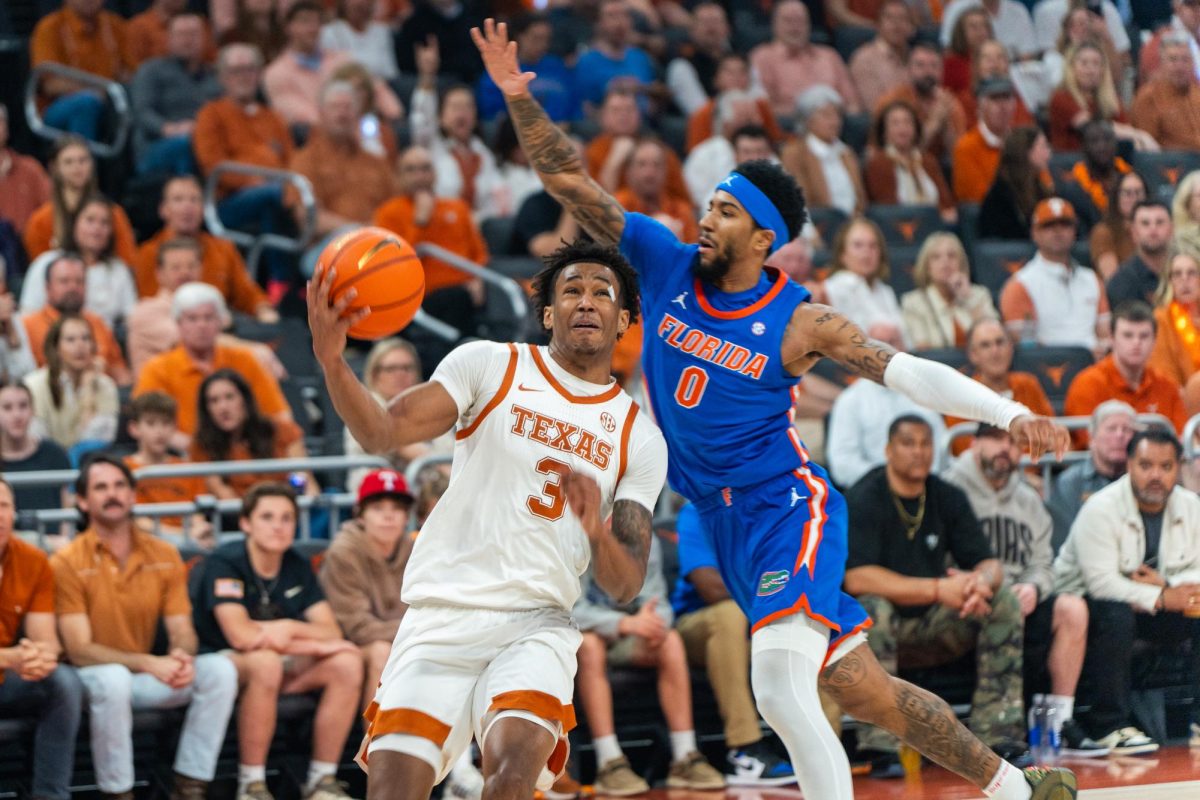
In volleyball, that data can help staff monitor spike volume and training intensity. In basketball, the devices can measure movement patterns and exertion levels over the course of practices and games.
The emphasis on measurable feedback extends beyond wearable monitoring.
Texas women’s basketball coach Vic Schaefer has described the program’s use of advanced shot-tracking technology in practice. The system uses cameras and sensors to analyze a player’s shot and immediately report specific measurements.
“The optimal mark is 43 to 47, and there’s a voice on there that immediately tells you when you shoot what your arc is, so you get instant feedback on it,” Schaefer told A to Z Sports.
Schaefer was referring to the shot arc, the height and curve of the basketball as it travels toward the rim. The system audibly announces whether a player’s shot falls within the optimal arc range, allowing players to adjust their mechanics in real time.
While Schaefer’s comments relate specifically to shooting analytics, they reflect a broader shift in how Texas programs incorporate technology into athlete development. Data feedback is increasingly immediate, quantifiable and integrated into daily practice routines.
Across collegiate athletics, sports science infrastructure has expanded as departments invest in injury prevention and performance optimization.
At Texas, wearable monitoring and real-time analytics are now part of the training landscape, collecting information throughout countable athletic activities and shaping how workload is evaluated.
For athletes in volleyball and basketball, the technology operates quietly in the background, capturing movement and exertion data as preparation continues.