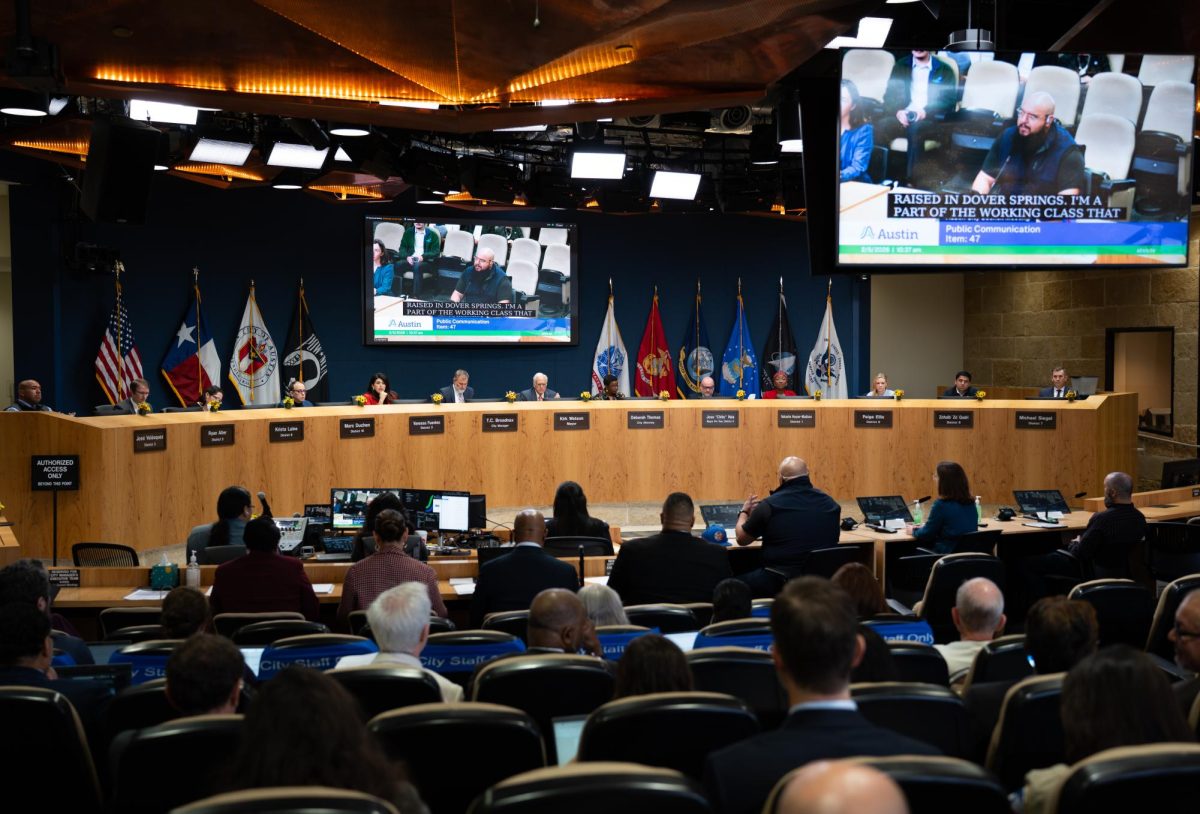
Austin City Council passed a citywide program on Feb. 26 to evaluate operational efficiency and functions in response to a petition to amend the city’s charter after delaying the ordinance last month.
The ordinance requires recurring audits of the city by an outside consultant, with at least three years between assessments. The city auditor will work with the consultant to review city operations, management structure and use of outside contractors, as well as compare Austin’s finances and efficiency to peer cities, according to the ordinance.
The ordinance was originally set to be voted on at a Feb. 5 council meeting. Since then, the ordinance has been updated to explicitly include city employees in the assessment after the Austin and Travis County division of the American Federation of State, County and Municipal Employees sent a letter to city council.
The letter also expressed concerns about the audit’s cost, transparency level and inclusion of public opinion.
“This reform is a unifying rally point for those who believe in good government, believe Austin is successful, and believe Austin can be even better,” Mayor Kirk Watson wrote in a newsletter after the ordinance was passed. “We can unify around the pride in our city and take new pride that our city is on the cutting edge of improving itself by being willing to critically assess itself.”
The audit was proposed in response to a petition started by Save Austin Now to add regular outside audits to the city charter, Mayor Pro Tem José “Chito” Vela said. Save Austin Now co-founder Matt Mackowiak wrote in an email that Save Austin Now will continue to seek a charter amendment, which cannot be reversed as easily as an ordinance.
The ordinance requires the approval of nine or more council members to repeal or amend the ordinance. Charter amendments can be voted on by Austin citizens if a petition reaches 20,000 signatures and can only be overturned with another charter amendment.
Mackowiak wrote that Save Austin Now has collected the requisite number of signatures and that their charter amendment will be on the November 2026 ballot.
“Any effort to find efficiency in the city budget is a welcome development, but an internal audit run by the city will not rebuild trust with taxpayers,” Mackowiak wrote. “Only a fully external audit of the entire budget will begin to do that and that is what our charter amendment is.”
City auditor Jason Hadavi is currently working on a request for proposals and hopes to hire an outside consultant by the end of the fiscal year in September. He said the process of evaluating the entirety of the city will take place over five years.
“It’s unprecedented, and when we’re doing something unprecedented, it’s going to be a learning process,” Hadavi said. “I expect us to learn things along the way, and that’s one of the beauties of breaking it down over the course of five years.”
Editor’s Note: This article has been updated to accurately reflect the number of council members required to amend the ordinance. The Texan regrets this error.