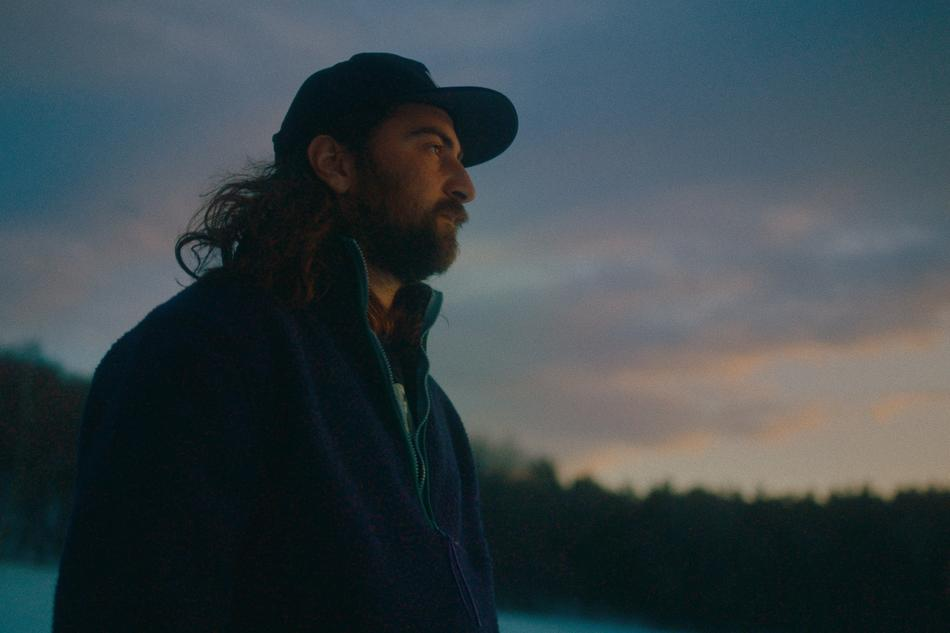
Noah Kahan rose to heights of fame he never imagined after the release of his 2022 album, Stick Season. Through his lyrics, he lays bare his mental health and family trauma. Outside of his music, Kahan became known for his witty, often self-deprecating jokes. He founded the Busyhead Project, which advocates for ending the stigma around mental health. While a lot can be assumed from his music, Kahan has never gone on the record to talk so intimately as he does in his new documentary, “Noah Kahan: Out of Body.”
Kahan let director Nick Sweeney into his life behind the scenes, taking Sweeney to his mother’s and father’s house, the studio, his brother’s apartment and his home, which he shares with his wife, Brenna.
Sweeney’s previous documentaries include “Santa Camp,” which highlights the lack of diversity in the Santa industry, and “AKA Jane Roe,” which tells the story of Norma McCorvey, the real-life “Jane Roe” in the landmark Roe v. Wade case.
The film opens in Boston. Kahan lays on the turf at Fenway Park, his dream venue, which he would play later that day, July 18, 2024. A news clip shows dedicated fans lining up outside the venue ahead of the show.
Then, the film takes audiences to Strafford, Vt., where Kahan grew up. Backdropped by Kahan’s song, “Paul Revere,” Sweeney interviews residents of the approximately 1,300-person town. The camera shows two little girls sitting in an igloo.
“My favorite song is ‘Your Needs, My Needs,’” one girl said. “My favorite song is Taylor Swift,” said the second girl.
Through home videos, dinner table conversations with his family and a tour of the house where Kahan wrote much of “Stick Season,” Sweeney effectively showcases the humanity of Kahan and his family.
Perhaps the most interesting scene appears the day after Kahan’s show at Fenway Park. Sweeney films Kahan back with his mom, pushing a dock and a kayak into a serene lake. The juxtaposition of Kahan playing his biggest show to the next day, just living a normal life, further humanizes the musician.
In clips throughout the film, Kahan sits by a campfire, getting vulnerable for the camera. He spoke openly about his body dysmorphia, suicidal thoughts and his relationship with his dad. From the beginning, the viewer sees Kahan grappling with wanting to get closer to his father again, but also wanting to keep a distance due to inheriting familial trauma from him. Near the end of the film, Kahan plays guitar with his dad, jamming to a song he used to play for him and his siblings, as shown in a home video.
“Noah Kahan: Out of Body” showcases Kahan’s life so raw and openly, in a way that he has never done before.
“It’s really, really crazy to watch your life like that,” Kahan said in the post-film Q&A. “I think everybody in the world deserves a chance to see what they look like and how they treat each other.”