After reading about Japanese incarceration camps in America in the book “The Buddha in the Attic,” English senior Riley Williams wondered what other parts of history were left out of her classes.
“I realized that in my entire Texas public school life, I had never heard about this historical event, so it made me do a bigger deep dive into things that aren’t included in public education,” Williams said. “I realized that we’re not talking about a lot of important things.”
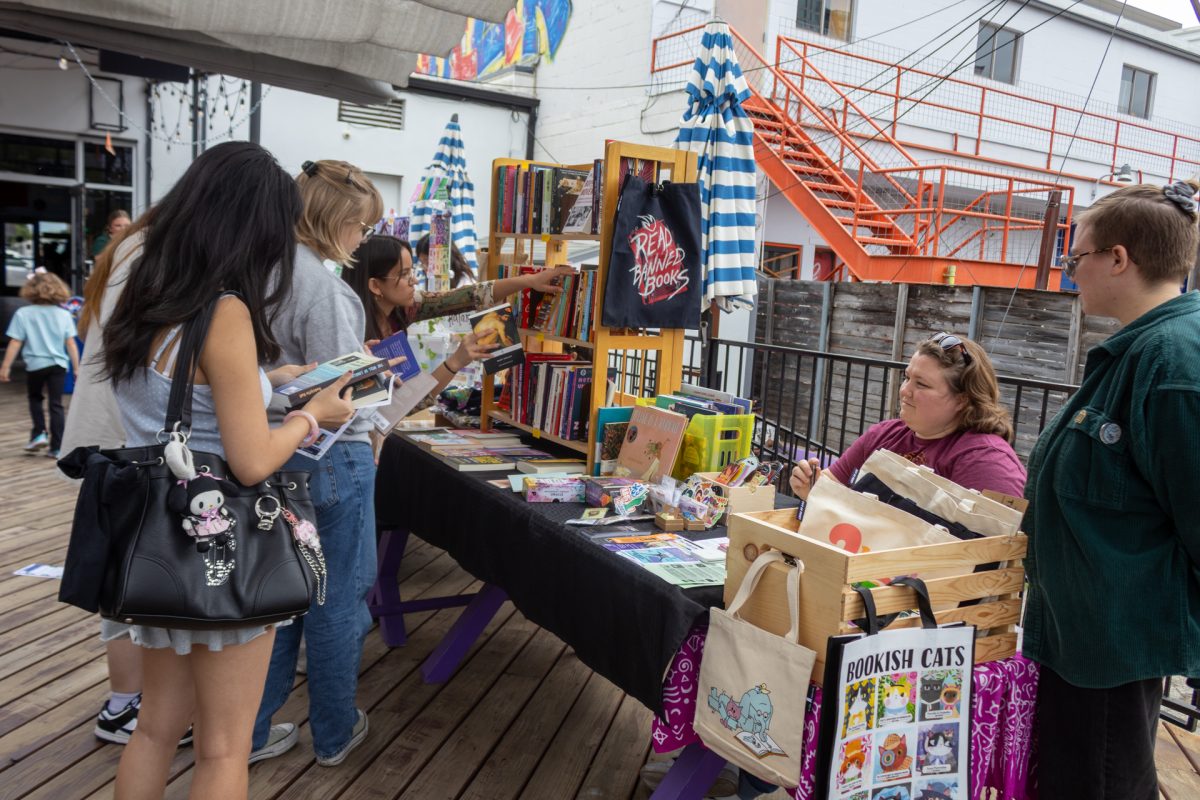
On Saturday, Williams hosted Where Did All the Books Go?, an event she created to raise awareness about book banning and censorship, particularly within the UT community. The event took place at the 1972 Pub and included a panel discussion, community Q&A and outdoor market.
“We need to talk about (censorship) because there’s a lot of things happening at UT and attacks on education, especially the School of Liberal Arts, and I’m seeing it affect my peers and my professors,” Williams said. “I wanted to create a space where everyone felt welcome, and we could have a conversation, because the best way to combat things is just to keep the conversation going.”
The panel included UT professors, alumni and even Williams’ mom, Kimberly Williams, an educator for over 25 years who currently teaches 5th grade reading and writing. Kimberly spoke about the rise in book bannings at her school, especially in 2022.
“I remember clearly the day I walked into the library and saw books packed up, either to be moved or taken from the shelf,” Kimberly said. “It made me feel incredibly angry and powerless. The changes were no longer distant whispers, but people shouting from online platforms, distorting truths and bullying schools into compliance.”
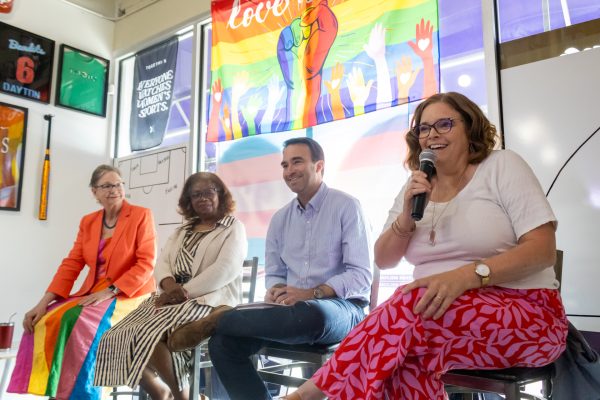
Frank Strong, a fellow teacher, said he noticed similar things at his school. This prompted him to co-found the Texas Freedom to Read Project, a nonprofit organization fighting censorship around the state by publicizing information about book bans, creating ballot guides and organizing parent groups.
“The first (misconception) is this is not being led by angry parents who are mad about what they saw in their kids’ book bags,” Strong said. “This is a coordinated assault from national groups that are sharing information and inflaming culture wars.”
UT professor Helena Woodard spoke about her experience teaching Toni Morrison and how censorship often targets topics that feel uncomfortable, but are vital to learning.
“Get through the hard stuff,” Woodard said. “You don’t ban it, you have conversations with why you feel so uncomfortable about the reading of the text.”
The panel closed out with Dr. Hannah Wojciehowski, professor and director of the program in Comparative Literature. In 1987, she created “Banned Books and Novel Ideas,” a course still taught at the University.
“I think that there’s tremendous pleasure in reading books that somebody somewhere has considered bannable,” Wojciehowski said. “(It) guarantees that anybody energetic and curious will want to read that book.”
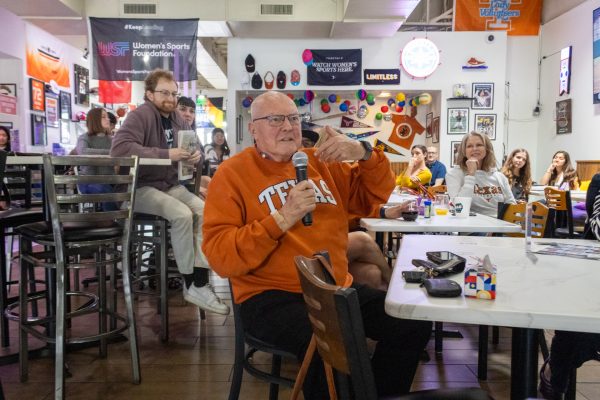
After the panel, a Q&A allowed students, faculty and community members to share their experiences and learn about ways to take action. For Williams, her goal of providing a space for discussion and dialogue proved successful, and she said she hopes to host the event again in the future.
“(Where Did All the Books Go?) allows people to see that there’s a community where they feel supported, and that there’s also people fighting back,” Williams said.
Editor’s Note: This story has been updated with quotes from UT professor Helena Woodard.