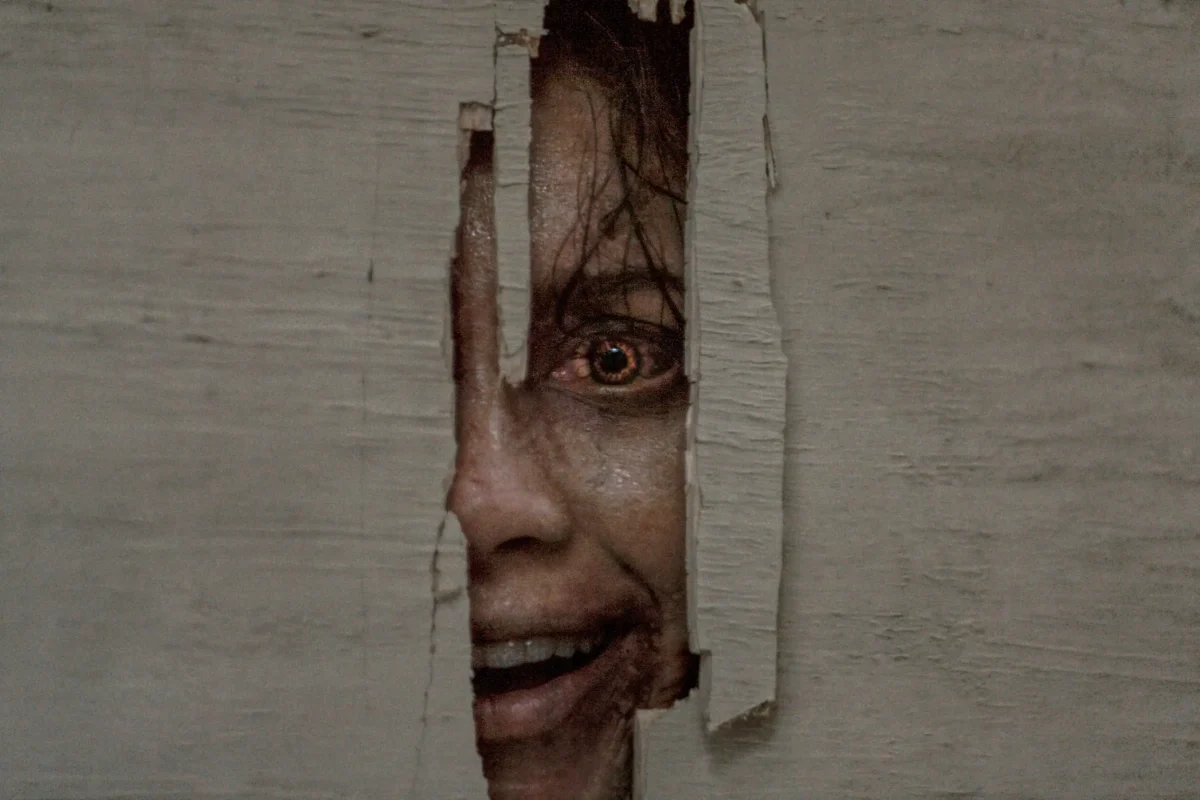
A bedroom formed onstage, complete with a star-decorated chest of drawers and scattered personal objects. A girl lay asleep in bed until an imaginary visitor arrived unexpectedly.
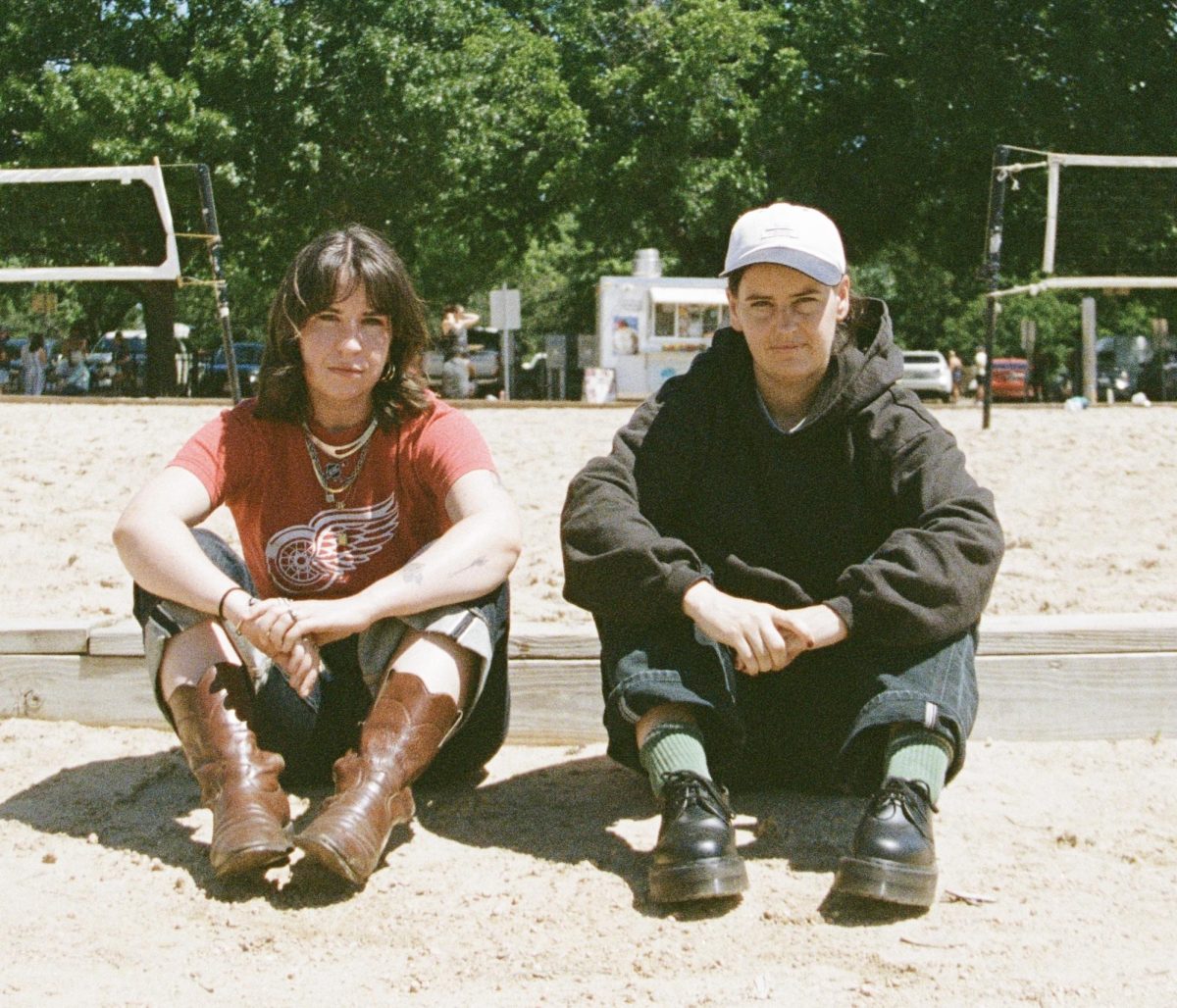
Despite the rain this past weekend, Broccoli Project, an avant-garde student theater organization at UT, staged “Chest of Drawers” outside on Friday and Saturday evening at Pearl Street Co-op’s Ark Park. The 45-minute play, written and co-directed by Gigi Beckham (English and BA in Theatre and Dance ‘26) alongside co-director Carly Geary (Humanities and BA in Theatre and Dance ‘27), explores girlhood, imagination and the complexities of growing up through a series of surreal vignettes.
The story follows “Girl” as her old imaginary friend, Chester Drawers, reappears after crawling through her dresser at night. From there, a series of characters — each embodying a distinct experience or emotional state — emerge: a talking fish navigating its parents’ divorce, a hunter’s wife grappling with objectification and a “Skinny Monster” portraying body image and the pressures surrounding it.
“The joke is that there’s not a plot,” Beckham said. “The best way to think about it is that all of these characters are extensions of Girl and her experience. … In the end, if there was an ethos or a thesis for it, it’s about letting these thoughts … that maybe are not super pleasant just pass through you and about not intellectualizing yourself out of feeling.”
Students run the Broccoli Project entirely, funding coming from previous performances’ profits. Beckham said one of the biggest challenges in bringing “Chest of Drawers” to life was working with a $300 budget.
“(It) made us more creative,” Beckham said. “The most valuable thing when you’re making a (Broccoli Project) pitch (is) it wouldn’t happen without people’s time … people are so generous and will bring things from their room. We make it happen either way.”
That collaborative spirit extended to the cast itself, which included students from a range of academic backgrounds beyond theater.
“Something important to me is that a lot of the people in the show are non-theatre majors,” Geary said. “Theater is such an educational tool … (and) a channel to empathy. … When you can understand a character, you can understand yourself a little better, and for non-theatre majors to be able to experience that as well is what’s so special about (the) projects (we) do.”
While the play resists a traditional narrative, its emotional impact resonated clearly with audience members like radio-television-film junior Vivian Pham.
“It’s about this trite topic that is girlhood,” Pham said. “Everybody’s making art about girlhood, and it’s about bows and talking to girls in the bathroom about who’s skinnier, or who likes what hot teacher. But I think this was a really smart and tender take on something that happens to a lot of people … the collage of scenes was a really … smart tool in which you can collapse this ever-changing experience into short snippets.”
That fragmented structure also made the performance feel widely relatable, even beyond its focus on girlhood.
“I think everyone will find some moment in it that will relate to them on a level that maybe they wouldn’t expect,” Pham said.