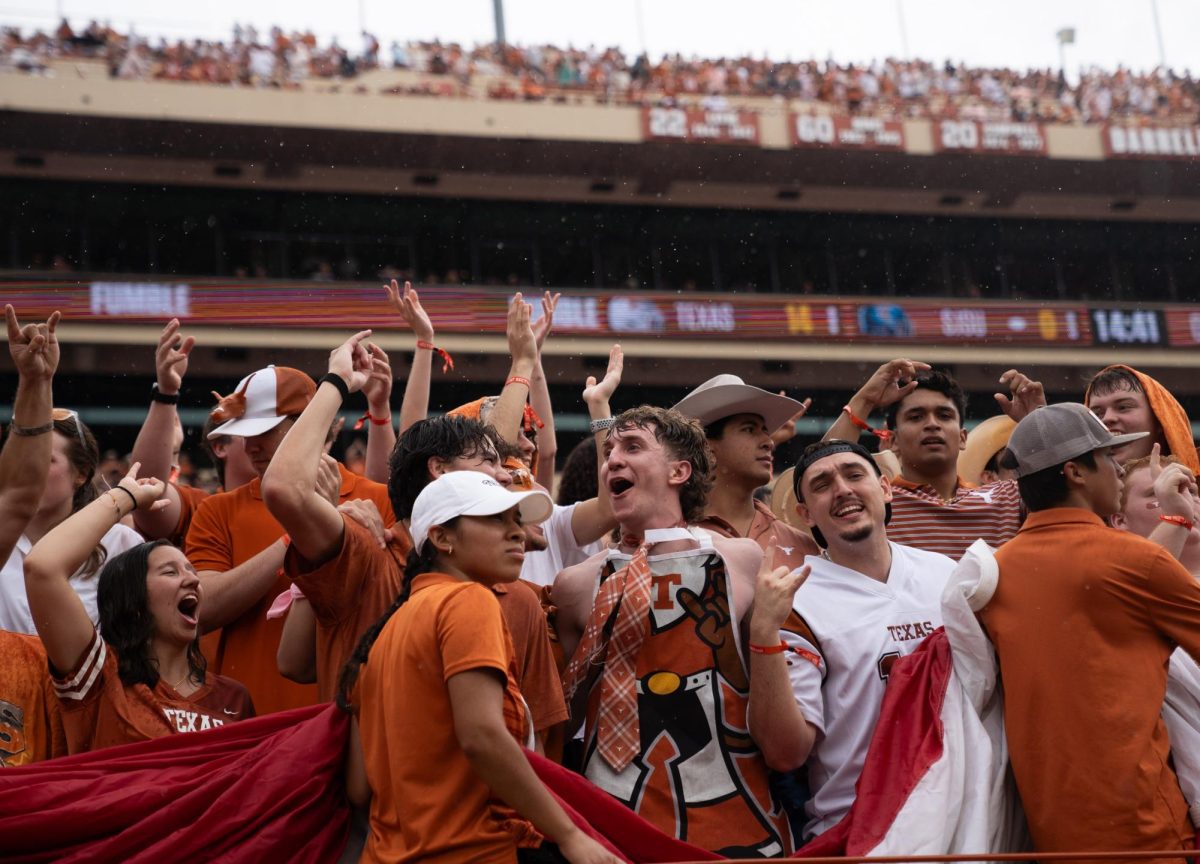
Way back in 2022, I was a freshman at Texas and a rookie to Texas Athletics. There I sat, on a chilly September dawn outside Darrell K Royal-Texas Memorial Stadium, waiting for what would become my greatest viewing experience in all my four years in Austin.
My first home game at DKR … against No. 1 Alabama.
Fast forward to my junior year, I’m sitting in the dining room of my kitchen, refreshing the Big Ticket page constantly at the Wednesday 6 p.m. release date for the Saturday game. I got online right on time, but alas, no ticket!
How did everything change so quickly, and when did it become so difficult to get a Big Ticket?
The numbers tell the story clearly. In 2021, a Big Ticket with football cost $175. By 2025, that price climbed to $250, a 43% increase in just four years.
Demand followed. Sales of the Big Ticket with football jumped from 16,890 in 2021 to 22,789 in 2025, a 35% surge. The biggest sales leap was between 2023 and 2024, the year Texas joined the Southeastern Conference and left the Big 12 as conference champions, with a 23% jump.
So, it’s clear the success of the Texas football program is equivalent to the demand for ticket sales — no surprise there. But then, what’s the point in buying the Big Ticket if it’s just for the chance to go? Texas Athletics needs to find a way to guarantee its students access to the seven or eight home games it offers each year. It is the divine right of a Longhorn student to watch their team play, and it’s time to open the upper bowl back up.
The solution is to have a sale go to the lower bowl first. Then, when those sell out, give out upper bowl tickets to another 4,000-5,000 people on the south end, diagonal to the student section. This brings up the total to roughly 16,000-17,000 students. With a stadium that can fit over 105,000 people, aiming for at least 15% of your fans to be students should be promoted.
Now, to be fair to Texas Athletics, this is a billion-dollar business. The SEC demands it. Recruiting, facilities, Name, Image and Likeness — none of it is cheap, and the Big Ticket is one of the ways the lights stay on. There will always be money to be made off 100,000 seats and a fan base that will pay whatever it takes to watch junior quarterback Arch Manning sling it. That’s just the reality of modern college athletics.
But here’s the thing — if you’re charging a student $250 for a ticket package, there has to be a near-guarantee of actually getting in. You can’t sell someone on the idea of being a Longhorn on game day and then make them sweat out on a refresh page while praying for stable Wi-Fi. The Big Ticket isn’t a lottery ticket. It’s supposed to be a seat.
I sat outside DKR at dawn for Alabama as a freshman because I didn’t know any better, and it was the best decision I ever made. Two years later, Georgia came into town for one of the biggest regular-season games in recent Texas history, and I couldn’t get a ticket. Not because I didn’t try, but because there wasn’t one for me.
That’s the difference between 2022 and 2024. And if Texas Athletics doesn’t fix it, a lot of freshmen who should be falling in love with this program the way I did are going to spend their Saturdays watching on a laptop instead.