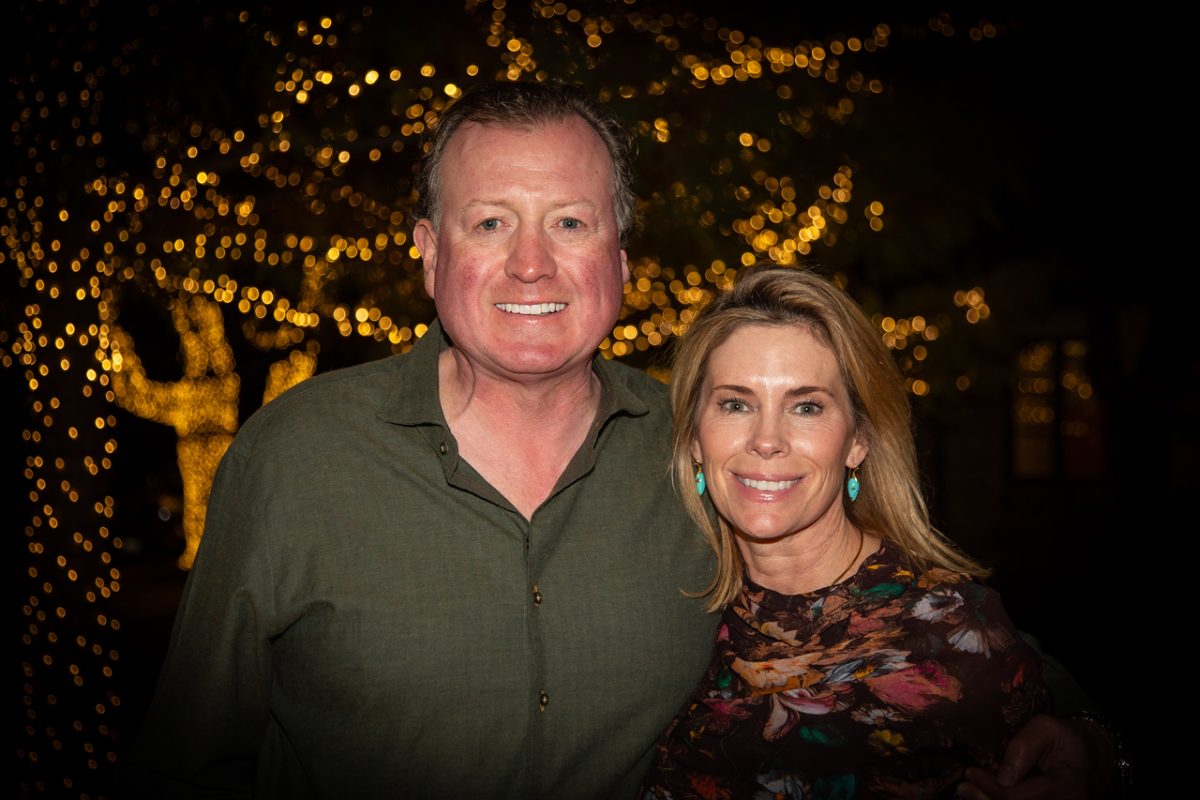
Michael and Susan Dell pledged to donate $750 million to the future UT Dell Medical Center, which is set to begin construction later this year. The couple made the announcement on Tuesday alongside UT President Jim Davis and Gov. Greg Abbott.
The Dell couple is the first to surpass $1 billion in lifetime donations to the University in its history, with the medical hospital aiming to raise $10 billion over the next ten years. The 27-acre center will be built north of the Main Campus, southwest of West Braker Lane and Mopac.
“At every step we’ve seen what a great difference this University makes possible,” Michael Dell said. “Better care, stronger outcomes, more families getting well closer to home and extraordinary physicians, researchers and builders choosing to come here and to build here.”
The 300-acre area of the Dell Medical Center and the J.J. Pickle Research Campus will be renamed to the UT Dell Campus for Advanced Research. The Dell Medical Center will offer a hospital with patient services and up to 500 beds.
The center is set to open in 2030, with expansion of specialty programs and facilities set to continue through 2032. Many cancer patients travel around the state or even the nation to receive top medical care, said Peter WT Pisters, the UT MD Anderson Cancer Center president, but this hub aims to provide Austin residents access to world-class healthcare.
“This moment matters to us because of how many people it will reach: students discovering what they’re capable of, people building careers that matter and patients getting the care they need, when and where they need it,” Susan Dell said.
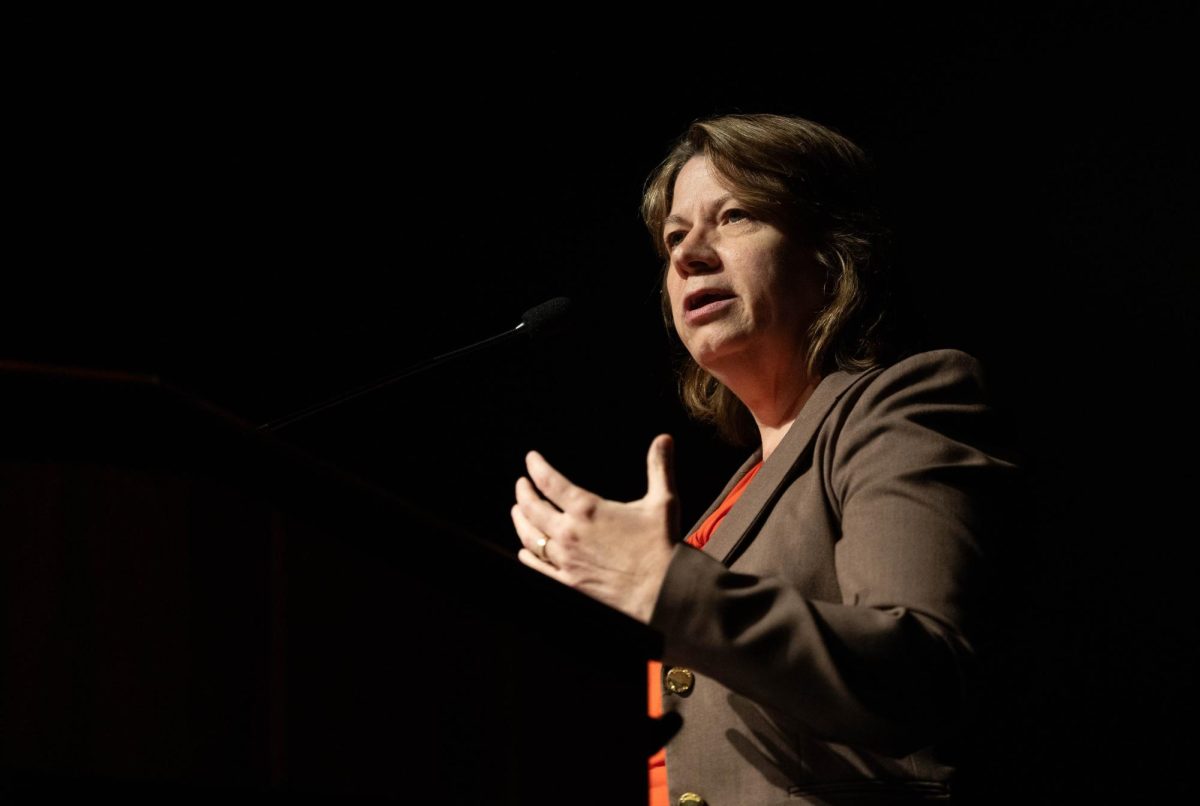
The center will also be “AI-native,” directly utilizing and embedding the technology into procedures and operations. It will be the first of its kind, implementing artificial intelligence “from the ground up,” said Claudia Lucchinetti, dean of the Dell Medical School.
“(AI-native) means identifying risk earlier, often before symptoms appear,” Lucchinetti said. “It means helping physicians make faster, better-informed decisions in real time. And it means ensuring that no patient falls through the cracks.”
The center will fully integrate the MD Anderson Cancer Center as a collaboration to provide patient care. The MD Anderson Center location in Austin was set to be built in the now-demolished Frank Erwin Center, but was announced to be changing to the proposed location of the Dell Medical Center in a February Board of Regents Meeting.
“We looked at all the demand and the need for expansion in the future,” said Kevin Eltife, the chairman of the UT System Board of Regents. “For patient care, for ease of access, in and out and for future expansion, it’s just common sense to be here.”
In addition to the medical center, the funding from the Dell couple will also go towards the undergraduate students’ scholarships and student success programs. Contributions will also go to the Texas Advanced Computing Center, which houses the leading supercomputing hub in the nation, according to its website.
“Susan and Michael Dell are Longhorns,” Davis said. “They have the will to act, and have transformed (the) lives of students and patients in Texas for years from that will.”
Some of the contributions are set to provide support for student housing as well. At the end of the announcement, Eltife announced the Dobie Twenty21 Residence Hall would be renamed to the Dell House. Michael Dell, a UT alumnus, had originally lived in the residence hall during his freshman year, selling computers out of his room before leaving to start his multi-billion-dollar company.
“My parents sent me to the University of Texas to become a doctor,” Michael Dell said. “That plan got derailed in room 2713 at Dobie Center. … But Susan and I never lost our connection to medicine and our belief that this University can do great things for this community.”