This year marks the 250th anniversary of our country’s founding. Over 1,000 people have experienced human rights violations in ICE custody, gas prices are up $1.12 since January from a war with Iran and we had the world’s first trillionaire. I can’t help but wonder, what would our forefathers think of all of this?
The story of our Founding Fathers and their brave fight against the British has been relayed to me countless times over the years. While their actions and beliefs at the time were revolutionary, the constant parroting of their story feels trite considering the fractured and disastrous state of our current American democracy.
Many politicians and citizens consider our forefathers’ beliefs, traditions and precedents to be of paramount importance in our government. They would rather maintain these political structures in the name of tradition than break them in the name of progress.
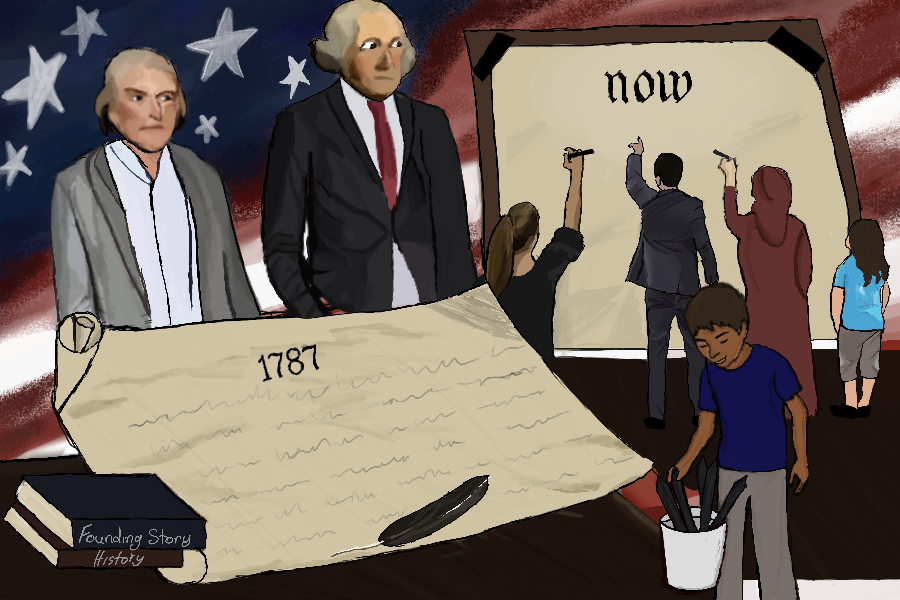
All of this traces back to the story the American people have often been sold about our forefathers: they created a flawed but indelible framework, wherein we all need only to be simple caretakers and slight adjusters as time moves on.
“The importance of the Declaration around the world has been the idea that tyrannized people can rise up,” UT Law professor Sanford Levinson said. “This is what has made the Declaration so inspiring to lots of people around the world … along with the abstract values.”
The true value of our founding fathers’ stories comes from their role as revolutionaries and stepping stones in the constant march toward progress. They didn’t perfect the government in some utopian system or even create a framework that Americans should work within forever — they served as one moment in a long lineage of revolutionary movements.
“We’re going through a revolution of ideals,” government senior Lukas Cardenas said. “That’s what (the founders) would have wanted, even if the exact ideals are not the same.”
As Americans, we must continue to fight tyranny in all places, even within our own government. That would be more in line with our Founding Fathers’ beliefs than blind worship of a system they didn’t intend to be infinite.
“People say, ‘Well, we have to keep (on) this particular path because James Madison said this,’” Levinson said. “But if you read Madison, you’ll read him saying, ‘Think for yourself.’”
Do not let the story of our Founding Fathers’ brave and progressive fight prevent you from doing something brave in the name of progress — even if that requires pushing against the structures and ideas they set up in the first place.
Making a change for the benefit of people in our country and across the world is worth the breaking of precedents set by dead men.
Hay is a radio-television-film senior from Bryan, Texas.