Over 70% of students believe their universities do a good job promoting free speech, although only about half rate their university’s response to protests highly, according to an April 8 study.
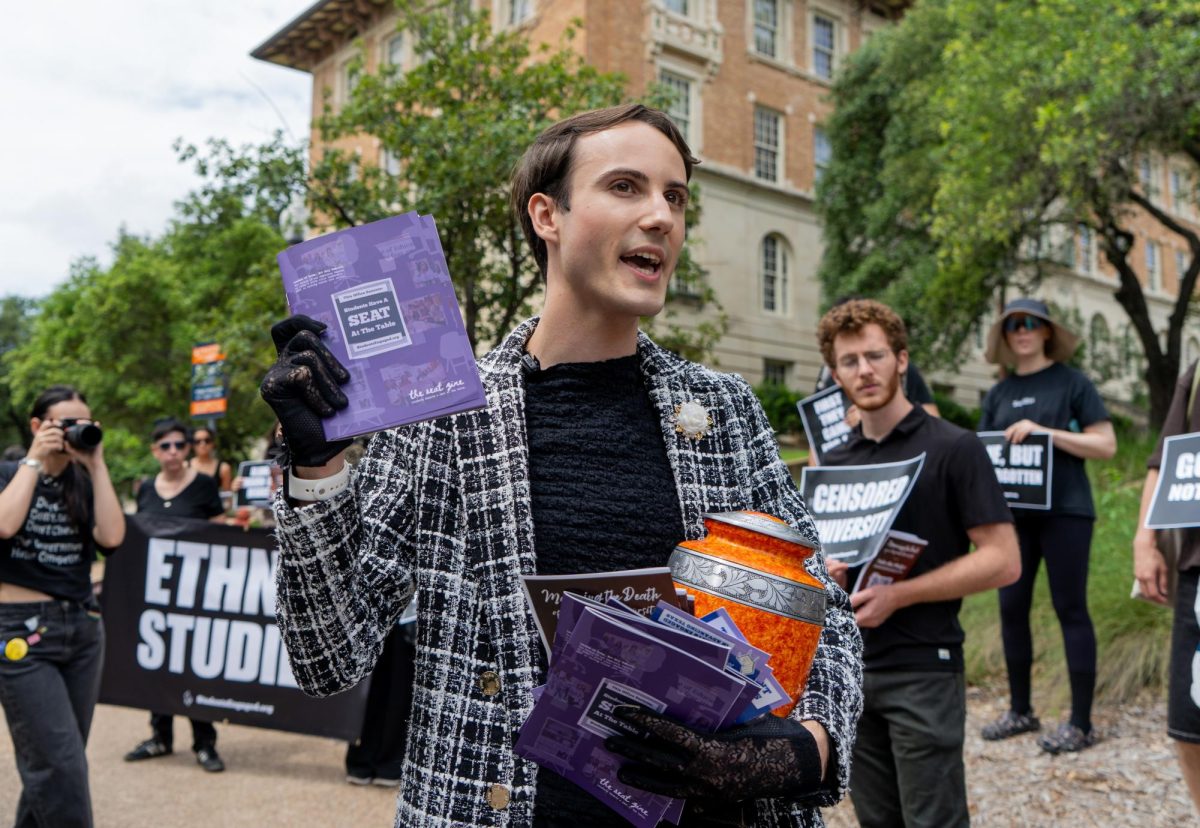
Pro-Palestine protests on April 24 and 29 last year drew hundreds of demonstrators on campus, and law enforcement arrested more than 100 protestors. Following the protests, the University made unannounced changes to its free speech policies over the summer, including implementing a definition of antisemitism required by a Texas executive order, giving University officials more discretion to determine policy violations and restricting the use of amplified sound. Now, some UT students hesitate to applaud the University’s behavior regarding free speech, while others are more concerned by judgment from their peers.
The University is within its right to restrict where, when and how free speech is practiced on campus, particularly in the case of protests that block parts of campus, said David Ryfe, director of the School of Journalism and Media. However, UT acted more “stringent” and “dramatic” in its policy enforcement last year compared to other universities, he said.
“Perhaps the University should have been a little more accommodating of students, even though they were infringing on the rights of others to some extent, in helping them understand the limits and also helping them, at the same time, promote their speech rights,” Ryfe said.
According to the study published by Gallup and Lumina Foundation, lower percentages of students report acceptance of pro-Palestine and pro-Israel views on campus, at 57% and 50%, respectively, compared to topics of gender, sexuality, race and religion. Seventy-three percent of students, including 78% of Democrats and 69% of Republicans, reported they can freely express themselves on campus. Only 5% said their university does a poor job of promoting free speech.
“I have had to keep quiet on a lot of issues because I knew that I would be putting myself in a place of jeopardy,” said Mariah Adeeko, a rhetoric and writing senior. “My response is different because I’ve had to actively suppress how I feel about a number of topics that the University has decided to take opposing stances on compared to my own.”
Lamar Qaddumi, a member of the Palestine Solidarity Committee, the organization that organized last April’s protests, said the University’s motto, ‘What starts here changes the world,’ promotes free speech and action, but when implementing free speech, UT suppresses pro-Palestinian and non-conservative views. Qaddumi said pro-Palestine demonstrators fear retaliation from the University and the government, particularly those who hold visas amid visa revocations across the nation. In January, President Donald Trump filed an executive order directing agencies to report anti-semitic activities of non-citizen students.
“A lot of people view UT as an open school, as a free-thinking school, but what happened last year on April 24 and the 29th and everything since then has proved that it is free speech for those who are in line with what UT believes as an institution and the political views that are held by those in the administration,” Qaddumi said.
Jasmine Rad, co-president of Longhorn Students for Israel, a student-led Israel advocacy organization, said the University does a good job promoting free speech and handling protests, although it should better communicate to students what behavior is and is not accepted. However, she said in some cases she feels uncomfortable expressing her pro-Israel views with students. Some pro-Israel students also fear anti-semitic activity if they speak out, she said.
“There are notions that if you are pro-Israel, you are also racist, or far right or so many things,” Rad said. “There’s been situations where … I don’t feel comfortable to (share my perspective) just because I feel like my character will be judged because there’s so many implications now.”