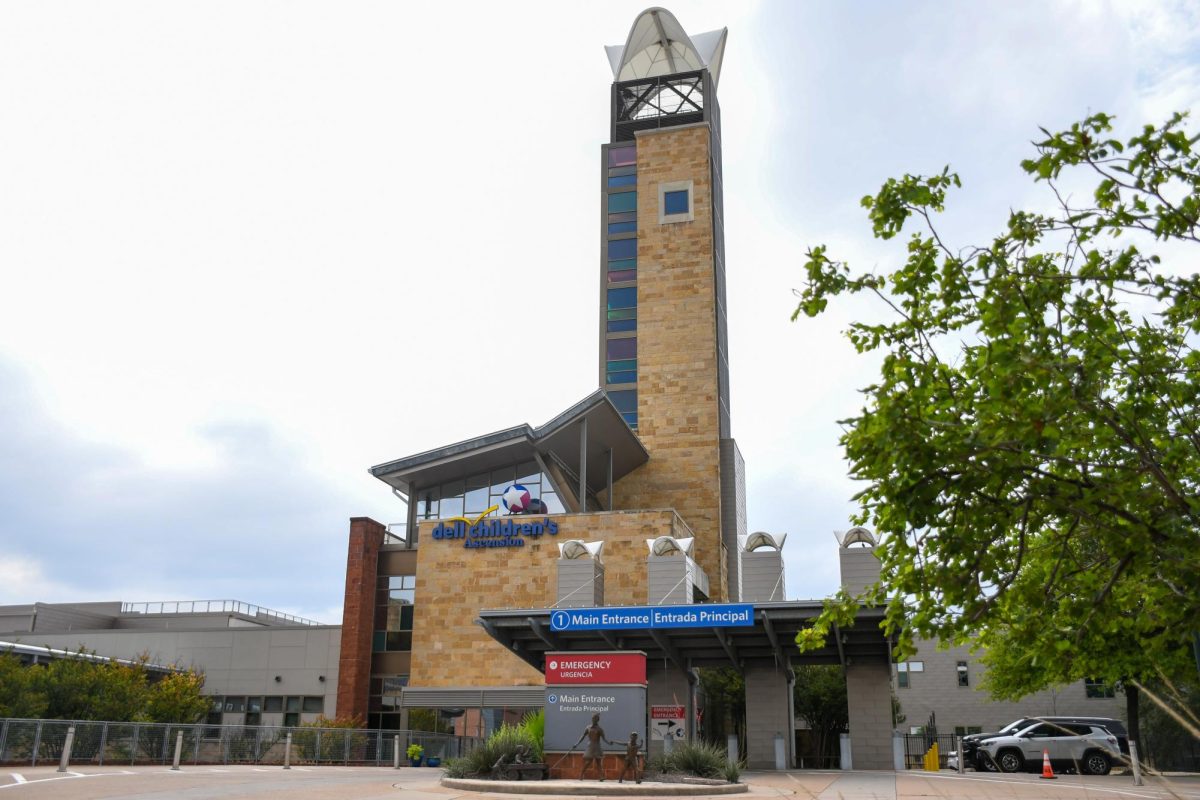
Two professors in the College of Education have received university funding to begin developing therapies to provide emotional care to families and care providers of children with brain tumors. The project, which was announced on June 8, will be a collaboration between professionals at Dell Children’s Medical Center and other educational psychologists across the country.
Around 5,000 children in the U.S. are diagnosed with brain tumors each year. For each child receiving treatment, their families, physicians, nurses, social workers and other people close to them are emotionally affected. Mark Eddy, professor of educational psychology and kinesiology and health education, and Erin Rodriguez, associate professor of educational psychology, are seeking to create interventions and programs to help these networks of people cope with diagnoses as well as stressors before, during and after treatments.
“Seeing this gap in programs that are offered to families with children with brain tumors, (we wanted) to address that gap and (felt) compelled to address places where there aren’t as many resources for families,” said Rodriguez, who has done previous work with pediatric chronic illness, such as asthma.
Eddy and Rodriguez received UT’s New Directions in Research seed funding, a grant from the Office of the Vice President for Research funded by University research investments. It provides faculty with up to $60,000 to enable data gathering for innovative research projects and to become eligible for larger external grants later on.
“Programs like New Directions enable faculty to explore innovative concepts and build the foundation for future breakthroughs and external funding success,” wrote Fernanda Leite, vice president for research.
Eddy said the study will begin with interviews of a sample of parents, caregivers and providers at Dell Children’s to assess areas where they feel they need help. The team will then develop the intervention program based on these areas as well as factors affecting families such as stage of treatment and the child’s age, he said.
“(The therapy) has to be something that the patients and families and the providers at the clinic all see a need for, and can access and are really excited about. … It has to be something that will actually benefit the patients and families,” Rodriguez said.
Other faculty and collaborators include Dr. Kevin Kumar at Dell Medical School, Dr. Carolyn Phillips, assistant professor at the UT School of Nursing, and Sabina Low, deputy director of the Sanford Harmony Institute at Arizona State University, whose child survived a pediatric brain tumor.
“Often times, the emotional well-being of the patient and caregivers is neglected, secondary to medical issues,” Low wrote in a statement. “We want to find ways to better support families and patients in ways that are tailored to their situation and resources; in ways that are accessible while being sensitive to their capacity for benefiting from supports.”