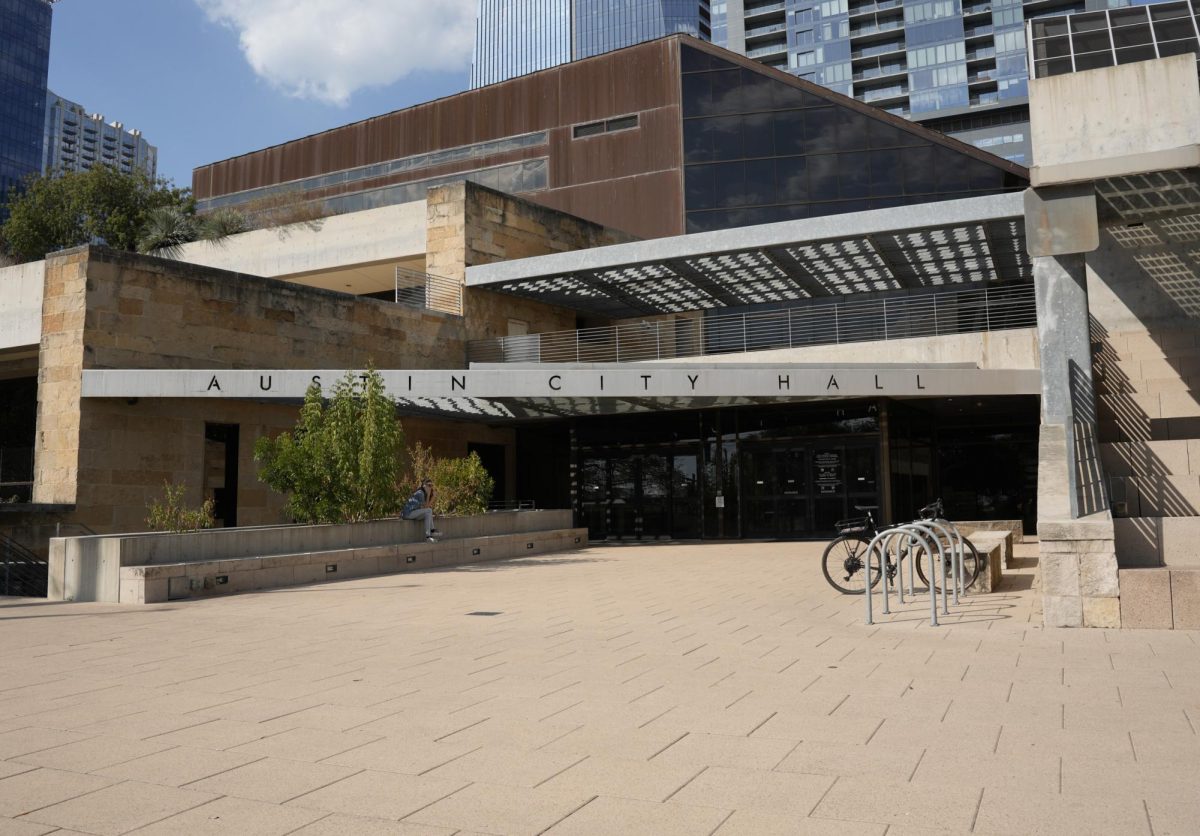
Amid increased community concerns around data privacy and the loss of civil liberties, the Austin City Council announced on June 3 that it would end the Austin Police Department’s automated license plate reader program by the end of the month.
A city audit found that despite increased “safeguards” implemented in 2023, automated license plate reader cameras, which compare scanned license plate data against criminal databases, could share information with outside agencies, including immigration enforcement.
APD deployed nearly 500 ALPR cameras by April 2025, including 40 fixed cameras around the city, according to the audit. In March, the department approved a contract with Axon Enterprise for more than 200 ALPR cameras mounted to the backs of APD vehicles. ALPR data resulted in 165 arrests, 133 prosecutions and one missing person found, according to the audit.
Sharon Strover, co-director of the UT Technology and Information Policy Institute, said it is often hard to interpret ALPR data when agencies like APD are dependent on external vendors for data collection, raising concerns of transparency with how people’s data is being used.
A city audit from May found that the department could improve public engagement despite APD maintaining “transparency portals,” which allow people to view data collected using both ALPR vendors.
“Transparency, which is one of our ethical principles, is what should be mandatory and what we should all be looking for,” Strover said. “It’s not the final step, but if you can’t access the data, the processes and the practices, you’re at a total loss.”
Such limitations were also reflected in the contract between APD and Flock Safety. Although anyone searching the ALPR system must document the reason for their search, council member Mike Siegel identified in a presentation that 18% of Flock searches do not meet this requirement.
“The technology is ahead of the policymakers,” Siegel said. “What Austin City Council needs to do is take a step back and ask for more of a global review of all of our tools and tactics that create these data sets that can be used by third parties.”
In 2023, the city council voted to instate a pilot ALPR program with increased “safeguards,” including a 7-day data retention policy and required periodic updates to city leaders. It also affirmed that unless connected to a criminal investigation, officers cannot use ALPR data to investigate people exercising First Amendment rights, such as attending public demonstrations, according to a city council memo.
A Flock Safety spokesperson wrote in an email that all searches conducted in the Flock system are saved in an “indefinitely available audit report.”
Assistant Police Chief Sheldon Askew said during a city council work session that the department’s use of ALPR was due in part to a 300-officer shortage.
“There are cases in this police department that I firmly believe would not have been solved had it not been for the use of the ALPR system,” Askew said.
Askew confirmed during the work session that APD shared data with external agencies a total of six times throughout the duration of the pilot.
Council member Zohaib Qadri said that improving public safety rests on building good relationships between communities and law enforcement.
“You could have done your homework, and you could have had the most sound ALPR policy,” Qadri said. “But even as the audit shows, there are points of weakness. If there’s a point of weakness, there’s too much to lose.”