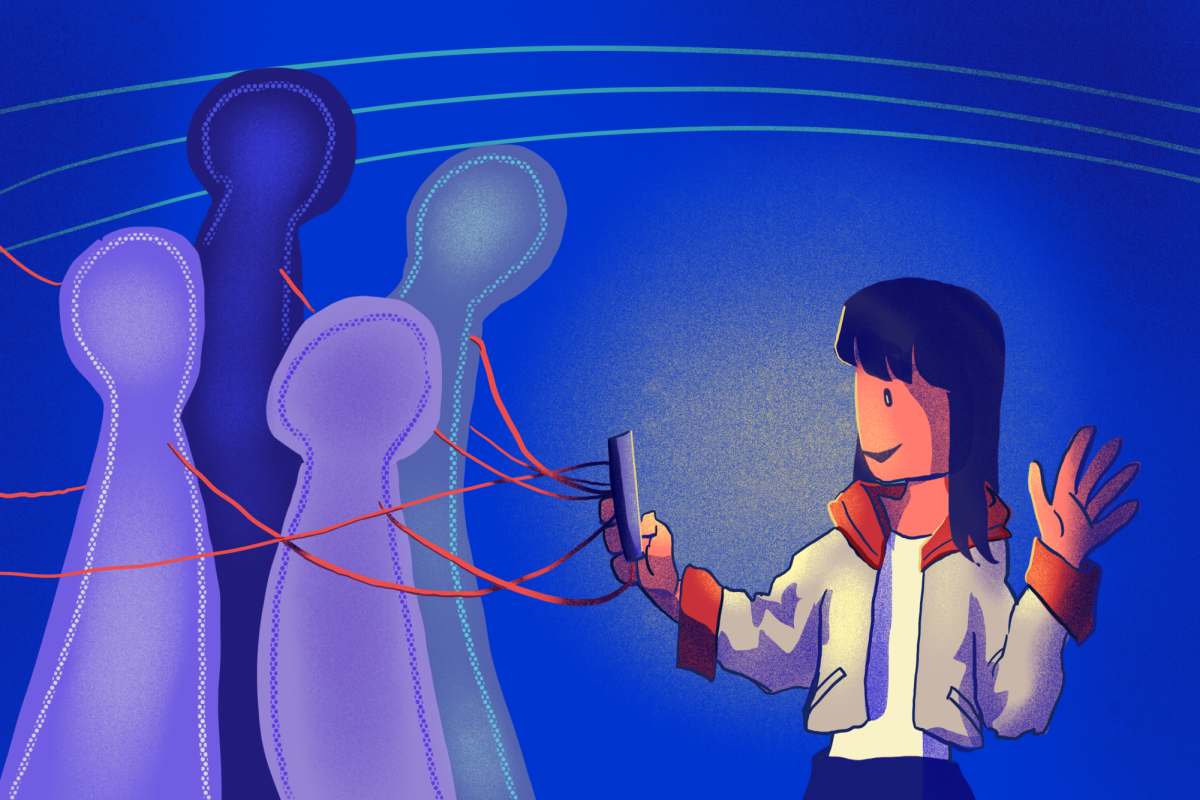
Some pressures don’t show up on a syllabus. They appear in late-night phone calls, the pause before a parent asks how classes are going or the quiet knowledge that your degree just isn’t for you. For some students, college is more than midterms and resumes. It’s a promise to carry forward a family dream, honor sacrifices and succeed without ever showing the weight it takes to do so.
That responsibility can be burdensome, but it’s often invisible.
When it stays invisible, it rarely gets addressed. Students might assume they’re the only ones feeling it, even as it shapes their life choices and drains their energy. This pressure can turn isolating, and the harder it is to talk about, the heavier it becomes.
Adrian Lancaster, founder and coordinator of the Longhorn SHARE Project, says that invisibility is a major challenge. The SHARE program offers peer-led spaces where students can support each other’s emotional well-being through open conversation and connection.
“You cannot see just by looking at somebody if they happen to be experiencing (parental) stress,” Lancaster said. “Until somebody breaks the ice and starts talking about it, you might think that you’re the only one who’s struggling.”
That silence can make a common experience feel rare. For many students, family expectations are layered with deep loyalty.
These expectations aren’t just about performance; they can be tied to gratitude, obligation and even a sense of debt. Speaking up can feel like you’re questioning the sacrifices that made your education possible.
“(Students) have been given the message , ‘You need to achieve because we made a lot of sacrifices to get you here.’ (so strongly from parents)” said Serena Messina, a licensed psychologist in interpersonal relationships and UT alumna.
Even when the intentions are loving, the effects can be damaging, making it harder for students to hear their own voice about what they truly want. The risks of carrying that pressure alone are real: burnout, depression and disconnection from one’s own goals.
“There’s a point where we just fall apart because it’s too much stress,” Messina said.
While programs like the Longhorn SHARE Project offer valuable peer support spaces, their topics depend on the facilitators each semester. Students facing family pressure might not always find a group tailored to their experience, leaving the issue unaddressed for a long time.
Creating a space to talk about that weight, especially with people who understand it, can make it easier to carry.
A student-led circle for this specific issue could help. A consistent space where peers talk about managing family pressure, especially in shared identity contexts, could normalize the experience and offer strategies that feel culturally relevant and empathetic. A clear and steady focus could ensure that this conversation doesn’t just happen occasionally, but remains a regular and visible part of campus life.
“You can be real about it and acknowledge that, ‘Yes, I’m doing my best and I’m still struggling,’” Lancaster said.
Even without an immediate solution, support can be transformative.
“If we have the right support group, we can deal with almost everything,” Messina said. “(If) we feel supported, then we feel like, ‘people are seeing and understanding me, even if we don’t have a solution yet.’”
Pressure from home doesn’t disappear when students walk onto campus. However, with spaces to talk about it, and people who relate, it doesn’t have to be carried alone.
Chitturi is a statistics and data science junior from Houston, Texas.