In theory, America is a nation of immigrants. In practice, platitudes like this mask a nation increasingly defined by hostility, exclusion and division.
As growing anti-immigrant sentiments find outlets ranging from legislative attacks to racist rhetoric, and efforts to end birthright citizenship gain uncomfortable traction in the courts, it’s becoming clear that a number of Americans fear how the country’s demographics are shifting. The effort to redefine citizenship is, in many ways, born from this fear.
The face of immigration in America has changed significantly over the last 100 years. While immigrants in the first half of the 20th century were largely white individuals from Northern and Western Europe, they have increasingly come from developing nations since 1965. Over 51 million immigrants lived in America in June 2025, making up 15.4% of the nation’s population. Today, the largest immigrant communities come from Mexico, India and China.
America is becoming less white. For many, that’s cause for significant concern.
Denise Gilman, clinical law professor and co-director of UT Law’s Immigration Clinic, argues that although it’s unlikely birthright citizenship will actually come to an end, the effort demonstrates a larger desire to redefine citizenship in America along racial lines.
“The motivations are pretty clearly related to a desire to maintain or grow an idea of a citizenry in the United States that is white European,” Gilman said. “That’s the underlying purpose and motivation for this endeavor to reinterpret the 14th Amendment: to exclude anybody who has had children in the United States in the last century.”
Immigrants, especially non-white immigrants hailing from developing nations, have long been accused of stealing opportunities from “real” Americans, placing burdens on the American economy and diluting America’s heritage. Rather than recognizing their contributions and asserting their belonging, political actors benefit from labeling non-white immigrants as criminals, job thieves and predators. In reality, immigrants and their children are embedded in the fabric of our country, from the functioning of our economy to our cultural identity. Citizenship, for these people, is more than the practical implications of an immigration status — it’s recognition of their identity and access to the fruits of their own labor.
Radio-television-film freshman Alexa Ximena Hernandez is the child of Mexican immigrants, and birthright citizenship has created life-changing opportunities for her family. She argues that it’s important to recognize that immigrants make their communities and country better, and their children deserve the same opportunities as anyone else.
“Nowadays, citizenship for many people is a piece of paper and documentation, which is unfair,” Hernandez said. “Many people do give back and they don’t have that documentation, and they do really help this country become better. But since they don’t have documentation, they’re not considered citizens.”
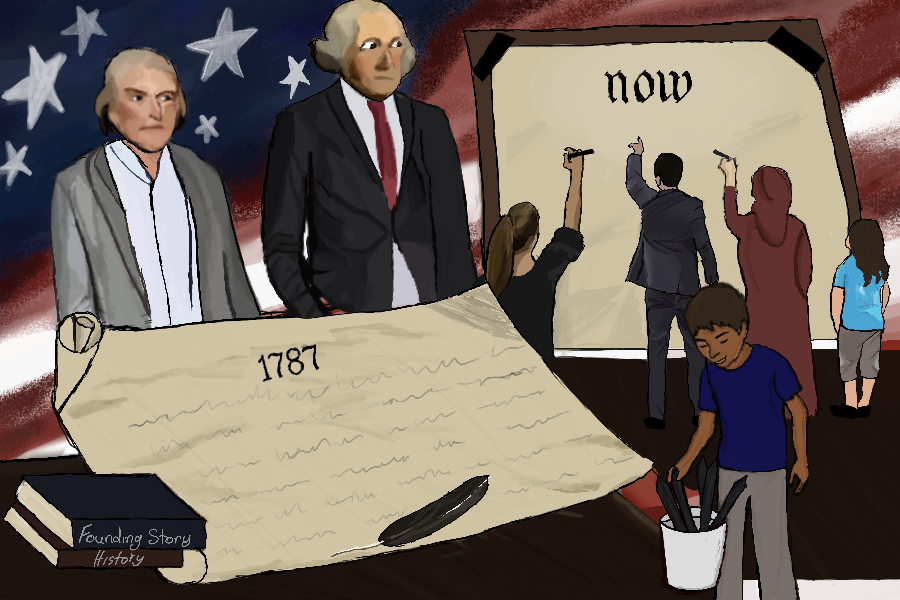
Supposedly, America was founded on the protection of idealistic values like life, liberty and the pursuit of happiness. The accuracy of this claim has been questionable historically, but the way our country treats immigrants today seems distinctly un-American. Our recitation of “liberty and justice for all” never seems to truly mean all, but that doesn’t mean it shouldn’t, or can’t. Our attempts at exclusion directly contradict the values we claim to hold.
“We are in a real existential crisis about who we are as an American people,” Gilman said. “That itself is a problem, that there is such extreme division as to how we integrate or don’t integrate immigrants. When you have part of the national community welcoming immigrants and recognizing the need for integration, and another part of that same national community rejecting immigrants, it creates a real breach in the national identity.”
“American” has never been synonymous with white, no matter how badly some may want it to be, and it’s essential that we remember that. In a country that’s increasingly hostile toward immigrants, recognizing just how much they belong can be transformative. The vast majority of us come from families who immigrated here at some point in history, both “legally” and “illegally.” Laws surrounding immigration and access to legal status have long been disproportionately aimed at excluding the non-white. Questioning recent immigrants and their children’s entitlement to American identity is rooted in racial prejudice, not legitimate concern.
There are millions of individuals from immigrant backgrounds who are vital to our culture, economy and communities. They’re as “American” as the rest of us. Someone’s perceived foreign identity doesn’t change their ability to love their country; the most American thing we can do is love them back.
Tuscano is a government junior from Round Rock, Texas.