Recent policy changes will impact the UT community with implications for academic freedom, university governance, student immigration status and college affordability. The Texan broke down these major federal, state and institutional policy actions along with what students can anticipate for their implementation.
Academic freedom
Texas Senate Bill 37 requires a review of the core curriculum and “low enrollment” degree minors and certificate programs. It also increases state oversight on the formation and activities of the faculty council, an elected body of professors who advise University administration about policy and curriculum.
The status of the current UT Faculty Council is unclear until the University of Texas System Board of Regents either approves new rules to restructure the council under SB 37 or dissolves it entirely by Sept. 1. The University has until Jan. 1 to implement all other components of the bill.
“We will adopt the requirements of SB 37 honestly, decisively and positively,” interim President Jim Davis said in a May announcement following the bill’s passage in the Texas House of Representatives. “Our implementation will maximize student success, promote a diversity of viewpoints and academic freedom, uphold our core mission of education and research and align our public university with the public’s expectations.”
Any student, faculty or staff member at UT may submit a written complaint to a new Office of the Ombudsman if they have reason to believe the University “failed to comply” with the provisions of the law. The office will be established within the Texas Higher Education Coordinating Board and serve as the “intermediary” between the legislature, institutions and the public.
Pauline Strong, president of the UT chapter of the American Association of University Professors, said concerns about the potential for overcompliance are apparent in the creation of the office because it is unclear what behaviors or statements could be subject to investigation. Anticipating the effects of implementation, Strong said it is important for students to play a role in shared governance and work with faculty to provide input on decisions impacting curriculum.
“Faculty and students have a common interest in really making sure that freedom of expression thrives at the University,” Strong said. “Administrators do as well. Everybody has a shared interest in quality education, and that requires free expression.”
Free speech
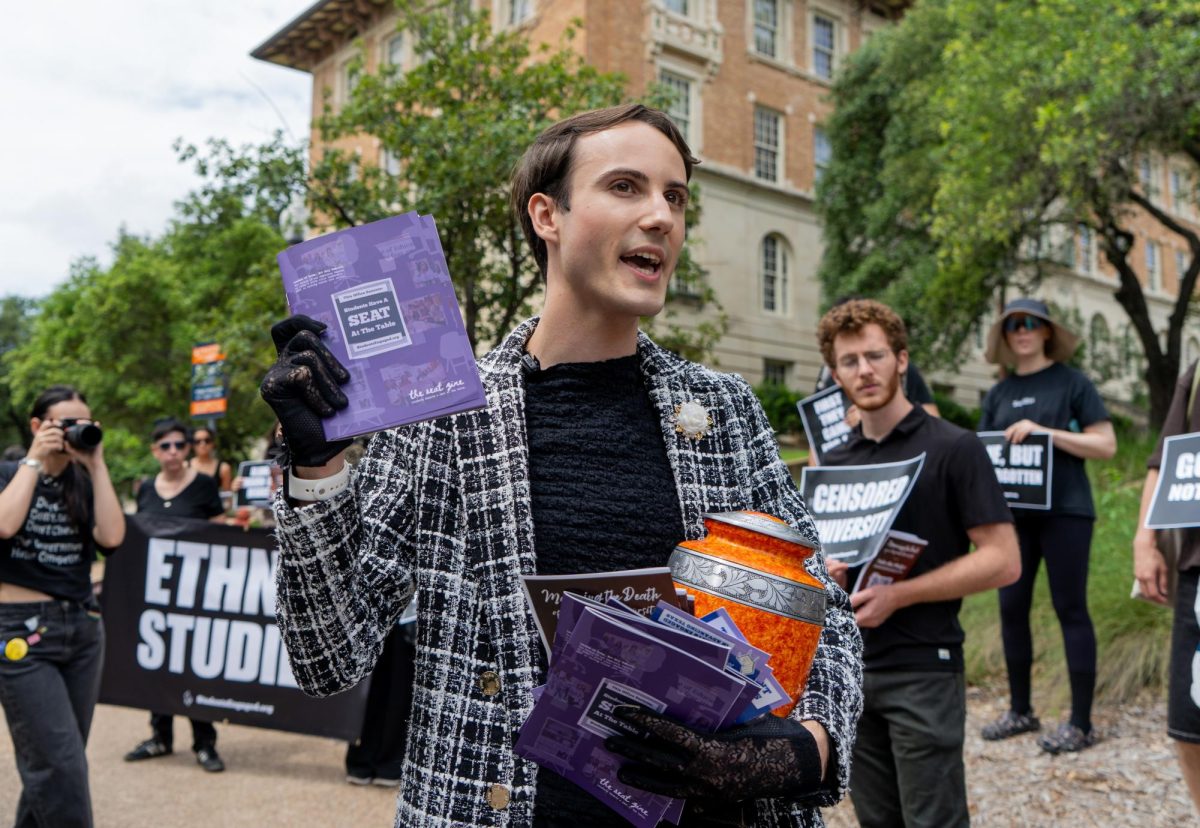
Texas Senate Bill 2972, also known as the Campus Protection Act, narrows the definition of the traditional “public forum” and grants university leaders discretion to decide which outdoor spaces on campus can be used for First Amendment activities. The bill, effective Sept. 1, prohibits UT students and employees from participating in “expressive activities” from 10 p.m. to 8 a.m. It also bans encampments and face masks used to conceal a protester’s identity.
Caro Achar, engagement coordinator for the American Civil Liberties Union of Texas, said the bill raises concerns about intended and unintended consequences of enforcement because it does not define what can be considered as “expressive activity.”
“You have a law that is written in a way that will almost require discriminatory enforcement or such intense neutral enforcement that you are still silencing huge swaths of your population,” Achar said.
College affordability
Undergraduate students who are Texas residents and whose families have an adjusted gross income of $100,000 or less will qualify for free tuition beginning this semester, following a November announcement by the UT System Board of Regents to expand on two endowments known as the Promise Plus program.
“Across UT institutions, enrollment is growing, and student debt is declining, indicating success in both access and affordability,” said UT System Chancellor James Millikin in a November statement. “That’s a rare trend in American higher education, and I’m proud the UT System is in a position to be a leader.”
Immigration
Following a January directive overturning protections previously granted to schools, healthcare facilities and places of worship, UT is no longer exempt from immigration enforcement activities that could take place on campus.
For international students who are applying for a visa, an expanded vetting policy by the U.S. Department of State now requires the public disclosure of all social media profiles, in addition to screening for “antisemitic activity,” according to a June policy announcement. Over 170 international students across the UT System experienced a visa revocation or change in their immigration status in April. At UT, a total of 17 student records in the Student and Exchange Visitor Information System database were terminated and later reactivated between March 30 and June 3, according to records obtained from the University.
In June, a federal judge struck down the Texas Dream Act, which allowed non-citizen students, including undocumented students, to pay in-state tuition rates and access state-funded financial aid programs. By July, the University began requesting evidence of “lawful presence” from approximately 1,150 students who previously qualified for these benefits to determine whether they would remain eligible beginning in the fall, according to public records obtained by the Texan.
Multiple public interest groups are seeking to intervene in the lawsuit to restore the Texas Dream Act, such as the Texas Civil Rights Project, the ACLU of Texas and Austin Community College. They are currently waiting on a decision from the Texas Northern District Court after requesting an expedited review.
“The judge is not obligated to rule by a certain date,” said Kassi Gonzalez, a staff attorney with the Texas Civil Rights Project. “We can again emphasize the importance of this case and that we want a ruling on the motion to intervene before school starts — before individuals are needing to pay.”