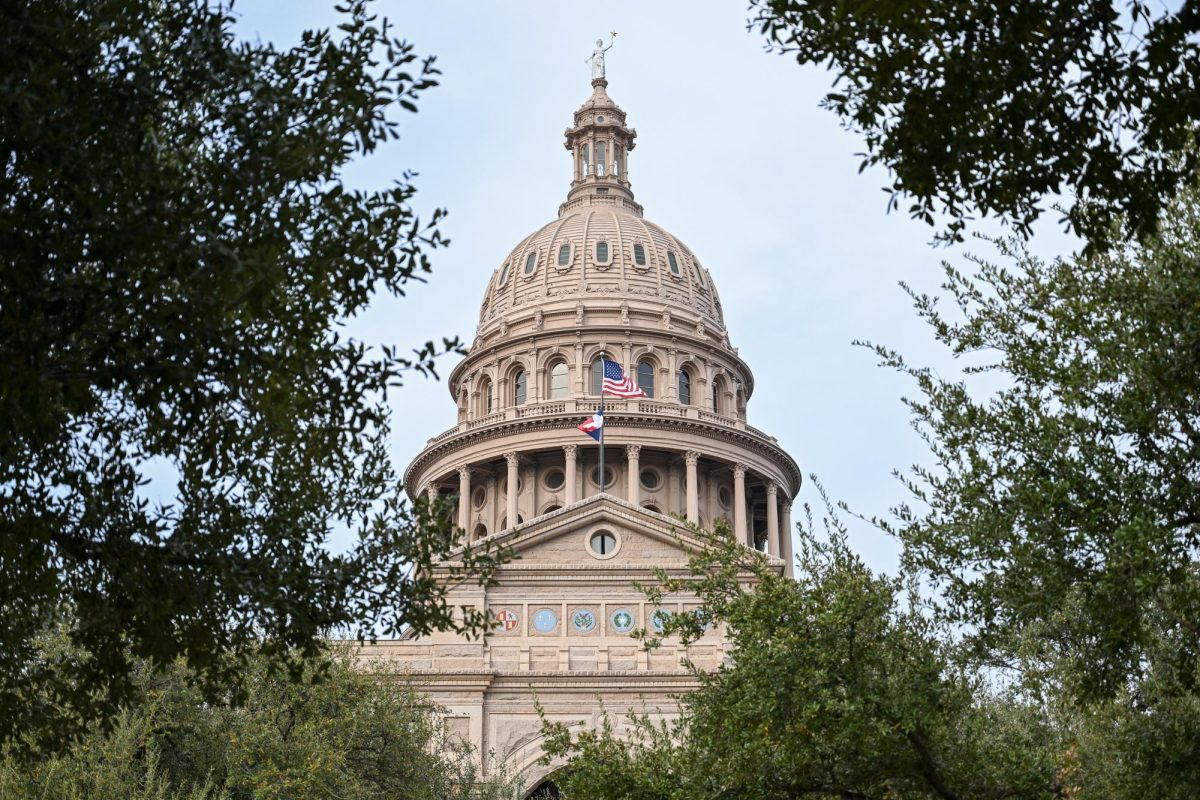
On June 2, the Texas Legislature sent Texas Senate Bill 37 to Gov. Greg Abbott’s desk, concluding months of debate between university faculty statewide and state lawmakers over the future of higher education in the state. The bill expands state oversight of public universities and reduces the authority held by faculty councils, bodies made up of professors who advise the administration on curriculum.
After multiple revisions, this version of SB 37 is expected to be the final version. Here’s what you need to know.
Will SB 37 become law?
The bill is now on Gov. Greg Abbott’s desk, where he has until June 22 to either sign it into law or veto it. Joshua Blank, research director of the Texas Politics Project, said a veto is unlikely.
“(SB 37) just puts more control of the system into the governor’s hands,” Blank said. “Why would the governor veto that?”
While the bill’s fate rests with Abbott, interim President Jim Davis said the University would comply with the measure last month when William Inboden was announced to the UT community as the sole finalist for executive vice president and provost.
“We will adopt the requirements of SB 37 honestly, decisively and positively,” Davis said. “Our implementation will maximize student success, promote a diversity of viewpoints and academic freedom, uphold our core mission of education and research and align our public university with the public’s expectations.”
What will change at UT?
If signed into law, UT must implement SB 37 by Sept. 1 or face investigations and potential freezes on state funding, which makes up approximately 10% of its budget.
One provision requires the University president to identify “low-enrollment” degree minors and certificate programs every five years for potential consolidation or elimination.
“(SB 37) ensures degrees earned in Texas are of value and prepares students for success, both in life and in the workforce,” Republican State Sen. Matt Shaheen said when introducing the bill to the Texas House of Representatives. “This proposed legislation makes clear what Texas students, parents and taxpayers should expect when educating our future workforce.”
UT would need to reduce its nearly 70-member Faculty Council size or request permission from the UT System Board of Regents, as the bill also caps the number of faculty council members at 60. The bill also grants the president the power to remove members with the recommendation of the provost and appoint members from each college. Previously, the University colleges elected members to represent them in the Faculty Council, according to the council’s bylaws.
According to a news release from the Texas Conference of the American Association of University Professors, the bill could make Texas colleges “less attractive” to future faculty.
University spokesperson Mike Rosen declined to comment because the University does not comment on pending legislation.
What won’t change?
SB 37 will not alter the content of Texas university curricula.
The final version removes language that would have banned teaching “identity politics” or theories about systemic racism and sexism in U.S. institutions.
Brian Evans, president of the Texas Conference of AAUP, said in a news release that the removal of the provision was a small victory, but it would impact academic freedom.
“Even with that small victory, SB 37 will put what we teach in the hands of political appointees rather than in the hands of faculty who have studied these subjects and understand their nuances,” Evans said.