Interim President Jim Davis
Interim President Jim Davis has been a resident of Austin since 1974, according to the Office of the President. After serving with distinction as a cryptologist in the U.S. Navy, he attended UT and graduated with a Bachelor of Arts in History with highest honors in 1996. Later in 1999, Davis earned his law degree from Harvard Law School and served as a law clerk at the Supreme Court of Texas. He returned to Austin and served as a Texas Deputy Attorney General, where he led the civil litigation division and advised the leadership of state agencies, boards and commissions, including the University of Texas System.
Starting in 2018, Davis worked as Senior Vice President and Chief Operating Officer and as Vice President for Legal Affairs and Business Strategies at the University. In those roles, Davis led many transformational projects, such as infrastructure planning for the redevelopment of Interstate 35 adjacent to campus, the Tower restoration and new undergraduate and graduate housing to address affordability challenges. Davis’ earliest memories of UT begin when his father joined UT’s faculty as the Chair of Radio, Television and Film.
This February, Davis was named interim president by the UT System Board of Regents and later nominated as the sole presidential candidate by the UT System Board of Regents.
William Inboden, Executive Vice President and Provost
William Inboden was named Executive Vice President and Provost in July and began serving in the position on Aug. 1, according to the Provost’s Office. As UT’s chief academic officer, he leads the school’s academic mission, covering programs and initiatives across the University’s 19 colleges and schools that serve more than 52,000 students and support more than 3,000 teaching and research faculty.
He received his bachelor’s degree in history with honors from Stanford University and his master’s and doctorate in the same subject from Yale University. Recently, Inboden served as director of the Alexander Hamilton School for Classical and Civic Education at the University of Florida. Prior to that, Inboden spent 13 years at UT and worked as the founding executive director of the Clements Center for National Security, among other roles.
He has served on the National Security Council at the White House, at the Department of State and as a staff member in both the U.S. Senate and House of Representatives. Inboden is the recipient of multiple research, teaching and leadership awards, such as “Lecturer of the Year” at the Lyndon B. Johnson School of Public Affairs.
Samuel Poloyac, Dean of the College of Pharmacy
In high school, Samuel Poloyac was interested in two things: health and chemistry. These interests fused together after finding the College of Pharmacy. What drew him to Texas was the chance to lead important parts of the pharmacy. For Poloyac, the best part about being the dean here is welcoming the students for the White Coat ceremony when they are welcomed to the profession.
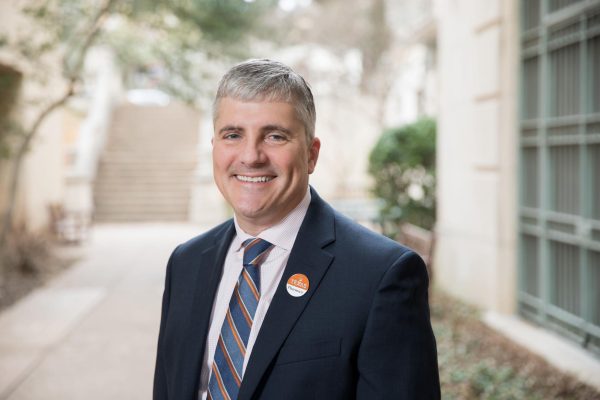
This fall, the school is welcoming a new class of students into the Pharm.D. program and adding six new faculty members. Last year, the school went through the process of becoming re-accredited, which happens every eight years. Poloyac said now they can really get excited as they launch off into a new year.
“When you find your purpose and you find your why, you find your lifelong learning opportunities,” Poloyac said. “It creates career success, so we want to arm our students with the personal and professional skills, leadership and management skills, communication skills and really that purpose behind what they do, of the impact they want to make in their career.”
Claudia F. Lucchinetti, Dean of Dell Medical School
Claudia F. Lucchinetti oversees Dell Medical School’s work in education, research and clinical care, according to the Dell Medical School website. Lucchinetti is a neurologist who has specialized in neuroimmunology and experimental neuropathy. Prior to coming to Texas, Lucchinneti was the dean of clinical and translational science at the Mayo Clinic in Minnesota, where she completed a neurology residency and a fellowship in neuroimmunology after earning her medical degree from Rush Medical College in Chicago.
Her work has been recognized with research grant funding from the National Multiple Sclerosis Society, the National Institute of Neurological Disorders and Stroke, the National Center for Advancing Translational Sciences and the U.S. Department of Defense. She conducted a landmark study that described four patterns of tissue damage in early multiple sclerosis, which suggested that multiple sclerosis lesions form differently in patient subgroups.
Robert M. “Bobby” Chesney, Dean of the School of Law
Growing up in the 1980s, Robert Chesney was fascinated by the Cold War. In 1990s law school, the focus of U.S. national security was shifting from Great Power competition to topics like rogue states, nuclear proliferation and terrorism, which grabbed attention at that time from a legal perspective, as it gave rise to many important but unsolved legal questions. Chesney practiced in New York City, but got a tenure-track offer from Wake Forest University shortly after the Sept. 11 attacks.
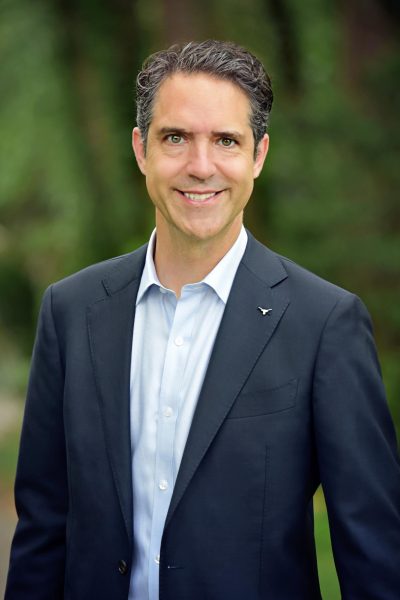
His scholarly career publications covered topics ranging from detention and drones to espionage and covert action. In 2008, the UT School of Law decided to bring in a visiting professor, which was Chesney’s dream job, as both he and his wife are from San Antonio, Texas. Chesney said that not only is Texas Law the best place to be a law student, but the best place to be a dean as well.
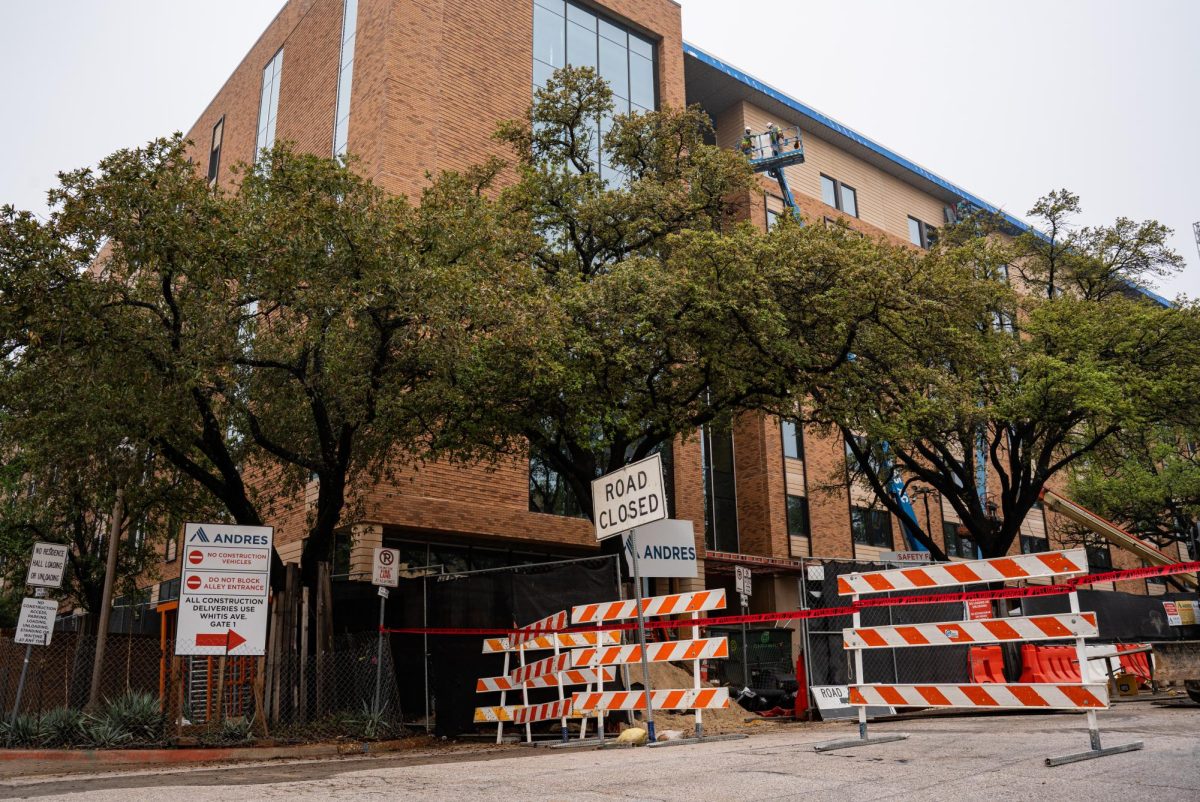
This fall, Chesney is excited about the launch of the new AI Innovation and Law Program and some major milestones for a new residence hall across from Dean Keaton Street. The school intends to be recognized as the very best of what a public flagship law school can and should be, with its employment outcomes, student culture, world-class faculty and affordability.
“We want our graduates to emerge with razor-sharp analytical skills…a sophisticated understanding of the complexity of law and legal institutions (and the forces that shape them), a deep appreciation for the value of engaging civilly and constructively in the face of disagreement and robust communication and research capabilities,” Chesney said in a statement. “We aim for them to develop deep and abiding friendships and professional ties along the way, for all of these things will carry forward with them across the decades that follow.”
Roger T. Bonnecaze, Dean of the Cockrell School of Engineering
With two parents in the field, Roger Bonnecaze jokingly said he was genetically engineered to be a chemical engineer. In high school, he liked physics, math and chemistry, and as he started studying chemical engineering, he decided he wanted to learn more. In graduate school, he wanted to be a faculty member because it is a combination of teaching students and the opportunity to do research at the cutting edge of the field. As dean, he enjoys helping faculty, staff and students succeed and creating programs that provide general support for college members.
This fall, the school is building an Engineering Discovery Building, which will be the new home for chemical and petroleum engineering students. The school will also renovate the seventh and eighth floors of Ernest Cockrell Jr. Hall, where environmental engineering faculty and graduate students conduct their research. The school is launching the first cohort for the master’s degree in semiconductor science and engineering as well.
“There are a lot of important, challenging problems facing society, and engineers are well equipped to help address many of those challenges,” Bonnecaze said. “I want our students to be very good at picking important, impactful problems and then going to solve them.”
Charles R. Martinez Jr., Dean of the College of Education
Charles Martinez spent his career as a clinical psychologist focusing on how to support the healthy development of children, families and communities around education and schools. Since then, he has held almost every role there can be in higher education. He said one of the joys of his job is that he gets to see up close what the school is doing to change the world. He sees students every day through office hours, seeing the difference his faculty’s research and teaching make each day.
Last year, the school celebrated and looked back on five years of its strategic vision called “Reimagine Education.” After six years, he is the longest-serving dean at UT and has seen many changes. Martinez said the school is unique because it trains mental health professionals, bilingual educators, school leaders, physical therapists and public health professionals. Martinez said he looks forward to continuing that work and partnering with communities across the state.
“It is a really challenging time in education, both in higher ed and in K-12 education,” Martinez said. “This complex landscape in our country is playing out in education spaces in particular ways. So, it’s challenging, but the work we do has never felt more important.”
Ramón H. Rivera-Servera, Dean of the College of Fine Arts
Ramón Rivera-Servera grew up a science kid. At the University of Rochester, he took a course with an American cultural studies historian about the history of medical imaging and the ways technology has reshaped both scientific knowledge of bodies and the cultural, social, political and economic world that evolved around those new images. In his work, he began to focus on how community dynamics assemble and the social rituals that art upholds.
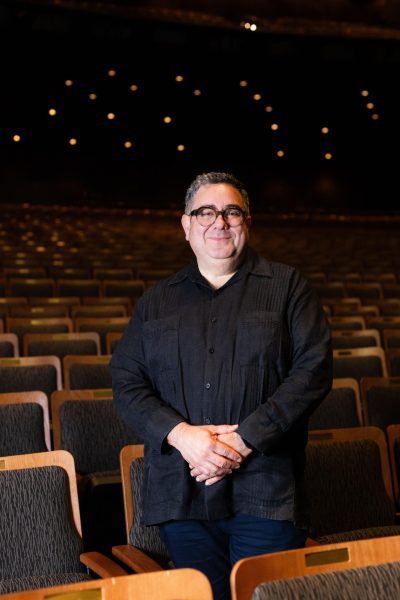
As dean, his role has moved from the specificity of his research to a broad embrace of different forms of expressions, histories and contexts that his faculty, students and staff represent. This fall, the school will launch the programming of the newly reconfigured career services office with significant support from the Provost’s Office, called Life Design, to think about how artists enter the workforce and how they sustain their creative practice while also being strategic.
“I also want them to be leaving my college with a real awareness for what it means to be an artistic citizen in this world, which is somebody that acknowledges the value of the arts for our common good and that invests and participates in continuing that effort, know that this is core to how we continue to be a community that cares for each other and that continues to think itself moving forward in unison and collaboration and in generous regard for both our differences and our commonalities,” Rivera-Servera said.
David Sosa, Interim Dean of the College of Liberal Arts
David Sosa was once asked what exactly luck is by his father, a professor of philosophy. Sosa said he could not give a satisfactory answer, but that it showed him how little he understood. Contending with philosophical questions like that was formative and led to Sosa serving as chair of philosophy. Now, he is excited about the opportunity to realize and enact a vision of the values implicit in the study of liberal arts.
Sosa said he wants the college to be more widely appreciated as part of UT’s bedrock and as a place that resonates deeply with the curiosity so many students bring to campus. This fall, the college will begin its annual recruitment of distinguished new faculty to join the school. Sosa is still unsure what exactly luck is, but even mundane circumstances or issues continue to raise philosophical questions.
“When we’re encouraged to interpret and get perspective on something, when we learn or use languages, when we must argue for or defend beliefs we hold or claims we make or positions we take — about our own behaviors, about past or present social circumstances or about how to arrange ourselves socio-politically — when we do these things we’re doing something special and valuable,” Sosa said in a statement. “What I hope students take away from their time in the College of Liberal Arts is a refined ability to do all of that and a greater respect for all of it and a new understanding and even wisdom that comes with it.”
David Vanden Bout, Dean of the College of Natural Sciences
David Vanden Bout earned his Bachelor of Science in Chemistry from Duke University in 1990, later earning a doctorate in chemical physics in 1995 from UT, according to the College of Natural Sciences website. He then worked as a National Science Foundation postdoctoral fellow at the University of Minnesota. He returned to UT in 1997 as an assistant professor. Vanden Bout is the recipient of multiple research, teaching and leadership awards, including an Alfred P. Sloan Research fellowship, a Cottrell Scholar award, a Research Innovation Award and more. In 2025, Vanden Bout served as the interim provost and executive vice president of the University.
Claudia Mora, Dean of the Jackson School of Geosciences
Just before she entered college, Claudia Mora’s sister introduced her to geology. She had thought she would be a writer, but after taking geology as a laboratory science credit, Mora has not looked back. Mora has worked at Los Alamos National Laboratory, using chemistry with foreign nuclear forensics and non-proliferation. Now, as dean, Mora does not conduct her research; she makes the plan.
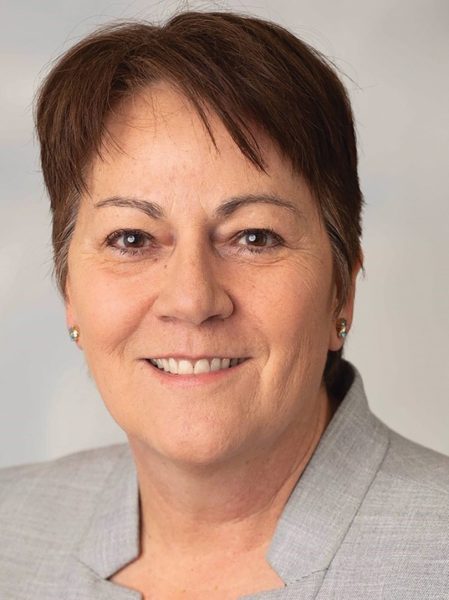
This fall, the school will launch some developments for the environmental science degree program. The school is also developing an internship program for students to have at Texas water-related agencies.
“I’m still excited by the breadth and challenges in geoscience the Jackson school works on — everything from energy science to climate science, water science, earthquake science, environmental science — and so I mean, we work on everything,” Mora said. “The discoveries that go on every day as I learn are exciting to me. I have a lot of science happening all around me, and I get excited about doing what’s necessary to facilitate that science, to fund that science, to connect students with the science so they have their own opportunities to learn and to find what excites them.”
J.R. DeShazo, Dean of the LBJ School of Public Affairs
J.R. DeShazo said public policy is about helping communities in the nation solve problems that cannot be solved by individuals and businesses alone. Public policy often involves a focus on national security, health care, education or child and family policy. DeShazo said he enjoys seeing the incredible impact alumni have made on their communities at every level of government, with alumni being the governors of states, ambassadors, state legislators, running federal agencies and those who have served their cities, towns and counties as civil servants.
This fall, the school will begin accepting applications on Sept. 1 for the master of national security and will start the Bachelor of Arts in Public Affairs with its first freshman class.
“The LBJ School trains the next generation of public leaders, and we try and give those leaders really practical skills in economic analysis, political analysis (and) data analysis, but also a wide range of leadership skills that involve public speaking and negotiation skills and skills around civics,” DeShazo said. “We really want to give our students the know-how to change the world and specifically the know-how to make government work for their communities.”
Lillian Mills, Dean of the McCombs School of Business
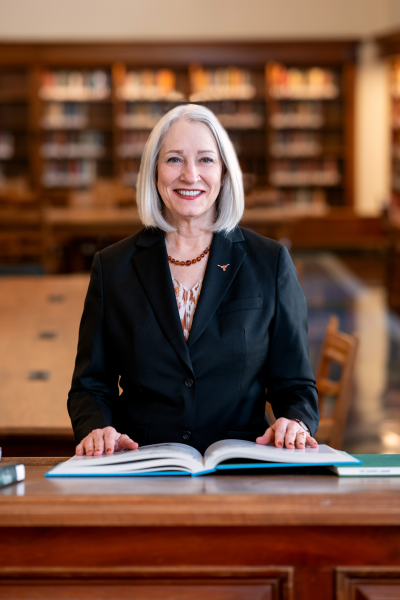
Lillian Mills was drawn to accounting and taxation because both words and numbers matter in tax policy. She consulted with the Internal Revenue Service and Treasury Department for 20 years, though she said coming from a family of professors made being a scholar and educator the family business. What’s different about her job as dean, compared with being a professor or department chair, is the extensive alumni relations. She said she loves hearing stories of their lives and successes and finding ways to connect them back to McCombs.
This fall, McCombs welcomes the first class of Hildebrand Scholars in the newly named MBA program. According to a Message from the Provost, Mills has decided to conclude her tenure as dean of McCombs and she will return to the Department of Accounting as a distinguished faculty member after her term ends on May 31, 2026.
“I want students to build friendships and networks for life and bring their spirit of collaboration to their employment anywhere in the world,” Mills said in a statement.
Anita L. Vangelisti, Interim Dean of the Moody College of Communication
Before working in administration, Anita Vangelisti was a professor for many years in communication studies, and her specialty is in communication and personal relationships, such as family, romance and friendship. She most enjoys how the interim dean position allows her to work with “a whole bunch of smart, motivated people to create and build things that really help the school’s students have great experiences at the University, which in turn allow them to go out to the world and succeed and have great impact in their careers.”
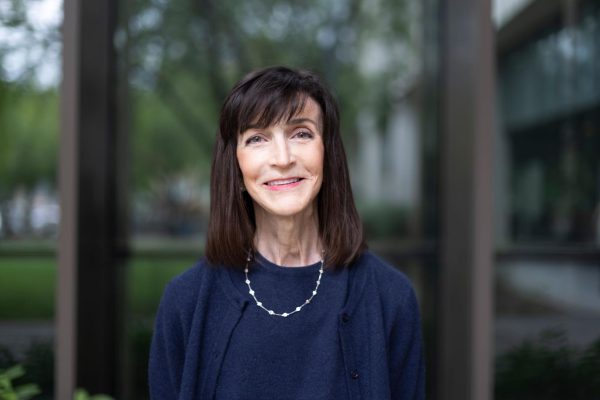
This fall, the school will continue the start of its sports production and broadcasting minor, a new gaming institute and a pathways program at the UTNY location, with freshmen starting their experience at UT in New York with Moody faculty. Vangelisti said this is one of the most exciting moments at UT in her career because there is an energy and excitement about making connections, both within the University and between the University and the community.
“The public, whether that public be the Austin community, Texas or even nationally and internationally, I think the public has an understanding of the importance of communication now that they didn’t 10 years ago or 15 years ago,” Vangelisti said. “For Moody students, it’s super exciting because people are ready for us to jump in and get things done.”
Heather Woofter, Dean of the School of Architecture
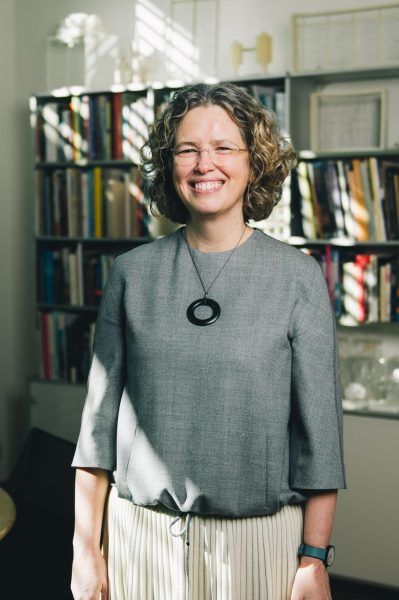
According to the School of Architecture website, Heather Woofter studied biochemistry at the University of Maryland and engineering at Virginia Tech before transferring into architecture and graduating in 1991. Woofter practiced for several years and obtained her architectural license before earning her Master of Architecture from the Harvard Graduate School of Design in 1998. She has been teaching since her time as a student at the GSD. She taught at Washington University in St. Louis, Missouri, for 20 years, but she also held visiting appointments in Greece and Korea. She has been co-director of Axi:Ome St. Louis since 2003, a practice pursuing an expanded investigation of architecture across disciplinary borders, various scales and diverse modes of practice.
Justin Dyer, Dean of the School of Civic Leadership
As an undergraduate business student, Justin Dyer took a class called “Foundations of American Politics,” which included documents like the Federalist Papers, Anti-Federalist Papers, Declaration of Independence and commentaries from the 19th century. It captured his attention, and he changed his major to political science, earning his doctorate in government at UT. Now, he has the opportunity to return as dean of this new school, which included building degree programs, putting a team together, hiring faculty and thinking about the building and space the school will inhabit.
This is the first semester that the school will have students as majors with the civics honors major, which was formally approved by the Texas Higher Education Coordinating Board in June.
“I hope that they come out more thoughtful, more engaged, more intellectually curious and willing to sit and listen and think about opinions that they may not have entertained and to be able to interact with people with whom they disagree,” Dyer said.
Soo Young Rieh, Interim Dean of the School of Information
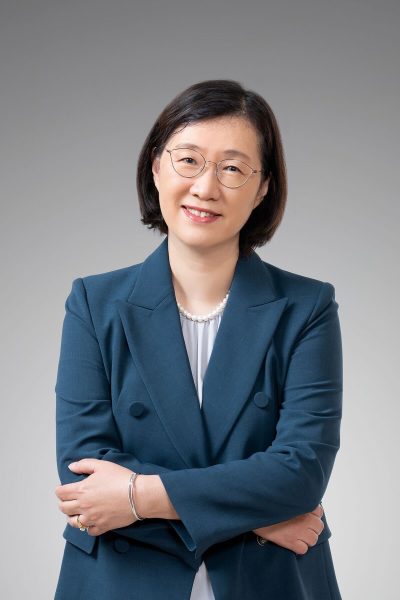
Over the past 30 years, Soo Young Rieh has been interested in examining the impact of human information behavior, which refers to human behavior concerning how people seek, access, organize, manage, assess, share and use information, as well as avoid it. She said one of the most exciting aspects of serving as interim dean has been the opportunity to look ahead and imagine the future of the field and shape how the school prepares for it.
In the fall semester, the school will launch the new iSchool Research Institute for StoryArc Exploration (iRISE), which is a yearlong research and leadership development program where teams of undergraduates, doctoral students and faculty work together to conduct research and find ways to communicate the impact of information science research through the stories they tell.
“As society continues to grow more complex, the demand for new knowledge and evolving skill sets will only intensify,” Rieh said in a statement. “That’s why I encourage our students to embrace collaboration, especially with those from different backgrounds and interests. The school is not just about acquiring expertise; it’s about building connections that spark innovation.”
Eun-Ok Im, Dean of the School of Nursing
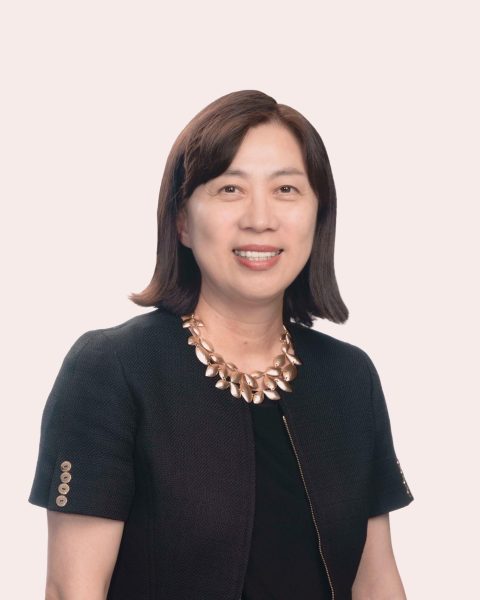
Eun-Ok Im’s journey began as an oncology nurse in South Korea before beginning her graduate studies in the U.S. She was drawn to nursing for the opportunities to improve health and illness experiences. UT was her home institution from 2002 to 2011, and she is thrilled to have returned to further champion the mission and success of one of the top nursing schools in the nation.
This fall, the school will host its second annual State of Nursing Science Endowed Lectureship Symposium on Sept. 24, bringing global leaders in health care, research and education together. The Simulation and Skills Center spaces are being updated to “expand VR and AI integrations that further enhance nursing education.”
“Nurses today are more than caregivers — they are changemakers, policy advocates, educators, scientists and innovators,” Im said in a statement. “We are excited about the future of nursing and the incredible contributions our students and alumni will make as leaders who shape health care for tomorrow.”
Allan Cole, Dean of the University of Texas at Austin School of Social Work
Allan Cole said his journey was not exactly linear, as he studied philosophy at Davidson College, social work at Columbia University and theology at Princeton University, but rather united by a deep fascination with how people navigate life’s most challenging moments. This fascination became intensely personal in 2016 when he was diagnosed with young-onset Parkinson’s disease at 48 years old. He learned firsthand how healthcare can miss the humanities while focusing on medicine. What excites him the most is how the school is constantly expanding what social work looks like in practice while honoring the profession’s core commitment to human flourishing.
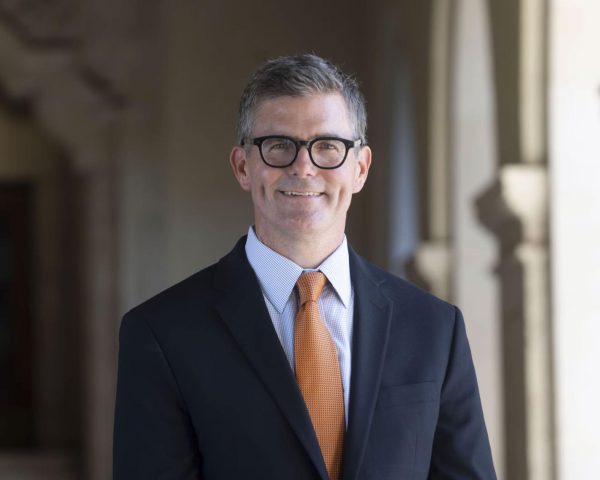
This September, the school will be celebrating its 75th Anniversary, joined by the Dell Medical School, a Live Podcast Recording, the Hogg Foundation and more.
“Our 75th Anniversary marks a true inflection point,” Cole said in a statement. “We’re leading nationally in addressing society’s most pressing challenges, from mental health crises to housing insecurity, through the transformative power of human connection. The world needs people who can see and embrace our common humanity, and that’s exactly what we’re preparing our students to do.”