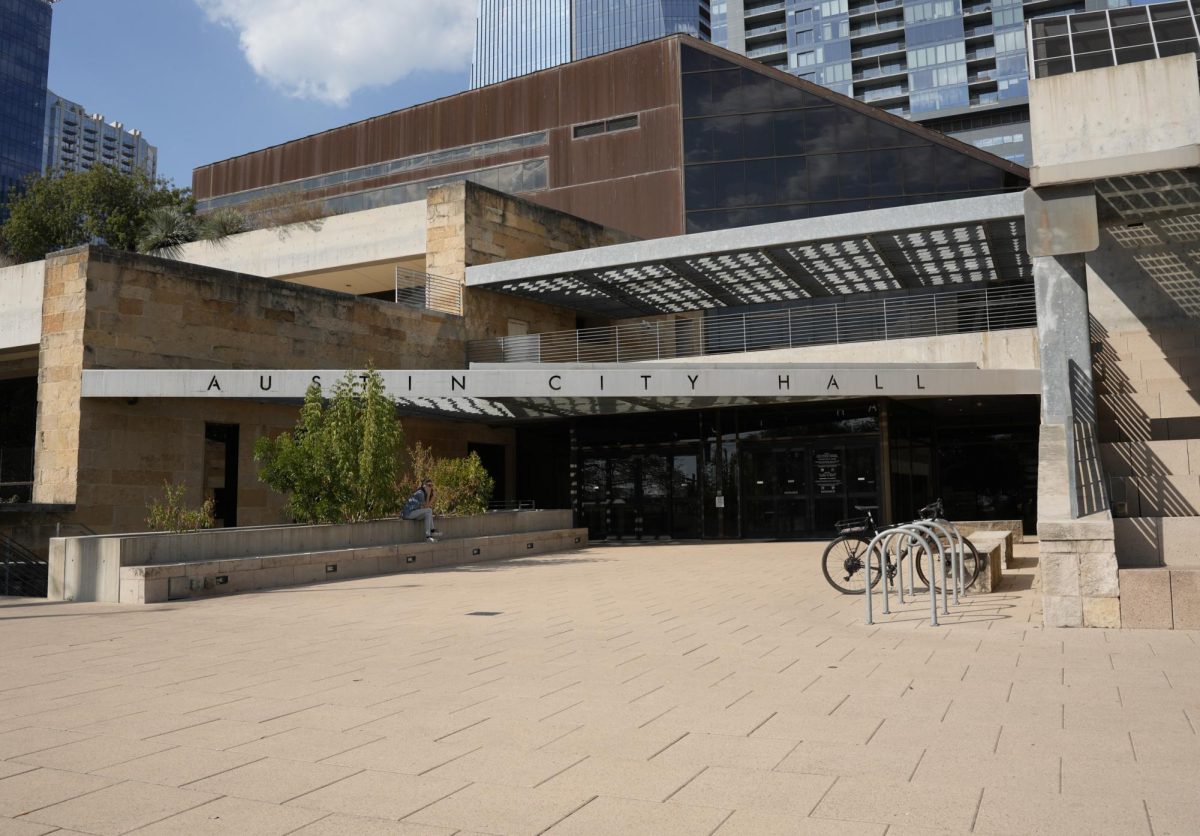
The city of Austin has added over 320 miles of new or upgraded sidewalks and approximately 500 pedestrian crossings since it created its traffic safety initiative, city leaders said at Austin City Hall on Oct. 10 in celebration of the initiative’s 10-year anniversary.
In 2015, the Austin Transportation and Public Works department first adopted Vision Zero, an initiative aiming to reduce yearly traffic-related deaths and injuries to zero through improved street design, traffic enforcement and public policy, according to the initiative website. Though traffic fatalities have remained consistent since Vision Zero’s adoption, serious injuries have declined since 2022, according to its 10-year report.
“We’ve redesigned intersections, created safer crossings and installed better lighting,” said Paige Ellis, council member for District 8, at the event. “The result is fewer crashes and injuries — something we can be proud of — but we should also remember what those numbers mean. It’s fewer lives turned upside down, fewer families grieving (and) more people who make it home each day.”
Using car crash data, the city identifies intersections and roadways with a high number of serious injuries and fatal crashes before implementing “low-cost, high-impact” treatments such as speed humps, speed displays and protected bike lanes.
Transportation safety officer Joel Meyer, who has been with Vision Zero for over nine years, said the initiative implements “proven safety countermeasures” that reduce crashes.
“We view it as a big responsibility,” Meyer said. “We’ve been entrusted with a lot of funding, a lot of community support and it’s our responsibility to go deliver on that.”
In West Campus, bike lanes on Rio Grande Street were added in 2012 before the city implemented Vision Zero. Today, efforts to improve road safety in West Campus through Vision Zero come in the form of police enforcement.
Austin Police Department detective Jason Day, who leads the Driving While Intoxicated Enforcement Unit and coordinates APD efforts with Vision Zero, said West Campus has not had many serious injury accidents, despite heavy pedestrian traffic and nightlife culture.
“Fortunately, I think that most West Campus students are making better choices than actually getting in cars and driving (while impaired),” Day said. “Part of that is because of the ability to walk from shorter locations.”
For students like computer science junior Ayush Singh, West Campus traffic safety measures, like bike lanes, make scootering around campus accessible but are less common when traveling further into downtown.
“(My main concern is) looking out for those potholes,” Singh said. “You just have to be focused while riding the scooter.”