A United States district court judge suspended UT System’s enforcement of certain provisions of the Campus Protection Act, a law limiting expressive activity on campuses, according to a court document from Tuesday afternoon.
Judge David Ezra issued the preliminary injunction, writing the plaintiffs successfully raised “significant First Amendment issues.” As a result, the UT System cannot enforce certain provisions of the law at any of its institutions while a lawsuit filed on behalf of UT-Austin and UT-Dallas student organizations is litigated.
“While we cannot comment on matters involving litigation at this time, the UT System complies with the law and court orders,” wrote UT System spokesperson Ben Wright in an email.
The preliminary injunction prevents four provisions of the law from being enforced: the expressive activity ban between 8 p.m. and 10 p.m., as well as the end-of-term bans on invited speakers, amplified sound and percussion instruments. The rest of the act can still be enforced.
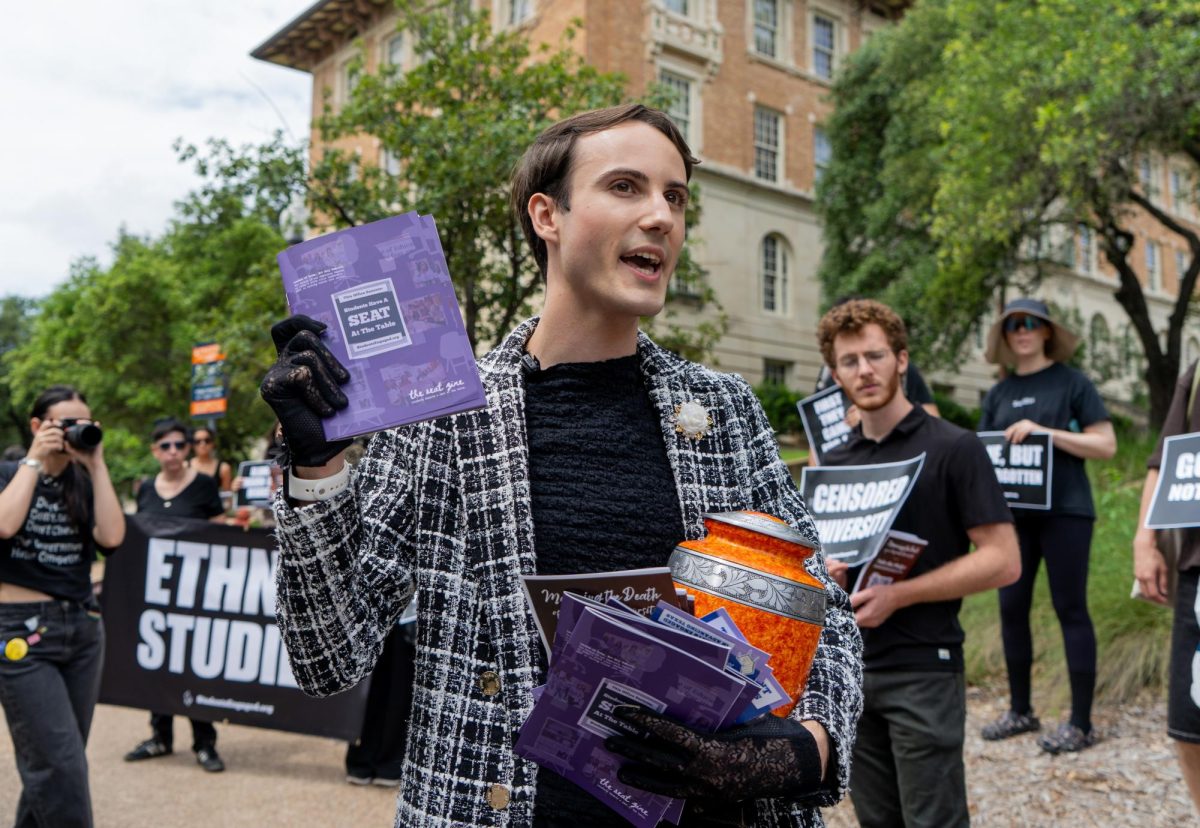
The Campus Protection Act restricts expressive activity on college campuses between 10 p.m. and 8 a.m. and bans speakers and amplified sound at the end of the semester. The bill also reverts the University to a “limited public form,” where expressive activities on campus are exclusively limited to students, faculty and staff, opposed to members of the general public.
The bill reversed a 2019 state law that identified public universities and colleges as “traditional public forums,” where anyone can engage in expressive activities. Former Texas Sen. Brandon Creighton authored the bill following large pro-Palestinian protests on campus in April 2024.
Two days after the bill went into effect on Sept. 1, the Foundation for Individual Rights and Expression filed a lawsuit against the UT System, saying the law limits students’ First Amendment rights.
FIRE filed the motion for the preliminary injunction on Sept. 9, and the court heard oral arguments on the motion on Oct. 2. FIRE attorney Adam Steinbaugh said the foundation expects to have a status conference, which he said is a routine meeting involving lawyers and the court to identify next steps in a case.
“We are pleased with the ruling and proud of our clients for standing up for their First Amendment rights,” Steinbaugh wrote in an email.
Editor’s Note: This article has been updated to more clearly reflect the injunction. The Texan regrets this error.