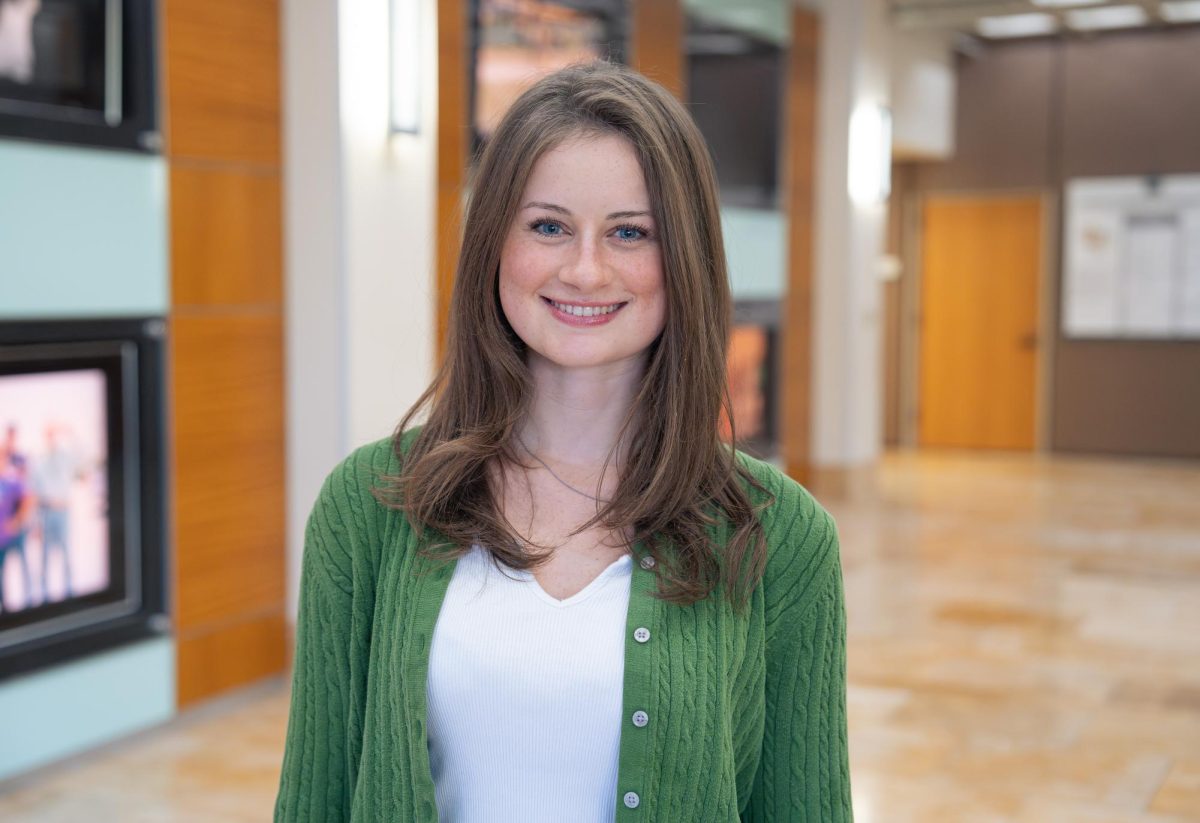
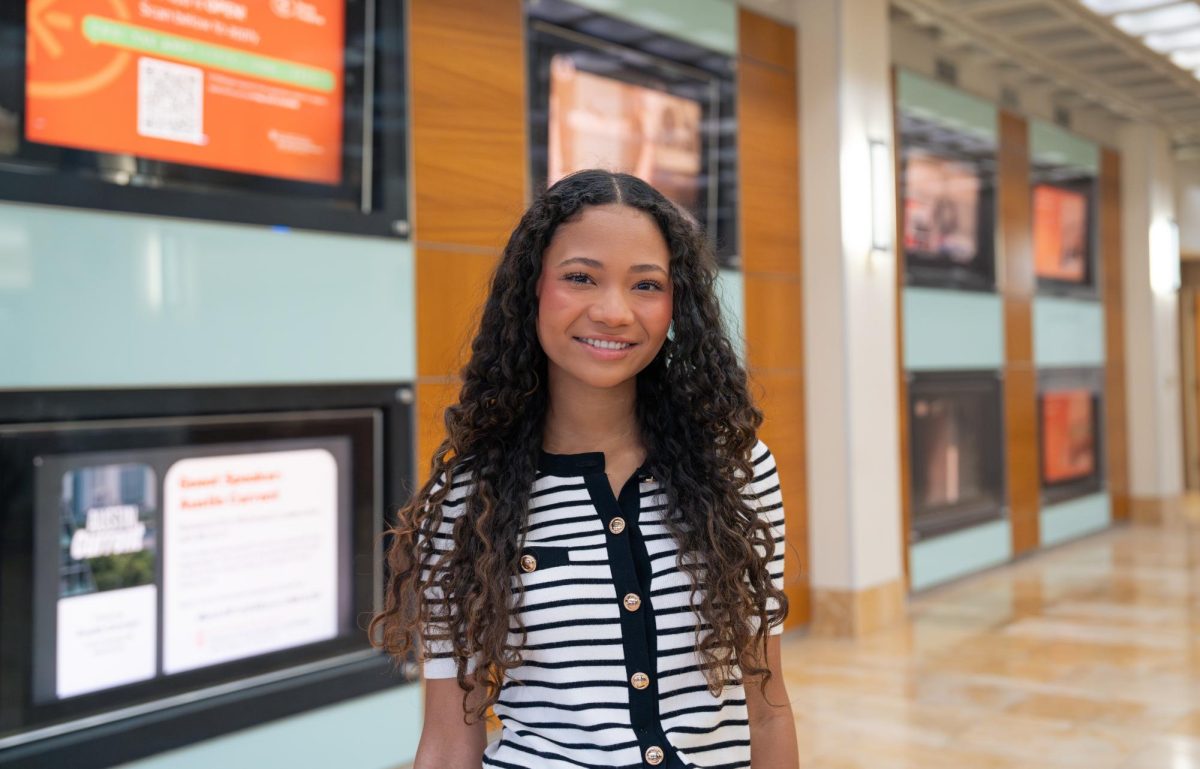
Audio Producer Shiza Siddiqui explores Austin’s thrifting culture and fashion scene to find out why people thrift, what they’re thrifting, and the impact thrifting has on the local community.
Reported and produced by Shiza Siddiqui. Edited by Ethan Rubenstein. Cover art by Angela John. Music by Blue Dot Sessions.
*Intro music*
Shiza Siddiqui: Austin’s thrifting and fashion scene reflect its laid-back nature and uphold its slogan: “Keep Austin Weird.” My name is Shiza Siddiqui, and I am an audio producer at The Daily Texan. To learn more about what Austinites are wearing and why thrifting is so popular, I spoke with people throughout the UT and local vintage community.
I started with Vivian Mutty, president of Texas Fashion for Students, to hear what trends she’s seeing on campus.
Vivian Mutty: I know there’s a theme of women dressing more masculine and men dressing more feminine, and I think that’s beautiful to see the crossover of, um, styles and that there’s no one style that fits a certain gender or a certain person. Um, so that’s been something that has been interesting to see and that I’ve noticed. Um, growing in the Gen Z community is just having confidence and not caring what other people think about what you wear. So like hardcore androgynous is what I would describe Austin as just from the scenes that I hang around. Um, I also would say like “Western Chic”. There’s a lot of that that I see and I think that’s beautiful and um, I’ve, like, coming from someone who grew up in the north, I never saw the like existence of cowboy boots and, uh, overalls and, um, jeans as much as I do now.
Siddiqui: To understand Austin’s vintage market from a retail perspective, I visited Leopard Lounge, where store manager Sydni Adams explained what shoppers were typically looking for.
Sydni Adams: We price based off of desirability. So sometimes, especially in Austin, people will place more value in a T-shirt versus outerwear because it’s Texas. So having, um, an $80 rare, uh, like New York Yankees, T-shirt—so all of those factors play into how we price things. And just based off of, at this point, we do have to compete with eBay pricing. We do have people specifically who come here to shop our fur because wherever they’re from, fur’s really pricey. So we’re able to keep a low price on fur because we’re in Texas and our tourists and international visitors love that, um, love that aspect. So that’s kind of the demographic. It is a range and I would, I’m happy to say that it’s a range in like race and age as well. Um, I find a lot of pride in being a black store manager and in Austin, which I don’t think has the highest demographic for black and brown people.
Siddiqui: For many people, thrifting is more than just a popular trend, it’s a part of their lifestyle. I talked to Aidan Vu, one of the assistant styling directors at Spark Magazine to explore why people are so drawn to thrifting in the first place.
Aidan Vu: Thrifting has really become like this kind of broader idea or practice for me and my day-to-day life. Um, like when I was young, um, my mom was really an avid thrifter, um, that’s like kind of what we did to bond together. Uh, when I was younger, uh, when, you know, we were sad, we would go thrifting and when we were happy, celebrating, we would go thrifting. So thrifting really became like this, um, kind of almost bonding activity and kind of uh, a symbolization of my childhood.
Siddiqui: At the Sunday Vintage Market on Guadalupe, I met Austin local and former UT student Christina Lam. Her connection to thrifting started early in her life as well.
Christina Lam: Why do I thrift? I mean, when I was younger it was more of a necessity thing, because we grew up pretty poor. Um, but now that I’m older and it’s not like quite necessary, like economically anymore, for me, I do it because I think there’s a lot of waste that we don’t consider when we consume things, especially clothing. So I like thrifting because it aligns with my values of, um, like anti-consumerism. And just like reusing things and giving something a new life.
Um, whenever I thrift stuff, I do like a little ritual at home where I kind of like cleanse the energy from it, where I give the item gratitude, like, oh, you know, like thinking about who this item belonged to before, and then like being like oh, well this item’s still here with me, so I think that’s pretty cool that these items have a history as well.
Siddiqui: Christina went on to explain why some people may choose to not thrift at all.
Lam: Well, I have some friends who get kind of overstimulated by the thrift store. Some people might find it a little overwhelming or like the idea of looking through a bunch of items and like picking what resonates with you is a lot harder than walking into a retail shop where the look is already being sold to you.
Siddiqui: The popularity of thrifting has exploded in recent years, the trend shifting from necessity for many families to indulgence by fashion enthusiasts.
Adams: So with it being, um, popularized, uh, the moment I, that’s, that stands out to me for when it got popular was that fucking Macklemore song, sorry for cussing, but gosh, that Macklemore song about thrift, about the thrift store, like, it just really shifted the price point, like literally. Um, and it just opened access and in opening that access to a group of people who just wanted to kind of come up on something cool versus a need-based shopping.
Siddiqui: To Christina, this shift in public perception has been significant in terms of stigma.
Lam: Their stores are associated with, um, more underprivileged demographics and, yeah, I think there’s like a negative stigma maybe still associated with thrifting, but I haven’t seen that too much anymore, so it’s definitely changed in a positive way. I think people view thrifting way more positively than before.
Siddiqui: While thrifting is becoming more of a trendy activity, Vivian believes that its roots shouldn’t be ignored.
Mutty: Um, so I think there is overall a benefit to thrifting, and I think it should be popularized, but, um, the culture and the history of these secondhand stores should be recognized as well.
Siddiqui: At the Sunday vintage market, I also met UT grad student Amrin Haque. She explained that thrifting has also been an important way to build and foster community.
Amrin Haque: Also, like, I think people like to thrift as an activity and because like Gen Z, you know, kind of struggles with finding community, it’s a great way to like involve your friends and going on a little like hunting experience in a way.
Siddiqui: As Amrin mentions, Gen Z has fallen in love with thrifting, but it’s more than just the social aspect of the activity. Mia Bridget, the treasurer at the Texas Fashion for Students Club explains why thrifting attracts her age demographic.
Mia Bridget: I also think with college students being cheap and everyone wanting to get stuff on a budget, thrifting has made a real big resurgence within like our demographic of like Gen Z, of people our age now figuring out like, oh, like I have to buy rent and like if I want clothes, I’m not gonna spend $75 on a t-shirt that I’m gonna wear once a month when I go out.
Siddiqui: Sydni adds to this, drawing comparisons between Gen Z and millennials when it comes to fashion choices.
Adams: I don’t, I wish I knew more about, uh, like what it is specifically about Gen Z, but I do think it could just be a control thing due to trauma. Um, millennials will still get kind of cringey to me where I’m like, oh, you really didn’t care about what you put on today. But like nine times outta ten, if a Gen Z person comes into my store, they look great.
*Laughter*
Siddiqui: In conversations around thrifting, resellers are often brought up. Thrifters often complain of resellers who buy clothes for cheap and resell at exorbitant prices, which is why they’re disdainfully referred to as scalpers.
Vu: I think like even with resellers that go to their stores and buy things in bulk, they also kind of consume like the quality clothing that is there as well, um, and that affects like, again, both the quality and affordability for low income people, um, which is kind of the foundation of thrift and vintage.
Siddiqui: Amrin shared her frustration with reseller pricing on online platforms.
Haque: I think that I used to really dislike them and I, on certain apps like Depop, I will get upset. That’s why I won’t really use it that much. Um, because at the end of the day, lots of these clothes are used. You don’t know how many times they’ve been worn, you don’t know what condition they’re in, where they’re from. And if it’s not like a life-changing piece, I’m not going to pay a specific price.
Siddiqui: Thrifting is lauded for being a more environmentally-friendly alternative way to participate in fashion trends than buying fast fashion. Some criticize those who thrift for taking away clothes from lower-income populations, but Christina presents an alternative perspective.
Lam: I think that it’s a myth that there’s not enough clothes to go around. Um, I think if you look up the numbers, look up the pictures of all the landfills, there’s way more textiles in the world than we need, so I think anything rescued from the thrift store is a good thing.
Siddiqui: Fast fashion continues to draw criticism for crossing ethical boundaries. Mia explains how fashion is political and how affordability can bar access.
Bridget: I think, keeping it mainstream within college students, anyone can be in fashion. It’s just up to you if you have the drive and the motivation and like the passion for how you want to dress and how you care about dressing. Anyone can be a part of fashion. I think definitely in the higher, like, points, it gets more political in the ways of like the consumer who can buy into fashion, the people who fit the specific norms, ’cause fashion is so stingy when it gets higher up.
Siddiqui: Sydni talks about when her perspective on fast fashion changed, and how clothing production has changed since previous eras.
Adams: I care so much about fashion, for one. I think first it comes to being a fashion girl. My first job was at Victoria’s Secret, so I saw firsthand, um, the changes from what Victoria’s Secret was when I was like a kid in the nineties. It was a different thing from when I was finally working as like a young adult.
So already kind of having that inkling, but knowing that it wasn’t the most, sustainable, like I could just see the back warehouses and, um, how inventory turned based off of trend or sales.
Siddiqui: When it comes to people’s relationship to fashion and style, Aidan and Sydni believe it should be personal—and tailored to themselves, pun intended.
Vu: Um, I think celebrating clothes is another thing to understand. Um, everyone has style. I always think like people have style regardless if we like it or not. I think every single person has their own style, whether they put no effort or all of their effort into it.
Adams: But ultimately, you should just do what you want and wear what you want. Um, micro trends kind of gives to a societal power that I think needs to be dismantled a little bit. Um, I think we should be accepting of all forms of expression and not assign, um, anything to it. Just wear what you want to, and once you start calling it something, it starts to take away and then it can be commodified and then it can be just like resold to us.
*Outro music*
Siddiqui: Austin is a unique city with unique folks, and fashion has become a great medium through which to express that. For that reason, thrift shops make up an important part of the fabric, pun intended, once again, of our local community. That said, it is important to recognize the origins of thrifting and the diverse reasons people choose to thrift or not to thrift. And amid the constantly changing trends, it is critical to focus on owning your own style and fashion experience.
This episode was a production of The Daily Texan Audio Department. It was hosted and produced by me, Shiza Siddiqui, and edited by Ethan Rubenstein.
If you liked this episode, make sure you subscribe to The Daily Texan podcasts on your streaming platform of choice and follow us on Twitter @texanaudio. Thanks for listening!