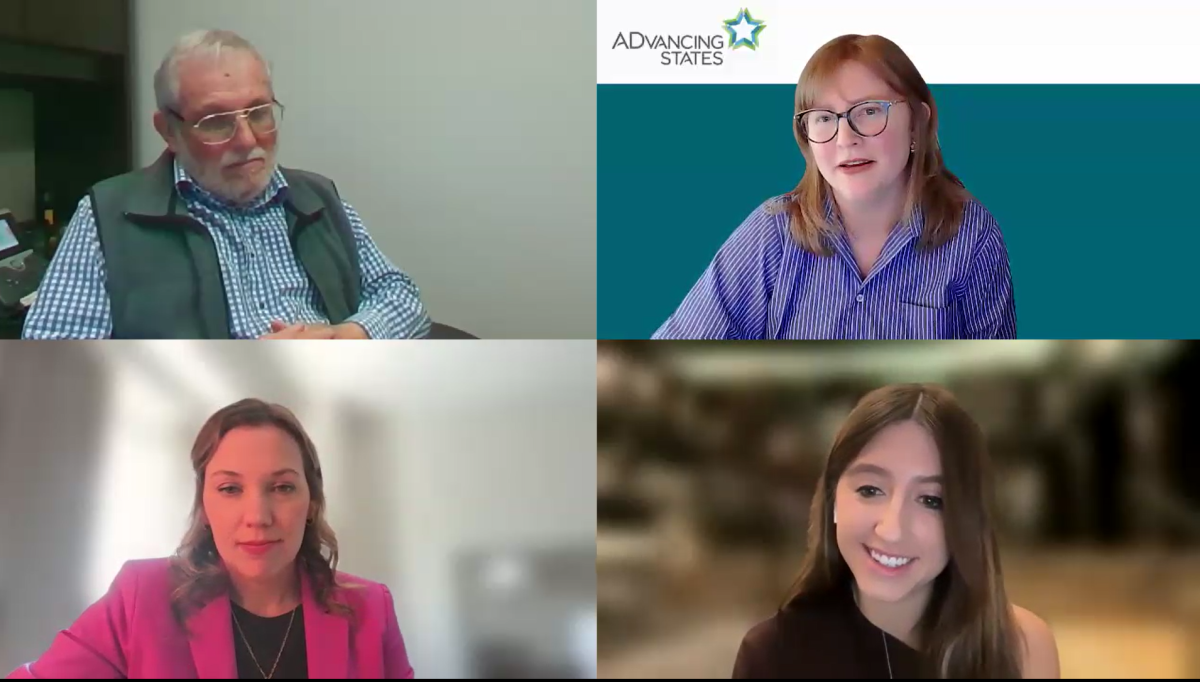
Each Friday this March, students from around the country and the world logged onto Zoom sessions to learn about careers involving the elderly.
For the first time, the American Society on Aging (ASA) offered a virtual student summit ahead of their On Aging conference — the largest multidisciplinary aging conference in the country — taking place in late April.
“ASA recognized the importance of engaging emerging professionals to spark more careers in aging,” said Anna Hardy Finger, who served on the planning committee for the summit. “The number of older adults in the U.S. … continues to grow rapidly, and we have a shortage of professionals in a number of areas of the workforce that serve older adults and their family caregivers.”
The summit, offered at no cost to students, featured presentations from health care professionals on different aspects of the geriatric job field, such as networking, artificial intelligence and the various career pathways available to students.
“A lot of times, students don’t even realize they’re interested in aging until they have a practicum experience or an internship, or maybe they have a personal connection with an older adult that is really meaningful in their lives,” said Alyssa Aguirre, one of the summit speakers and assistant director of Dementia Care Transformation with Dell Medical School. “Having conferences like this … increases student interest in aging … which, I feel like, to meet the growing demands of our aging population, is going to be more and more important.”
Aguirre said the online nature of the event made it more inclusive for students, since the On Aging conference happens annually in different cities nationwide.
“It’s kind of a difficult time of year for some students,” Aguirre said. “It’s right around spring break … so having this virtual option … is a really good way to make the content more accessible to students.”
Erin Cantrell, director of the DiNitto Career Center and Alumni Relations in the School of Social Work, also spoke at the summit. She said students may want to work with a certain age group of people, but change their minds after getting practical experience.
“I’ve heard from students or from alumni that maybe their entryway into working with aging people was working in hospice,” Cantrell said. “It’s not something that was … the first thing that they wanted to do in social work, but … through that experience, (they ended up) really enjoying that type of work, finding it very meaningful.”
Aguirre said she valued the diversity of career fields represented in ASA conferences.
“Older adults are supported by interprofessional teams in different sectors,” Aguirre said. “So to have conferences that also highlight that diversity of different professional identities that we have in the field of aging is really neat.”
Finger said that although a bias exists against careers involving the elderly, it’s a diverse, necessary field for Texas’ 65-plus population, which makes up nearly 14% of the state.
“Working in the field of aging and working with older adults is maybe not people’s first thought about an ‘exciting career,’” Finger said. “There is still a lot of stigma and, quite frankly, ageism that persists. … But I would challenge anyone to think about aging careers as a professional pathway. It’s a dynamic sector to work in.”