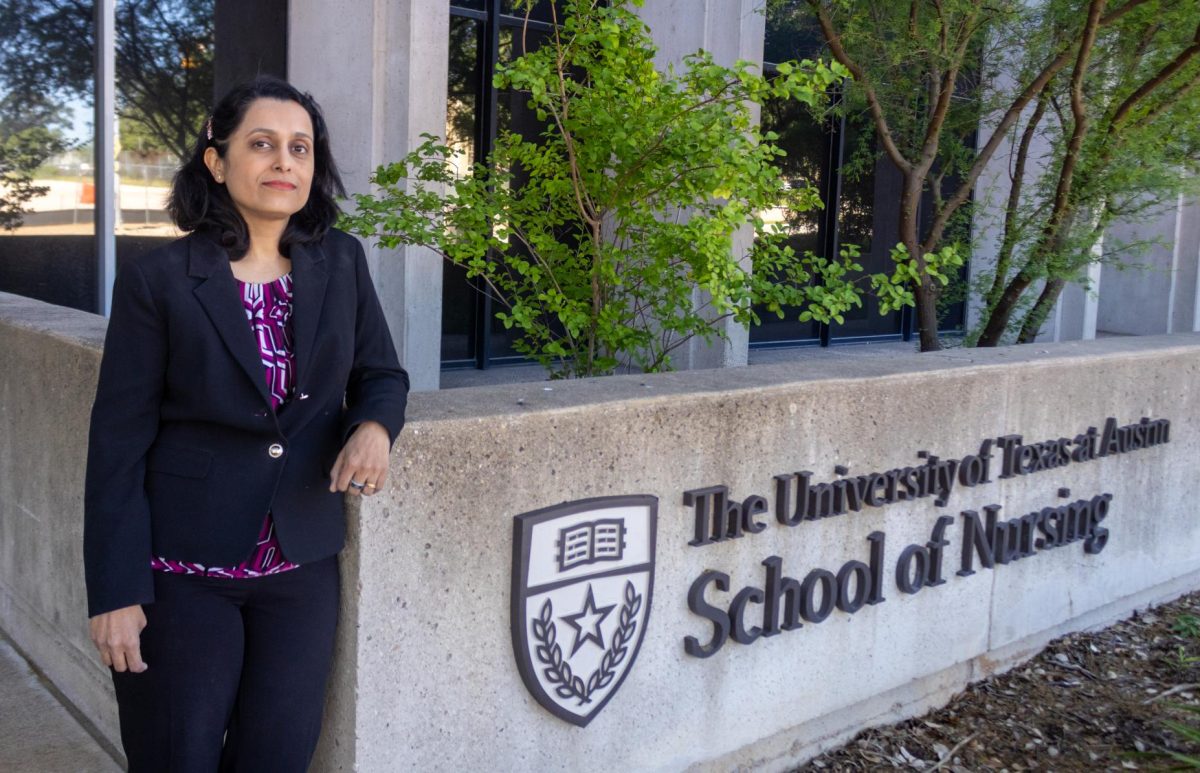
Kavita Radhakrishnan has worn many hats during her time at the University. A long-time faculty member in the school of nursing since 2012, Radhakrishnan has served as associate dean for research and director of Luci Baines Johnson and Ian J. Turpin Center for Gerontological Nursing.
The UT School of Nursing announced on March 11 she would become its new interim dean. Radhakrishnan said she is ready to serve and tackle the many challenges nursing faces today.
The nation’s nursing shortage is the most significant pain point Radhakrishnan is seeing as she takes over leadership, she said. The shortage started during COVID-19 and has since only worsened. In 2024, the Texas Hospital Association estimated that by 2032, Texas hospitals would have a deficit of over 57,000 full-time nurses.
Radhakrishnan said she wants to ensure partnerships for nursing graduates are sustainable and well-designed to ensure more graduates enter the field of nursing.
“One of the key strategies would be building an effective academic practice partnership so that we can have those networks,” Radhakrishnan said. “We need it to be sustainable at the same time, so that we can provide a pipeline of good workforce for Texas.”
Radhakrishnan said that in her time at UT, she has collaborated with many schools across campus, including engineering and social work, and wants to continue doing so as interim dean.
“There’s been a lot of collaboration across my own program of research, and now with the upcoming, growing Dell Medical School and the new, eventual arrival of the University of Texas MD Anderson Cancer Center,” Radhakrishnan said. “They’re just exciting opportunities for us to make an impact and be true partners in the healthcare ecosystem.”
One of Radhakrishnan’s biggest goals during her term is to address funding and tuition issues to ensure all students have equal opportunities. Despite its best efforts, the nursing school is constrained in relieving the nursing shortage, Radhakrishnan said.
“We need more visibility to the school officials, because we do great work, (but) our acceptance rate is 2%,” Radhakrishnan said. “We need to do more to address the nursing shortage, but we are constrained.”
The University has not announced a search for a permanent dean at the time of publication. However, Radhakrishnan said during her time as interim dean, she wants to show the campus and Texas the great work the school is doing, including its 90% graduation rate and efforts to increase the number of doctoral degrees awarded.
“I want to stress that we are here,” Radhakrishnan said. “You can’t have a hospital without us.”
Editor’s Note: The quote in the ninth paragraph of this article has been updated for clarity at the source’s request.