On a cloudy morning, rain drizzled lightly from the sky and volunteers spread across the Festival Beach Food Forest, pulling weeds and tending plant plots. A speaker played music loudly, children ran around giggling and volunteers walked barefoot through dirt paths, smiling and laughing as they cultivated the land. Behind them, Interstate 35 roared.
The Festival Beach Food Forest, which began in 2015, is an edible forest garden in the middle of downtown near Lady Bird Lake and on the eastern side of I-35. The refuge for plant species is threatened by the construction of a temporary wastewater pipe associated with the I-35 expansion.
Displacement due to highway construction is not uncommon. A 2017 report by the U.S. Department of Transportation found that construction of the interstate highway system displaced over one million people and disproportionately affected low-income and minority communities.
Programs like the Environmental Protection Agency’s Rethinking Highways for Healthy Communities are working to fix the damage caused by dividing infrastructure through community support, according to the EPA’s website.
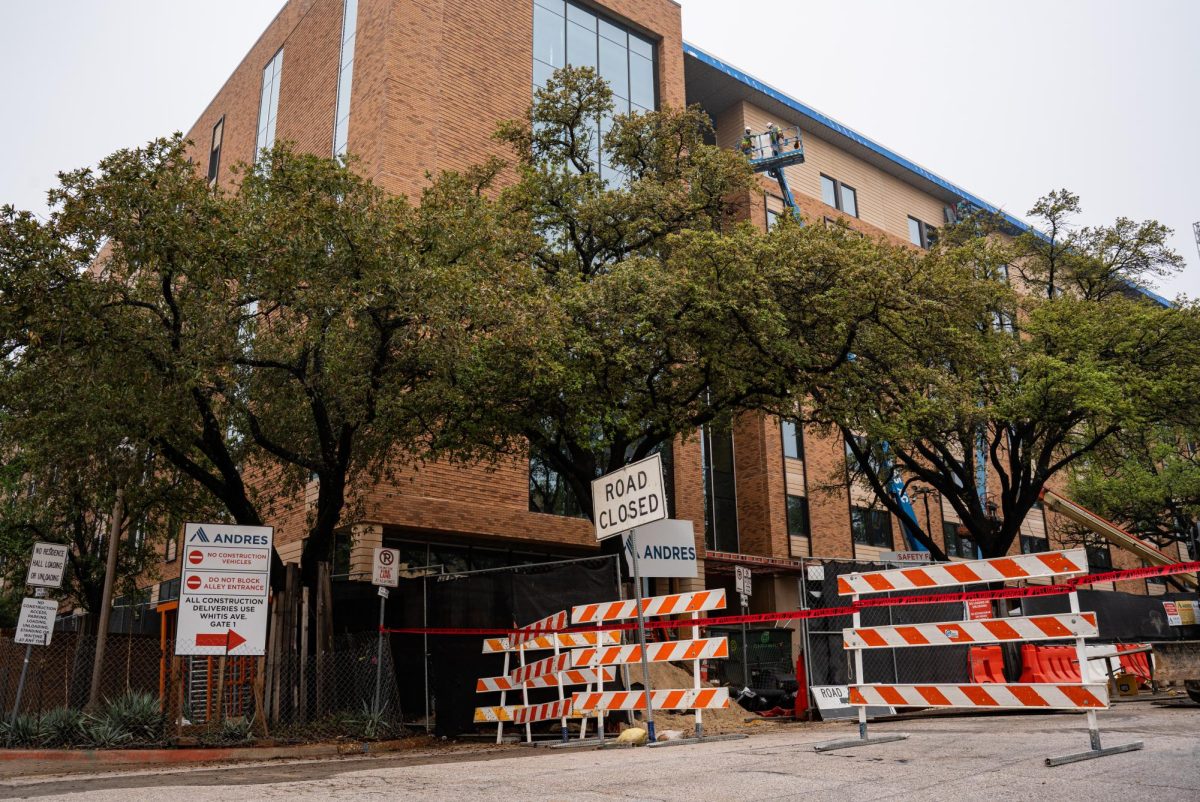
The I-35 Capital Express Central expansion project is mainly focused on congestion relief and improving local roads and will include parts of downtown Austin and the University area, according to a Texas Department of Transportation report. Construction would occur between 2026 and 2033, the report said. The project is part of a 10-year TxDOT transportation plan that the state invested $146 billion into, Gov. Greg Abbott announced last August.
Angelina Alanis, the communications and partnerships coordinator at Festival Beach Food Forest, said the organization has worked with TxDOT for the past 18 months, hosting quarterly meetings with their team designed to notify their community of any updates regarding the I-35 expansion.
While the team was notified of expected disruptions to parking, road closures, dust and noise, Alanis said excavation work was never mentioned until there was a construction plan. The food forest received an email on Jan. 6 that excavation and construction of a temporary wastewater pipe would occur just over a month later, in mid-February.
The food forest requested an immediate pause on construction and received a two-day pause by TxDOT to extend the start of construction from Feb. 16 to 18.
On Feb. 14, volunteers went to the Festival Beach Food Forest to dig up over 90 plants that sat in the line of impending construction. The food forest expects estimated losses at about $550,000, according to notes from a Jan. 26 food forest meeting.
Employees with the office of city council member José Velásquez met with TxDOT representatives, Austin Parks and Recreation staff and leadership at the Festival Beach Food Forest to understand how this miscommunication occurred, according to Jacqueline Hermosillo, Velásquez’s communicative strategist. Velásquez is the city council representative for District 3, where the food forest is located.
Austin Parks and Recreation officials reported internal miscommunication over how the TxDOT project would impact the food forest protected under Chapter 26 of the Texas Parks and Wildlife Code, which requires impact evaluations for non-park use of public lands and recreational spaces. According to a briefing released after a February Parks and Recreation board meeting, the board reviewed the project before City Council approved Chapter 26 clearance in January 2025. Austin Water was not informed of the pipe’s construction impacting food forest land until late January, said Dan Manco, a Parks and Recreation public information specialist senior.
A food forest leader said TxDOT declined to participate in early coordination mitigation meetings with city staff and food forest representatives during the February Parks and Recreation board meeting’s public comment period. The city is now working with TxDOT to notify stakeholders of impacts from this project and plans to restore the food forest to equal or better condition after construction, according to the briefing.
Alanis said faculty within the Parks and Recreation department learned about the expansion project impacting the Festival Beach Food Forest through the food forest staff. She said that Parks and Recreation staff were not told by those higher up in the department who have also worked on and approved that same project.
“It’s going to continue impacting us for the next decade plus,” said Angie Holliday, the community coordinator at Festival Beach Food Forest. “The reality is that this has been really devastating for our community and has really impacted the work we do here in a negative way.”
The core foundation of the food forest is built on connection, growth and celebration, which strives to nourish, educate and inspire the community, according to the forest’s mission.
“I think there’s a whole element of relationship and communication with plants that’s really underappreciated by a lot of the systems of power,” Alanis said. “The true intrinsic value of our green spaces, we haven’t really figured out how to fairly assign a value to them in a way that reflects their importance in relation to the industrial spaces that we’re also creating.”
On March 7, Festival Beach Food Forest volunteers shared what the garden means to them and their reactions to the wastewater pipe. “It’s My Park Day,” hosted this year on March 7, is one of Austin’s Parks Foundation’s biannual, community-led days of service.
“I first came to a volunteer event here in 2016 on It’s My Park Day, just like we’re doing here today,” Holliday said. “I just fell in love with it. This is such a unique, special (and) really critical place in the heart of downtown, in the heart of the city.”
Robert Leal, the Festival Beach Food Forest’s planting coordinator, leads plant walks, education and plant work days at the forest. Leal has volunteered with the forest for six years. He said the reaction to the wastewater pipe has brought the community together.
“A lot of community has come to support (us), so I feel like our web has expanded in a good way so silver lining,” Leal said. “We felt there was a loss there, but the response is where we get more than hope. We get action, we get tighter in our efforts.”
Sarah-Rose Geihl works as an arborist for Urban Forestry within the Parks and Recreations department and has volunteered at the Festival Beach Food Forest since December. Geihl said she felt grief, anger and a sense of tragedy after learning of the pipe.
“There’s been good public backlash,” Geihl said. “I think that has helped bring more light to it.”
Geihl said the number of volunteers coming to the Festival Beach Food Forest has increased since that backlash due to the publicity.
When asked what she’d like to see moving forward, Geihl said she’d like those with more power, like city officials, to recognize the importance of the Festival Beach Food Forest.
“More growth, more acceptance from the community. I hope they get more recognition and more funding so that they can be more protected,” Geihl said.