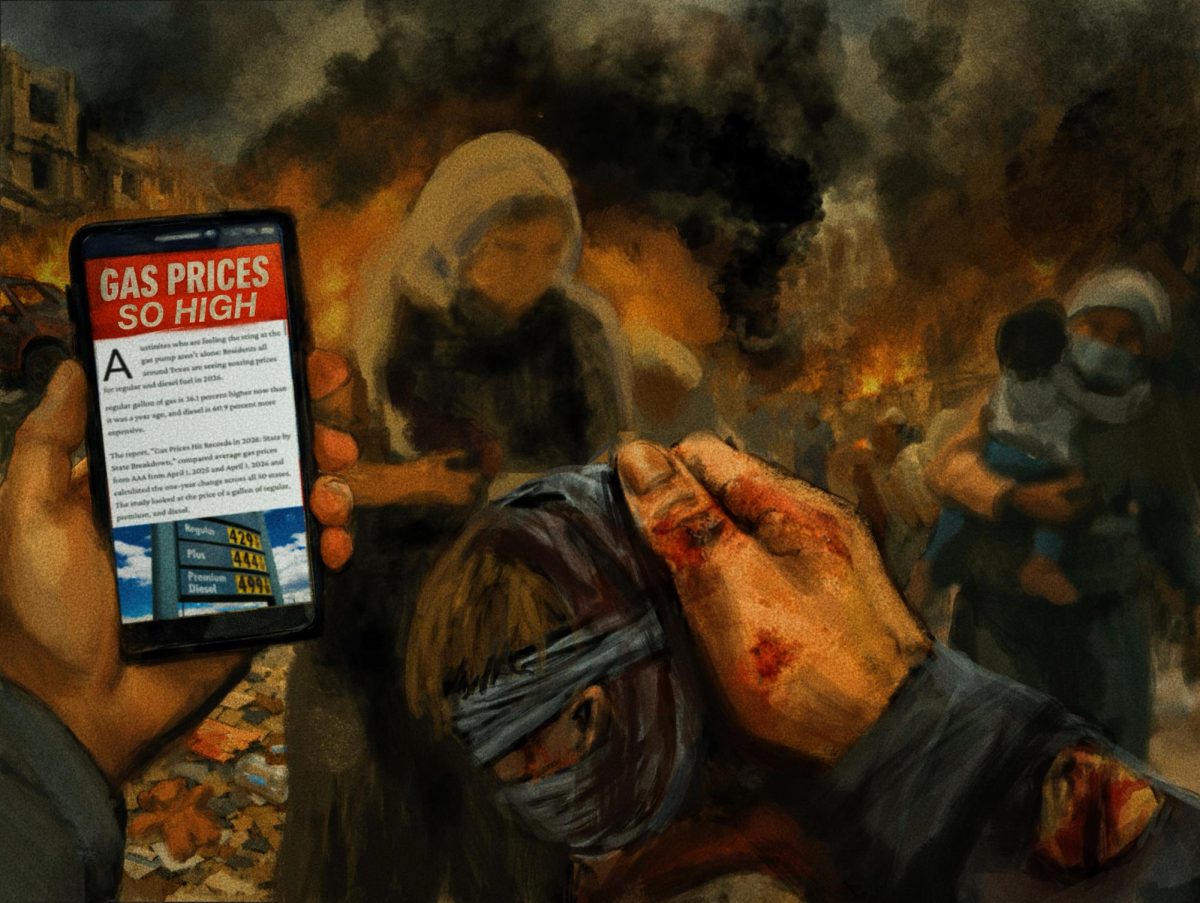
Many Americans disapprove of the government’s current involvement in foreign conflicts, particularly regarding the Iran war. As headlines around rising prices circulate, it’s easy to see why Americans have become dissatisfied with our current foreign policy initiatives. But there’s an element to all this that seems to take a back seat to the domestic effects of international conflict: the cost borne by civilians in the affected countries. Earlier this year, a U.S. strike on a girls’ school in Iran killed more than 100 people. Our government’s choices have devastated the lives of people across the world — people who don’t get a say in American governance or leadership.
“Most Americans don’t realize … that their vote does have global consequences. When we’re sitting in America and watching elections on TV, it feels like a very domestic event,” government PhD student Nivedita Jhunjhunwala said. “But what people don’t realize is that people abroad who have no connection to this country are also really closely watching these elections and what happens, because a lot of (what) is happening here shapes a lot of policies for other countries.”
Our vote has the power to change another person’s whole world, even if they don’t live here. Yet many Americans are not invested in politics. Pew Research Center reported in 2022 that many Americans believe that voting is important, but fewer than half surveyed thought that continuing to keep up with politics was important. Voting is an expression of support, whether for a person, ideology or specific policy. Understanding the nuance of how that decision not only impacts other Americans but people around the world is part of our moral duty when we vote.
“Just thinking critically about (the ethicality of your choices) falls particularly strongly on the responsibility of college students, because they are at a point in their life where they can make a lot of long-living decisions and make their voices very strongly heard,” said Ryan Lowe, linguistics freshman and a member of Students for a Democratic Society at UT.
A common misconception people have about voting is that their vote is insignificant in the grand scheme of things, or that elected officials are unconcerned with the demands of the people. Whether this causes some to not vote or vote carelessly, the impact can’t be ignored. Luckily, we exist within a representative political system, and we often hold more collective power than we think.
“There’s voluminous literature in American politics … suggesting that, in fact, candidates for office and then office holders are pretty responsive to citizen interests and citizen input,” government professor Daron Shaw said. “The idea is that they are rational actors who would like to be reelected in a democracy … (so) ignoring the preferences of voters comes at your peril.”
Politics can often feel hopeless, especially when atrocities seem to be committed daily and our society gets progressively more numb to them. As Americans, we must all grapple with the privileged position we are in to affect change, good or bad, on other people. This position comes with a moral responsibility, and that responsibility starts with our vote.
Thomas is a government sophomore from Frisco, Texas.