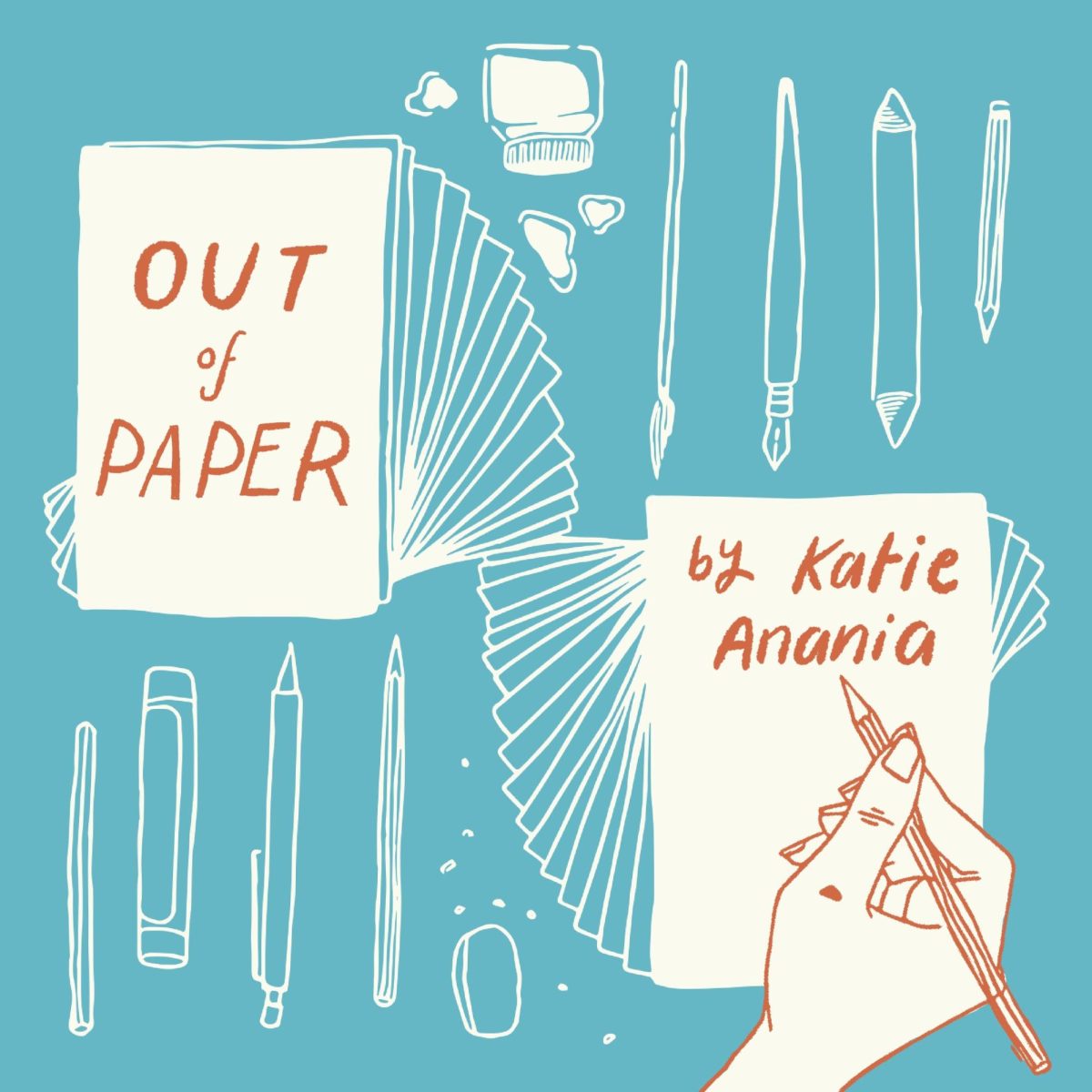
As a Ph.D. student at the University, art historian Katie Anania developed curiosity for drawing as a medium in the 60s and 70s, when works on paper started to be shown as final products in exhibitions. She turned this curiosity into a research project that developed into her first book, “Out of Paper: Drawing, Environment, and the Body in 1960s America.”
Anania, now an assistant professor of art history at the University of Nebraska-Lincoln, will speak at First Light Books on Thursday as a part of her book tour. She will speak with Eddie Chambers, Ph.D., an art history professor Anania worked with during her time at UT.
“I was deeply shaped by my Ph.D. work,” Anania said. “It’s fun to return to the place where you originally started working on a project and share it with the people who are now there.”
The five-chapter book, released on Oct. 15, focuses on artists who began using drawing and studio design practices in the 60s to rethink the way they related to the world around them. Anania said some of the book was shaped by conversations she had with Chambers as a graduate student.
“This book has been a number of years in the making,” Chambers said. “I’m expecting the conversation on Thursday to be a celebration as much as it is anything else.”
Anania said the work also focuses on ecology and environmental justice in the art world. Dana Fritz, art professor and Anania’s colleague at the University of Nebraska-Lincoln, invited her to write an essay for her photography book, “Field Guide to a Hybrid Landscape,” which was published in January 2023. Fritz said Anania’s contribution provided a new perspective about the Nebraska National Forests and Grasslands.
“I’m an artist, so my first job is to make visual things,” Fritz said. “I wanted to tell the whole story of the hand-planted forest, so I needed essays and maps to explain it … The environmental history is something we can learn from.”
Sharing an interest in the environment, Anania said Fritz’s work inspired her writing process for this book and vice versa. She said at her book events, audience members engage with her in conversation about the importance of artists in environmental justice, and said she feels satisfied with the book’s reception.
Anania said “Out of Paper” influenced parts of her next book, “Devour Everything: Queering Art After Agriculture.” She said she hopes “Out of Paper” will encourage readers to rethink the role of paper in our lives.
“We like to imagine that we live in this paperless world,” Anania said. “Paper is central to the way that we create our lives and tell stories.”
Editor’s note: An earlier version of this story included a misquote of one of the sources. The quote has been corrected. The Texan regrets this error.