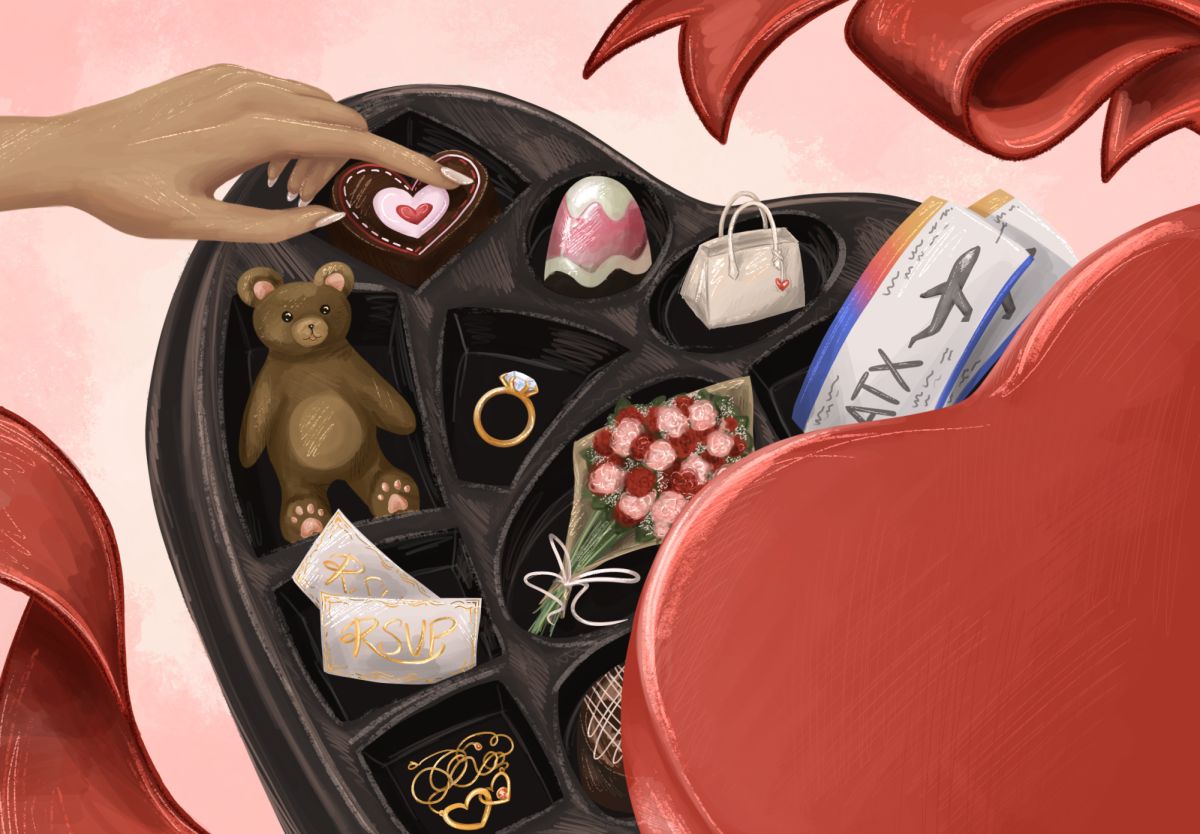
Imagine a candlelit dinner at the finest restaurant in town at a table lined with a rose petal pathway and a singular velvet box containing a gaudy necklace sitting atop. To many, this flashy scene signifies the picturesque way to spend Valentine’s Day.
However, while this narrative may sound enticing, its extravagance often appears superficial and impersonal. In a city deemed one of the best for Valentine’s Day, there are more authentic alternatives to spend the season of love in Austin.
Students should opt for more intimate, handmade gifts and personal experiences rather than showy gestures of affection.
“The only way we can show love is (through) this big, grand gesture, and Valentine’s Day is the commercial holiday to do that,” said Beth Cortez-Neavel, a licensed professional counselor associate and licensed marriage and family associate. “This day about love (becomes a) day about people’s perceived notions of what love is (when) it’s actually a very small part of what it is and how to celebrate it in partnerships.”
This commercialization of love can create a financial burden on some partners. By setting the precedent that love needs to be expressed monetarily, people waste money on prices continually driven by inflation. In fact, Americans are expected to spend $2.6 billion on flowers this year, with Texas being the second-most expensive state to purchase roses.
“(Valentine’s Day) sets this ritual each year where you (have to) show people you love them, get them gifts and take them out to dinner,” Cortez-Neavel said. “For some people, this is the only day they’re doing that with their partners, and that can really take away all the little moments of intimacy. … It’s saying to really love someone, you have to make all of these gestures that can cost a lot of money.”
This narrative also reinforces social media comparison culture, where couples feel pressured to match the grand displays they see online. However, love isn’t one-size-fits-all. Couples must work to redefine what love looks like, personalizing their celebration to reflect their connection and values.
“We hold on tightly to those materialistic expressions of love (because) we are told through media that this is the only way to show love,” Cortez-Neavel said. “It’s free to hold hands in the grocery store or take the dog out on a walk because your partner doesn’t want to.”
Most of all, these detailed, personalized gifts come across as more thoughtful because of the time, effort and dedication woven into them. Carefully curating a present can demonstrate how much a person knows their partner, which adds deeper sentiment and meaning.
“I thought (Valentine’s Day) was more focused on the gifts, mostly from the pressure of (young love),” said Kailey Cartwright, a management information systems freshman. “It was the determining factor of your relationship status back then. Now after five years (in a relationship), I know it’s not about getting something big or flashy. It’s something that reminds me how much he knows and loves me, and that’s so much more meaningful than a big, expensive gift.”
Valentine’s Day isn’t a competition of grand gestures but a celebration of connection, whether that means writing a heartfelt letter, cooking one’s favorite meal or simply enjoying each other’s presence.
This Feb. 14, students should embrace a more thoughtful approach. Love isn’t about how much you spend — it’s how much you care.
Lam is a computer science freshman from Mansfield, Texas.