When shaping their graduate or professional school applications, students envision a series of extracurriculars that perfectly align with their career goals. It can feel like building an equation that leads to where they want to be after graduation, including many standardized activities that many applicants may include in their resume. However, personal growth isn’t always found in a perfectly curated “standardized” system.
“Employers are not looking for majors, they’re looking for skills,” said Patty Prado, executive director of Career Initiatives. “You can acquire these skills working at Gregory Gym, you can acquire those skills of volunteering at a nonprofit, you can get the same professional skills in so many different settings. The challenge for most students is articulating and translating those skills, and then being able to demonstrate to a future employer how the skills they developed within a specific activity connects to why they would be successful and a good fit in that role.”
Mapping out your future and basing your extracurriculars on your career goals doesn’t have to be narrow. In fact, you can do anything that interests you as long as you’re able to translate those skills into a professional narrative.
“A lot of students assume their degree or major maps directly to a particular kind of job, and they often choose things to build a portfolio, as opposed to leading with curiosity,” said Annie Maxfield, director of the Graduate School Office of Career and Life Design. “In the career world, we often talk about planned happenstance and I think those natural moments of connection often come from following what you’re curious about and what you’re interested in.”
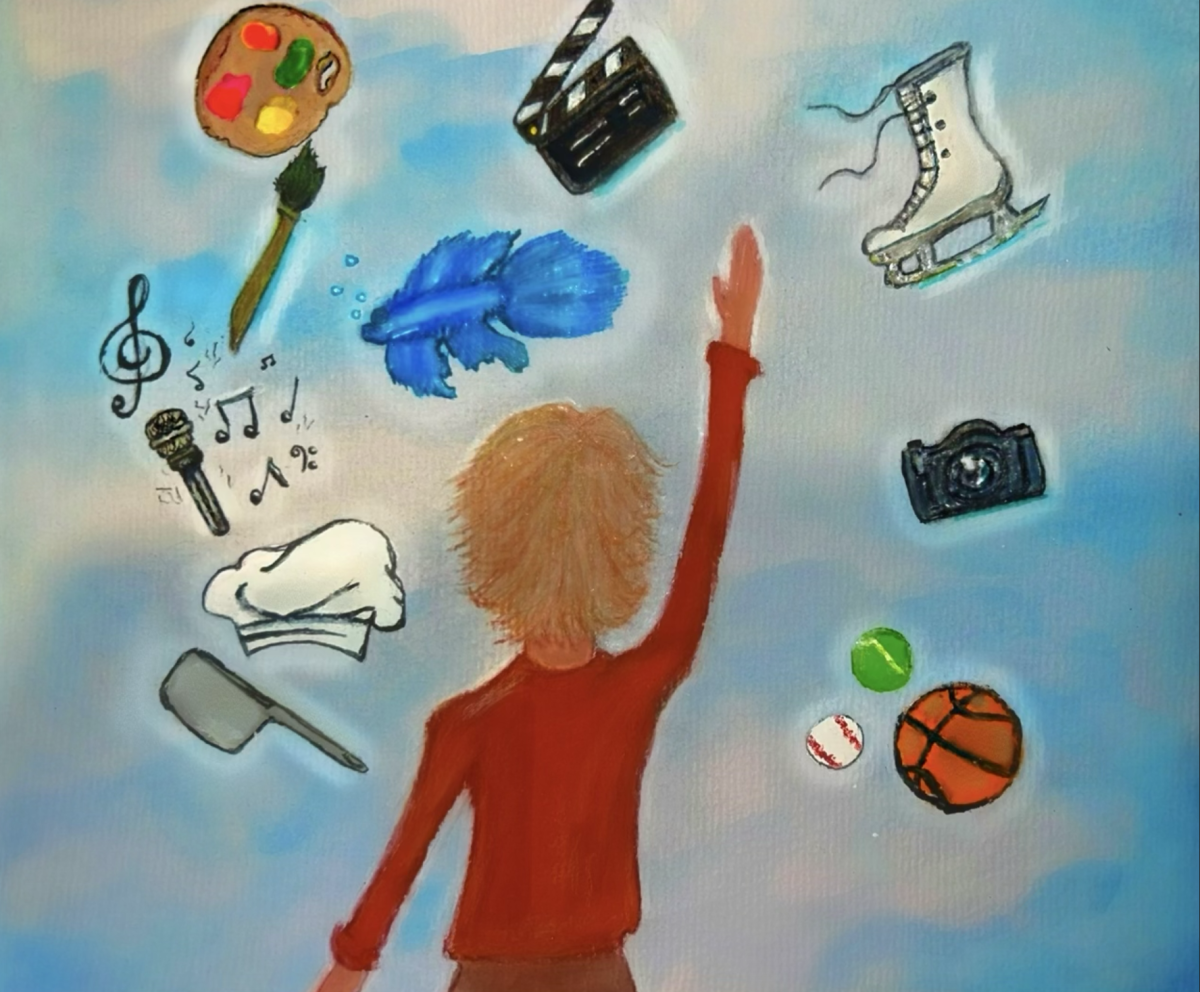
When selecting from a sea of extracurriculars, students should consider the value of exploration rather than adhering to a conventional mold. The most compelling applications are built on an ability to adapt, think critically and pursue interests with genuine enthusiasm.
By leading with curiosity, students are exposed to a multitude of unexpected opportunities that later shape into meaningful skills and experiences.
“Spark Magazine has helped me think creatively and collaboratively with others towards an artistic product, which has given me the skills to succeed in my chosen career path,” said Anya Gokul, a computer science and mathematics sophomore. “Modeling has also given me the confidence to advocate for myself in shared spaces, whether it’s in an interview room or collaborative projects. It has made me hold my space in a male-dominated field. That (confidence) has changed my life for the better.”
The key isn’t just participation — it’s reflection. While pursuing seemingly “random” extracurriculars, you may consider stopping and reflecting on how this activity contributes to your personal and professional development. Employers and admissions committees aren’t looking for people who check all the perfectly curated boxes but rather individuals who can articulate lessons from their unique experiences and apply them to the real world.
So, next time you’re drafting a list of extracurriculars, consider leading with curiosity.
Huerta is a government sophomore from Victoria, Texas.