As Austin continues its budget drafting process for the 2025-26 funding year, community advocates are pushing city leaders to allocate more money towards supporting immigrant communities, including students.
The Austin Commission on Immigrant Affairs passed a recommendation on March 29 for the city to allocate $25,000 towards the printing and distribution of “Know Your Rights” red cards at Austin Public Library locations. Additionally, the commission recommended $250,000 in funding to work with immigrant students and strengthen outreach with community organizations that serve these groups.
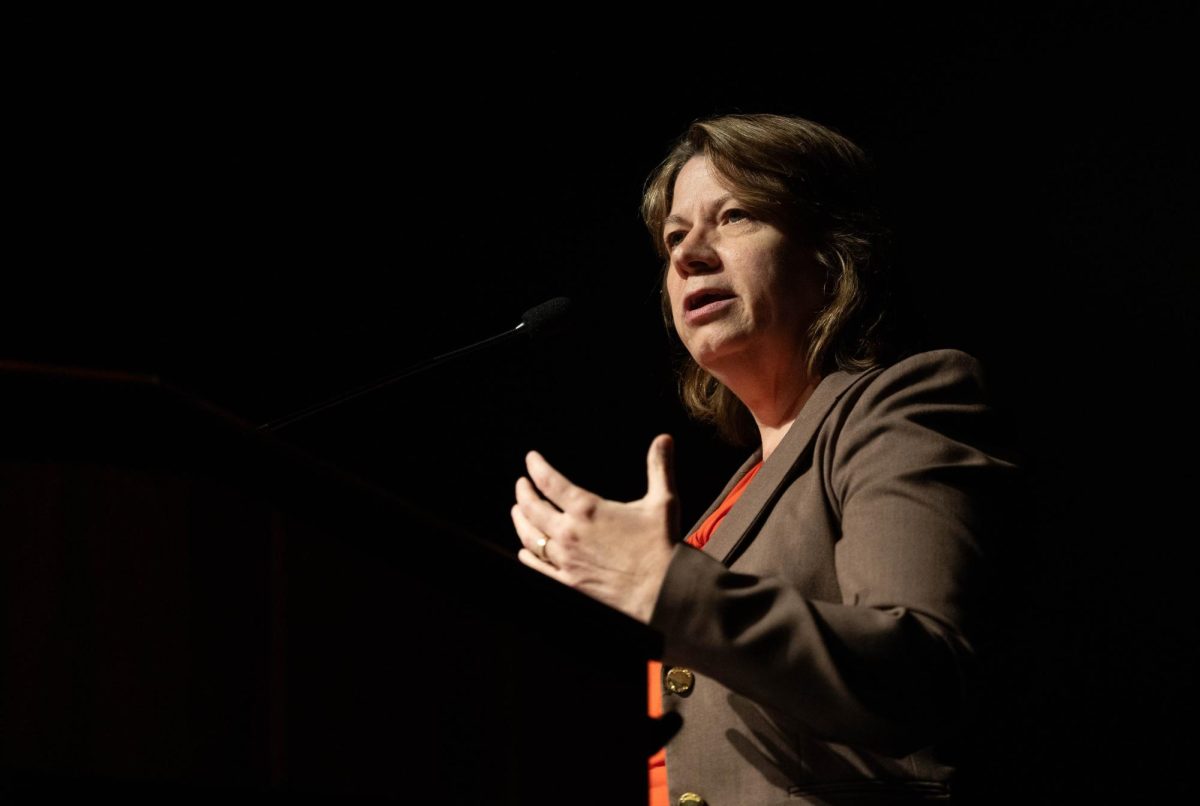
Commission Chair Melissa Ortega said they carefully considered the recommendations to understand what was reasonable within the current political landscape. She said commissioners prioritize information access, resources and guidance related to civil and legal rights for communities with high immigrant populations.
“We have to prioritize,” Ortega said. “You just have to get strategic and creative. How can we support (communities), what are we allowed to support?”
Under the 2023 Texas Senate Bill 4, local law enforcement is authorized to work with federal authorities to enforce immigration law. Local officials, public colleges and universities who refuse to cooperate with federal immigration enforcement can be charged with a Class A misdemeanor, according to the law. SB 4 is currently being challenged by immigration advocacy organizations in court, preventing the bill from going into effect until after the lawsuits are resolved. The lawsuit is currently scheduled to go to trial in July.
SB 4 is often called a ban on “sanctuary cities,” which refers to local governments adopting policies to promote trust between law enforcement and immigrant communities, according to the American Immigration Council. However, while there is no standard legal definition for a sanctuary city, the AIC said policies tend to focus on limiting local law enforcement cooperation with federal immigration authorities.
Commissioner Azeem Edwin said they are focused on providing information directly to relevant communities in accessible ways, including multilingual support.
“Until there’s an election, the federal government is the federal government,” Edwin said. “The federal government is powerful as far as immigration, however, what is enforced, where it’s enforced and what people know to do and not do is what largely the city governments can do.”
To push the recommendations through the city budget process, Ortega said change requires support from the community. She said calling district staff and expressing support for specific items for the upcoming fiscal year can help advance the recommendations. However, she said she is unsure whether the current political landscape will support the commission’s recommendations in light of other city priorities. She said there is a strong consensus of support across various commissions working collaboratively.
In a memo released last January, the city of Austin announced efforts to become a “Certified Welcoming City,” a designation granted by nonprofit Welcoming America. The title would expand the effort to foster an inclusive environment for immigrants to go beyond budgetary actions.
“Certified welcoming and sanctuary city are often conflated, but they are not synonymous,” said Leslie Nguyen-Okwu, director of strategic communications at Welcoming America.
Nguyen-Okwu said the program establishes a broader approach to fostering immigrant inclusion through policies and programs around goals such as civic engagement and public safety. Cities interested in the program are evaluated on a set of seven criteria areas. The program is centered on long-term commitment, which extends beyond the auditing process.
“The Welcoming Standard and Certified Welcoming (programs) emphasize building trust between communities and local law enforcement while educating all of us on immigrant rights and responsibilities,” Nguyen-Okwu said. “There is room for both. Sanctuary city and Certified Welcoming are part of this larger ecosystem of policies and practices that make communities welcome for everyone.”