Once paved by dirt and now the home to sprawling national chains, The Drag has remained a University staple. For over 100 years, The Drag has been the most famous strip of Guadalupe Street. The Daily Texan explored The Drag through the decades as it evolved from a dirt road to the center of the campus community.
1910s to 1920s
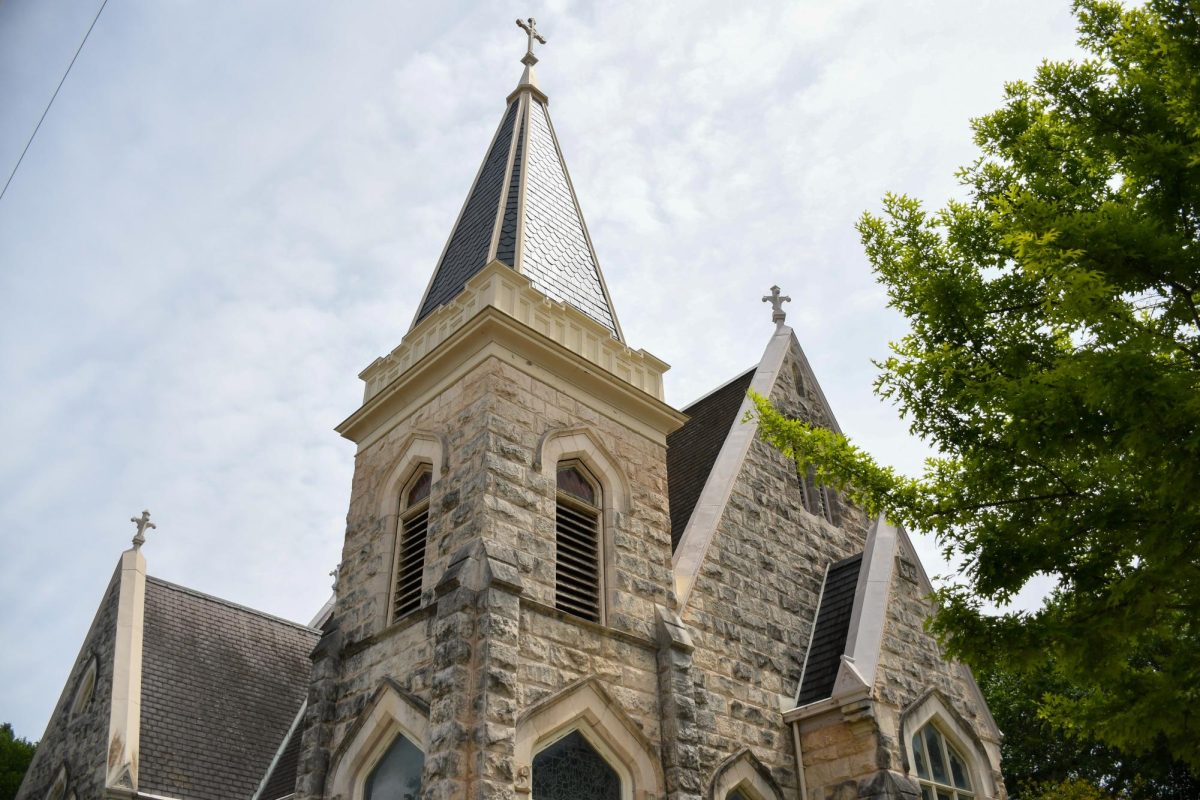
When students rolled up and down in Ford Model Ts, horse-drawn carriages and trolley cars, the University Co-op first opened on The Drag in 1917 after relocating from the Tower. Students, faculty and Austinites worshipped at churches like the University United Methodist, University Baptist and St. Austin’s Catholic Church, all of which still operate today. Austin staple Martin’s KumBak, later known as Dirty Martin’s Place, also opened in 1926 with dirt floors from which the establishment gained its name. In 1923, a funeral procession marched through the street for the University’s first mascot, Pig Bellmont, before students paid respect to him outside the University Co-op.
1930s to 1940s
After World War II ended and enrollment at the University more than doubled, veteran students traded war stories at the shops and drive-up drug stores on the strip, according to UT History Corner. Local cinema Varsity Theater opened in 1937, where CVS stands today, with its distinctive Art Deco style and film reel mural. With its first film showing, “The Texas Rangers,” the theater began a long tradition of entertaining students and patrons with a wide range of movies, including European art films, cult classics and nostalgia pieces.
1950s to 1960s
Up until the 1960s, not everyone was free to enjoy The Drag. The University admitted its first Black undergraduates in 1956, yet they found few businesses that opened their doors to them. A petition against segregation in University events, restaurants and theaters along The Drag circulated on campus. In 1960, 100 mostly white students led “stand-ins” at the Varsity Theater and Texas Theater. The peaceful demonstrators lined up for the 7:30 p.m. showing and asked the ticket seller, “I would like to buy a ticket if everybody is being admitted.” As each person was denied entry, they returned to the end of the line to restart the process. The demonstration drew attention, including from First Lady Eleanor Roosevelt.
“I am personally grateful to the Texas students for making the effort to bring about the end of this kind of segregation in their state,” Roosevelt said in her column, My Day.
The stand-ins continued for five months until the theater managers agreed to desegregate in August 1961. Most of the shops on the Drag were integrated within that year.
1970s
By the 1970s, students ate at food carts lining the strip or restaurants like Salvation Sandwiches Co., Legs and Thighs and Bluebonnet Circle Cafe. But the biggest events that brought the Austin community together were post-game celebrations.
In 1977, following a 26–0 football win against Texas Tech University, Longhorn fans carried on the tradition of “raising hell on The Drag every Saturday night” for the first home game in a month and filled The Drag for a nine-and-a-half-hour celebration. In a 1977 Daily Texan article, students recalled the “block-party-on-wheels” of horn-honking, bumper-to-bumper lights, fraternity trucks driving by with at least 25 riders and a masked moped rider throwing up “hook-ems.” By nightfall, the celebration became more raucous as a new crowd entered. People tossed water, cans and items at passing cars below from the Goodwall-Wooten dormitory, and nearly every car antenna and windshield wiper was bent under beer cans. Authorities shut the party down by 2 a.m. Sunday morning.
One Catholic school principal, Lynn Goodman-Strauss, who lived behind Night Hawk restaurant on The Drag, took her complaints to the Austin City Council to propose an ordinance prohibiting demonstrations without permits. She suggested throwing wads of chewed bubble gum into the street to halt traffic.
“It hasn’t come to that yet,” Goodman-Strauss said in a 1977 Daily Texan article. “But 1,000 wads of gum on Guadalupe wouldn’t bother me one bit.”
1980s
Students frequented cheap spots for lunch like Conan’s Pizza, Dobie Mall and I Can’t Believe It’s Yogurt. Students looking for a unique bargain went to the Renaissance Market set up in the alley where 23rd Street meets Guadalupe Street, or Discount Records.
“For the grand old lady (The Drag) is, I’d say she’s weathered it pretty well,” Discount Records manager Ray Williams said in a 1983 Daily Texan article.
A.J. Rather, UT alumnus and manager of Sommers Discount Drug Store on The Drag, noted the change in students’ behavior from formerly wild Saturday nights.
“It’s lots quieter than it used to be in the Fifties and Sixties,” Rather said in the same article. “Kids don’t have time to play like they used to. They’re more materialistic.”
1990s
In the decade of frosted tips, grunge music and the birth of the World Wide Web, The Drag adapted to students’ changing tastes. The street received a beautification makeover to make The Drag more pedestrian-friendly with new lighting, trees and sidewalks.
As technology advanced, so did transportation modes. Capital Metro proposed a light rail running through Guadalupe Street in 1994, but the plan never took hold as it required eliminating parking and bike lanes and increased noise pollution.
“The Drag is a tradition,” then-speech communication senior Karen Netzer, chairwoman of Future Alternatives for Safer Transportation, told the Texan in 1994. “Certain things should not be touched for futuristic modes (of transportation.)”
At the time, The Drag had three competing bookstores — Wallace’s, Bevo’s Bookstore and University Co-op, until emerging bookseller giant Barnes & Noble opened where the University Co-op now stands.
“The Drag is a vibrant, alive, historical section of town,” Jeanette Nassour, owner of ‘90s Drag business the Cadeau, in a 1990 Daily Texan article. “If townspeople would think to support (the businesses) on The Drag, there would never be a question of survival. I can’t think of a prettier shopping center.”
But the ‘90s also brought closures of several of the area’s landmarks, including Garner & Smith Bookstore, The Drag’s true “liberal arts” bookstore, and women’s department store Yaring’s and Leautweiler’s Jewelers. Varsity Theater also shut down, which became a dollar movie theater in 1988 as a last attempt to fill seats until being forced to shut down in 1990. Tower Records took over the space, a spot UT communication studies alumnus Ty Denton said he remembered visiting often.
“Most change is good, but sometimes it’s nice to see familiar faces,” Denton said. “You want some things to stay the same because it’s part of your history, just as much as it’s part of The Drag’s history.”
2000s to 2010s
By the end of 2005, seven stores closed, including Nomadic Notions, Mojo’s Daily Grind and Le Fun Arcade, as rising rent prices overwhelmed them. The Austin Independent Business Alliance began having “Third Thursday” to promote local businesses on The Drag, and stores stayed open longer, offered special discounts and featured live music to entice customers.
2020s
Today, chain stores have overtaken The Drag, but still retain a few “old Austin” spots, like Dirty Martin’s and Hole in the Wall.
“Change is inevitable,” Denton said. “There’s always going to be the next popular store coming in, and it changes … with the next generation, so something that’s there today that’s popular is probably not going to be there 10 years from now because you got a new group of students that want something different.”