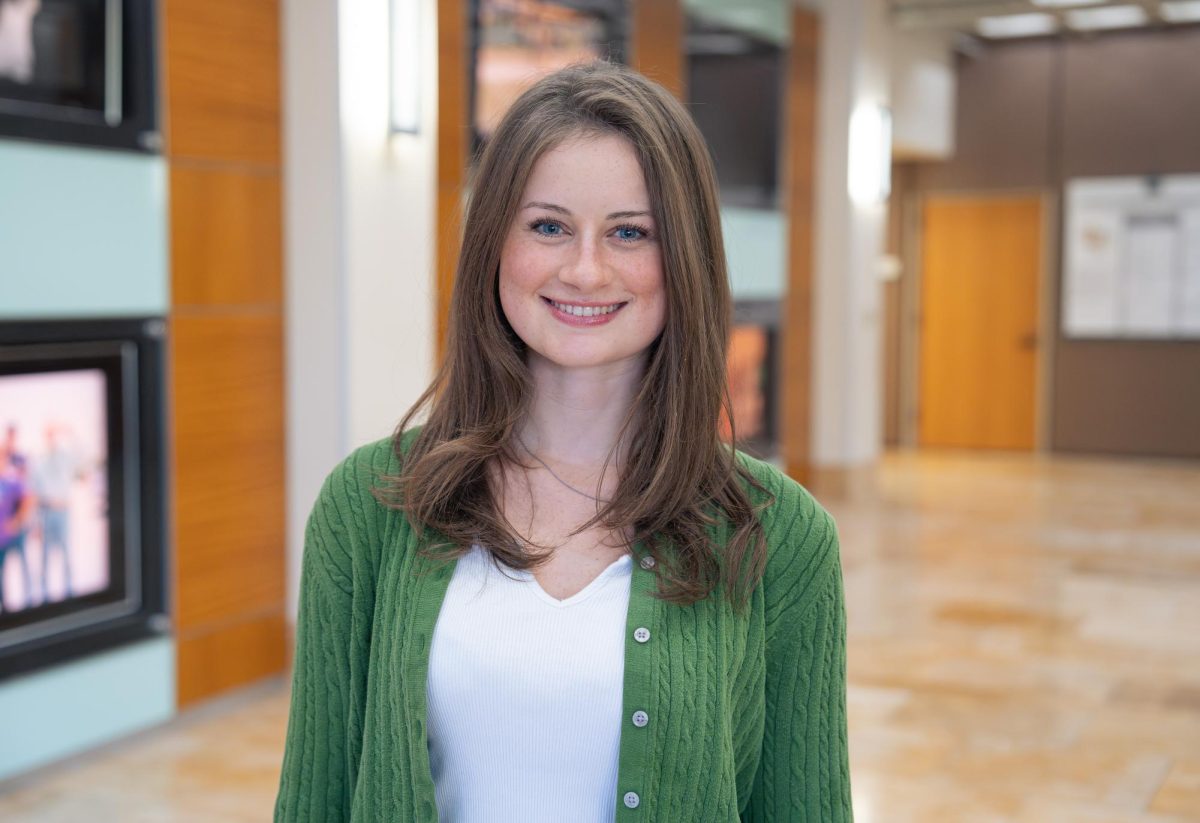
Achiraya Kurth: Welcome to Longhorn Essentials: Your guide to all things adulthood and UT. I’m Achiraya, and in today’s episode we’re talking about something that’s both deeply personal to me and incredibly relevant to so many students at UT… navigating college with ADHD.
Now, I’ll be honest—I have ADHD, but I’ve never registered for accommodations. Whether it’s feeling like I don’t need them, the hassle of paperwork, or just plain procrastination, I’ve put it off. But talking to other students and experts made me realize just how many resources are out there, even for students like me who aren’t officially registered.
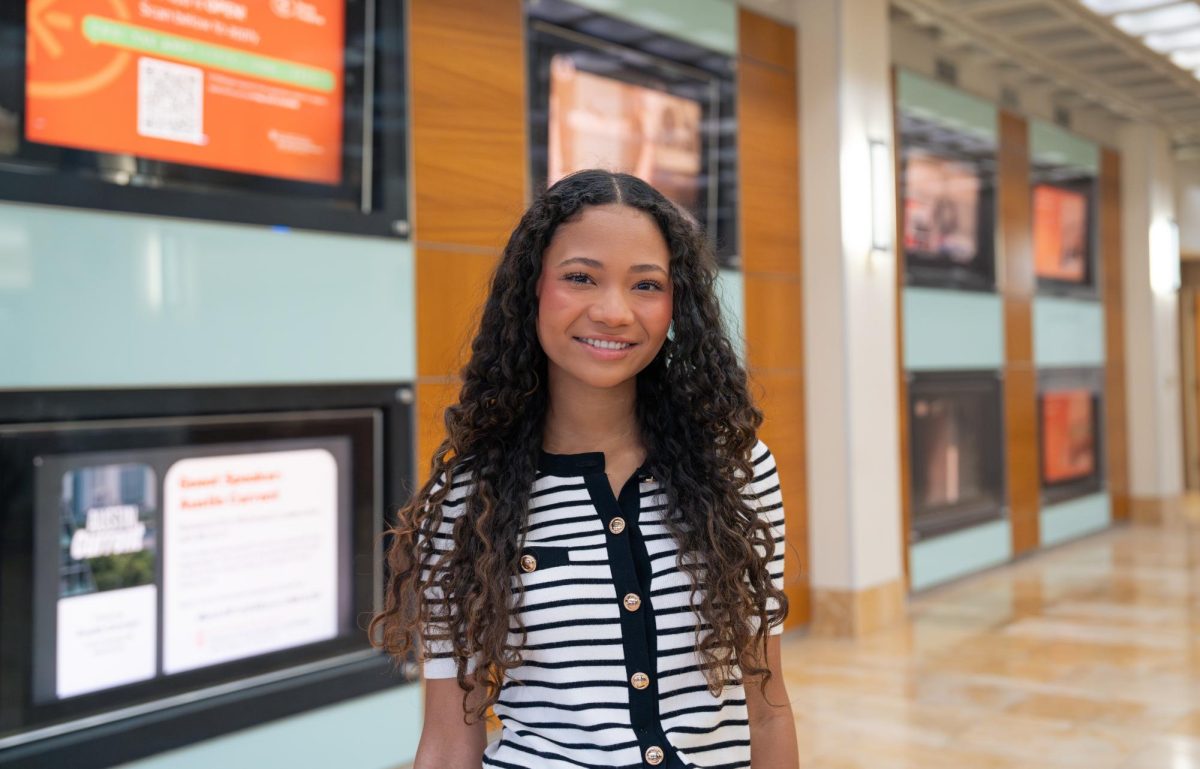
In this episode, we’ll hear from Ashley Richardson-Minnitt, program director of Longhorn TIES, Dr. Amanda Bosky, a UT professor who actively structures her classes to be ADHD-friendly, and UT students Clarissa Sandoval and Simon Marina, who have ADHD but approach college differently.
Let’s dive in.
Kurth: First, I spoke to Simon Marina, a sociology and Middle Eastern studies student, about how ADHD has affected his academic journey. He was diagnosed through UT’s now-defunct ADHD testing program, which used to offer low-cost evaluations.
Simon Marina: I was undiagnosed up until, I want to say, two years ago. And I was actually diagnosed through UT. They used to have a program here that you could sign up for and get tested for much cheaper than you can elsewhere. And it explained a lot because I had struggled a lot with focus all throughout my academic career, even way back when I was in grade school. So until I was diagnosed, I would say that my first year at UT was academically a disaster.
Kurth: But that program no longer exists.
Marina: I was one of the last. The demand was very high, and I can understand why. I think there’s a lot of people who are undiagnosed and probably struggle with it and don’t know. But yeah, there was a program on campus where you would send an email, state your interest, and give your cause, reasoning basically for why you think you might have it. You were charged something like $150 to maybe $200, and as I understand it, getting that out of pocket testing elsewhere can be in the thousands. So it was a very helpful program, but demand was so high. There was a very long, I think, six-to-eight-month waiting period, and as I understand it, it’s no longer at UT.
Kurth: High school was one thing, but adjusting to UT’s academic rigor presented new challenges for Simon. The study habits that once worked for him no longer held up, forcing him to rethink his approach to learning.
Marina: In high school, if you have enough understanding of the material you could get by with maybe not studying or doing things at the last minute. But in college, especially at UT, you really hit a wall with those kinds of study methods or time management skills. One of the nice things about ADHD is that when you’re really interested in something, you can really pay attention to it—it holds your attention very strongly, to a fault as a matter of fact. But if you’re not so interested in something and being in college, sometimes you’re gonna take classes that you’re maybe not the most interested in. It can be very, very difficult to keep attention, to keep interest, and to get assignments done. I like reading, I read in my free time, but academic text, you know you’re not reading it because it’s nice prose, you’re reading it because it is often very dense material that you need to learn and understand and analyze. And keeping at that for long periods of time is very difficult. Even if it’s something you’re interested in, because the ADHD mind is very concerned with novelty. If you’re not getting that novel stimulus, your mind tends to wander much more than the average student.
Kurth: That struggle to stay focused? It’s something Dr. Amanda Bosky, a criminology professor at UT, understands firsthand—because she has ADHD herself. She’s made it a mission to create courses that work for all students, not just those with official accommodations.
Bosky: I have ADHD myself, and so that is something that I’m particularly familiar with in terms of the kinds of things that are going to work for students with ADHD and help support other students that may struggle with similar types of executive functions. I also take into account what the most common accommodations are and try to build that support into the class as much as possible so that really everyone can benefit from that. I know that the accommodations process can be confusing and maybe complicated for some students, and some students may not have access to the doctors that they would need to be able to get accommodations, so I take more of a blanket approach in thinking. If there’s anyone who needs accommodations, I want to try and build those in as much as possible to the class. And so I think about the things that people are gonna struggle with, which I think are gonna be memory and retention of information and being overwhelmed by a lot of information or a big assignment. And think about how I’ve seen students kind of struggle in the past and try to build in ways to support them. And so by breaking things up into smaller assignments as much as possible, so instead of having two big exams, they have weekly quizzes that they have plenty of time to complete that are open book. It’s just about applying the kind of basic concepts from the week and being able to show their knowledge that way. Rather than stressing out about trying to study for a really big exam.
Kurth: For students with ADHD, inconsistency can be one of the biggest obstacles. Trying to keep track of shifting deadlines, different formats for assignments, or surprise changes can be overwhelming.
Bosky: Every deadline for anything in class is the same day and time every week so that students know that things are gonna be due for that week on Sunday at midnight or whatever.
And then another thing can just be getting to class, I think it can be a struggle a lot of times for students, especially with ADHD where maybe they lose track of time and all of a sudden it’s five minutes before class and there’s no way they can get there. And so they don’t end up going at all because they don’t want to come in late. So I do find that giving a hybrid option where students can attend remotely helps. If they can’t get there, they can just join the Zoom and I think that ends up helping out students mentally as well.
Kurth: Clarissa Sandoval, a UT student who took her class, said this made a huge difference.
Sandoval: One of my professors recently, she herself had ADHD and organized the class in a way that helped her administer the content, but it also helped me a lot. She had said that sometimes it’s hard to get accommodations through the university.
Kurth: For many students, one of the biggest struggles with ADHD is focusing in long lectures. Clarissa says this is one of the hardest things about college.
Sandoval: Sometimes some lectures are an hour and 30 minutes or something or an hour and 15 minutes. And so sometimes it can just be so hard to sit there and pay attention the entire time without drifting off and thinking about something else or getting distracted.
Kurth: I completely get that. ADHD makes it so easy to zone out, even when you really want to stay engaged. That’s why students like Clarissa tend to come up with their own strategies to stay focused.
Sandoval: One thing I learned that helped is kind of like if there’s a PowerPoint or something that they provide beforehand, I’ll review it and kind of a structure the notes based on, the lecture slides that they’ve uploaded. And that way, when I go into the lecture itself, I’m not starting from scratch, there’s something to build off of just because I think the more pressure I have to learn more content, the more overwhelming it can be.
Kurth: A lot of students with ADHD never register for accommodations, even when they know they exist. For Clarissa, she never even considered it at first.
Sandoval: I never sought out any accommodations. I got diagnosed with ADHD pretty late, I would say. I got diagnosed when I was 19.
Kurth: And because of that, she got used to figuring things out on her own.
Sandoval: I considered myself pretty high-functioning, and so because of that I was like, “Nah I don’t need it, it’s fine.” And it actually hasn’t been until recently that I feel I’ve kind of come to terms with the fact that I do kind of have to process things differently than everyone else does or I have to kind of jump through hoops that other people don’t have to. I think in the past I’ve been really fortunate to just kind of get by and get reasonable grades and do fine in school. And I think that’s one of the main reasons why it wasn’t something that was on my parents’ radar or anything growing up.
Kurth: But outside the classroom, there are resources designed to help neurodivergent students. Longhorn TIES is one of them.
Ashley Richardson-Minnitt: Longhorn TIES stands for Transition, Illuminate, Empower, Success. We provide comprehensive wraparound support services to students who identify as being neurodivergent. So that looks like one-on-one coaching—primarily executive functioning support, social communication support, and professional development support and we also provide drop-in support. We also build community through our neurodiversity mixers, Fidget Fridays, we have an adulting 101 workshop coming up.
Kurth: The best part? Students don’t have to be officially diagnosed to use Longhorn TIES.
Richardson-Minnitt: We do not require proof of diagnoses and we don’t because there are so many barriers to getting diagnosed. First, testing. Testing is really expensive and a lot of college students don’t have the funds to receive testing. Sometimes students are hesitant about going through that process or just the follow through on checking the email, calling the provider. There’s so many multi-step and kind of step-by-step processes that are already a little bit challenging for individuals with ADHD, and so we didn’t want any of those barriers to be in place to access our services. So students do not have to have a proof of diagnosis to access ties.
Kurth: Longhorn TIES is a program that Simon took advantage of!
Marina: The Longhorn TIES program that I’m a part of have been very helpful. It’s essentially case management with some social aspects thrown in. They throw a lot of social events for people to connect with other neurodivergent people on campus. It’s very helpful, but in my case, the most helpful thing was the case management aspect. So basically, weekly or biweekly (depending on what works for you) you meet with a Longhorn TIES case manager. In my case, I focus mostly on time management, scheduling, and assignments I have coming up. It’s basically a mode of external accountability that is also attempting to teach me the skills to keep myself accountable.
Kurth: So what’s the takeaway here? Whether you’re registered or unregistered, managing ADHD in college is tough, but you’re not alone.
If you struggle with time management, focus, or need support, check out Longhorn TIES. If you’re considering official accommodations, Disability & Access can provide extra time on exams, note-taking services and priority registration.
And most importantly, there’s no shame in asking for help!
Kurth: This was audio reporter Achiraya Kurth. Longhorn Essentials is a production of the Daily Texan’s Audio Department. More episodes can be found on your streaming platform of choice. Follow us on Twitter at texan audio (@texanaudio) and check us out at the daily texan dot com (dailytexan.com). Thank you for listening.