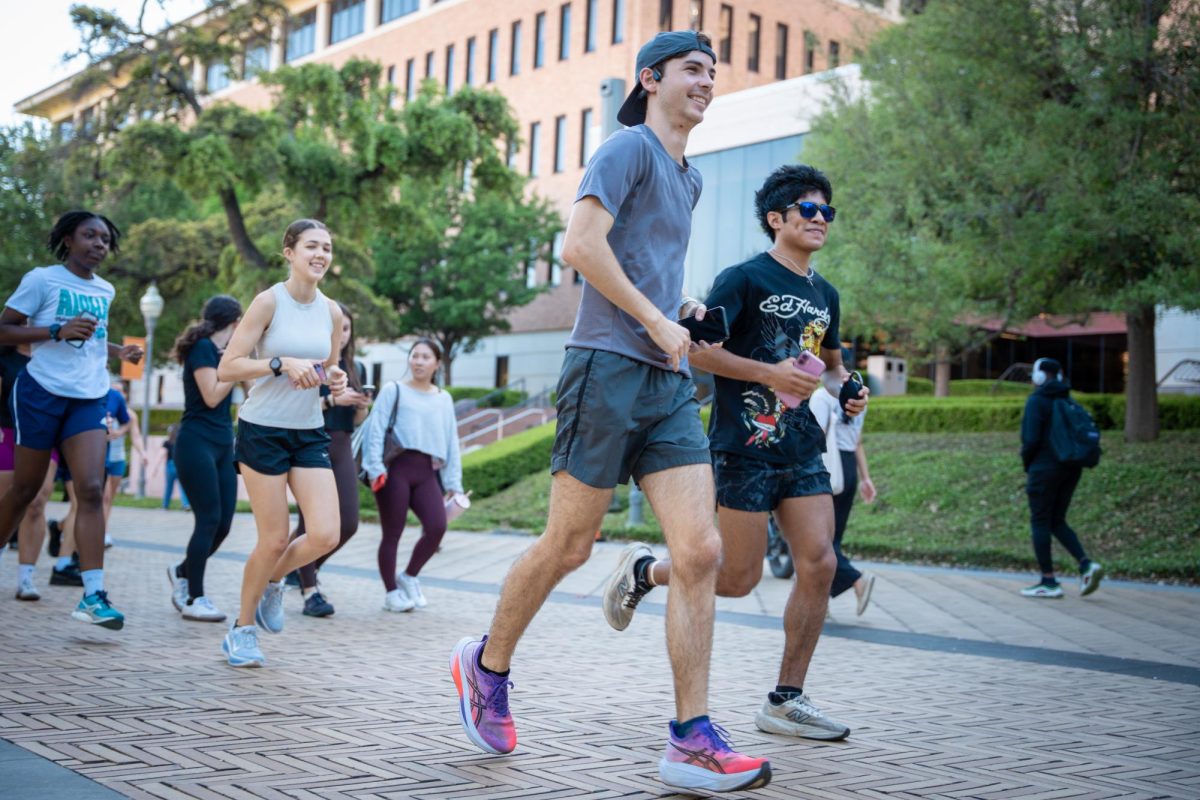
To some Austinites, running isn’t just exercise, it’s something closer to a religion.
Run clubs have existed in Austin since the 1970s, but it wasn’t until a decade later that the city became known for them. Running coach Paul Carrozza helped build the foundations of the running culture we see in Austin today, said Pam LeBlanc, a former sports columnist at the Austin-American Statesman.
“(Carrozza) made running a religion. He made it a part of your life. … He made it fun,” LeBlanc said. “It wasn’t like you had to go pound out five miles. It was a social activity that you did with friends, and you all did it together. You suffered together, and you feel awesome at the end together.”
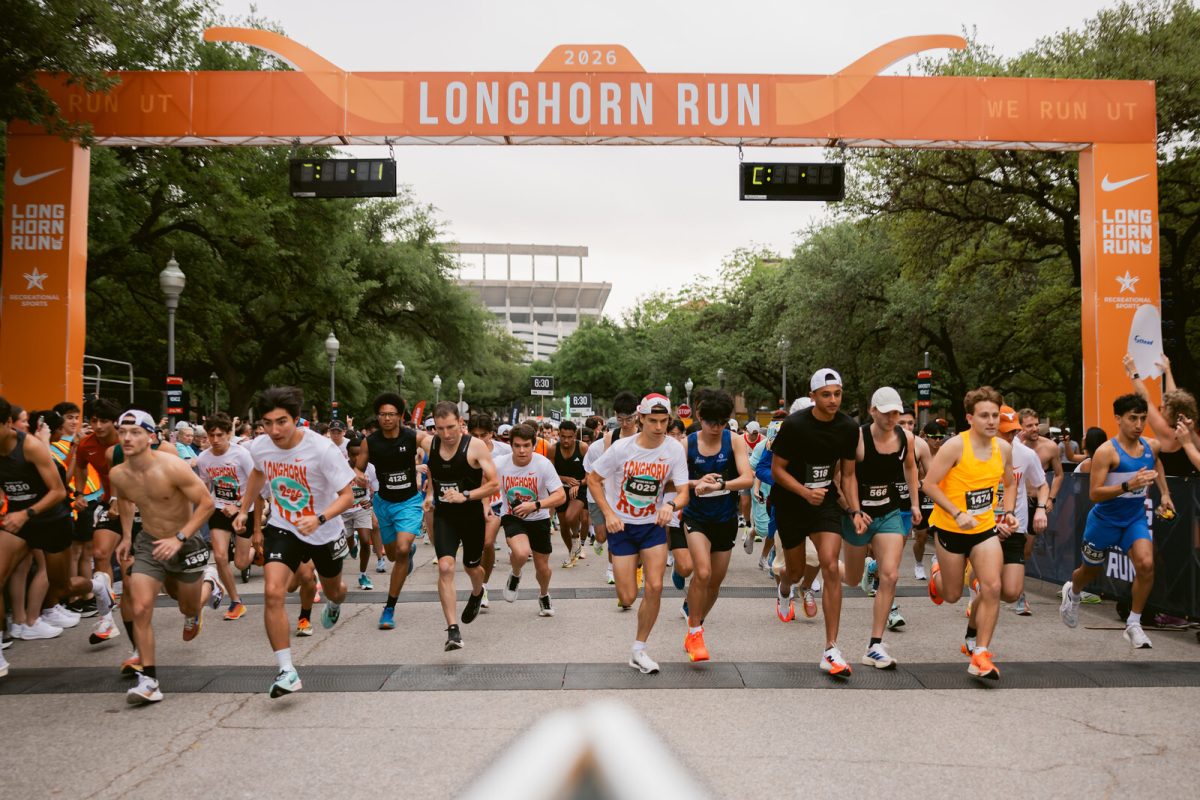
Today, the city has over 130 active run clubs, a number that has nearly doubled in the past decade as fitness culture has surged in popularity.
Rose Marie Hagman jogged infrequently during her youth in Del Rio, Texas and while attending school at St. Edwards University. It wasn’t until the completion of the Butler Hike-and-Bike Trail in 1972 that the sport became a daily habit for her.
The Butler Trail is where she met her future husband, Randy Hagman, co-founder of Austin Runners Club. Randy asked Rose if she would be willing to help plan some “fun-runs” for a group of runners. She said yes.
Rose became an active member of the Austin Runners Club, which Randy co-founded in 1974. The club was the first of its kind in the city. Many of its informal fun runs, including the Decker Challenge around Decker Lake and the Daisy Dash — a women’s only run — still exist today.
“It was really a way for people to get together and run together. Nothing was really organized,” Rose said.
Running during this period — commonly dubbed the “1970s running boom” — was largely event focused. As the sport grew in popularity nationwide, so did event attendance. People began forming training groups to prepare for the growing number of races popping up throughout the city. Rose said people would often run around UT’s football stadium or in the Westlake neighborhood early in the morning.
“When you’re training for a marathon, or just training in general, you get to know somebody pretty well,” Rose said. “You hear their life story 10 times.”
However, running during this period was still largely individualistic, according to a 2019 study published in research journal Sport in Society. Rose said people ran for personal goals, and largely joined groups to be surrounded by people with the same competitive aspirations. It wasn’t until the 1980s that the Austin running community gained a more community-focused approach.
“This is before all these big groups began,” Rose said. “And then it really blossomed, and it ballooned. And (now) everybody’s got a training group.”
In 1985, lifelong runner and California transplant Paul Carrozza moved to Austin, and immediately began working in the fitness industry. Three years later, he bought an old shoe store called RunTex, and developed it into a hub for a running community that was about to gain national prominence. The new RunTex still sold shoes, but Carrozza said he and his team sold something else as well: a structured, community-driven running culture centered around training groups, races and shared identity.
“We, initially, just loved the business, and we started the training group there and put on the Congress Avenue mile, which was our first event ever that ended up getting national prominence,” Carrozza said. “We just were all in on it.”
RunTex brought in some of the world’s greatest runners at the time, Carrozza said. Politicians like former president George W. Bush and former Texas governor Rick Perry also ran with Carrozza and his crew. Bush even assigned Carrozza to the President’s Council on Fitness.
“We had so much support from the community,” Carrozza said. “I truly understand the sense of building an ecosystem where everyone is involved for the right reasons and … it’s inclusive.”
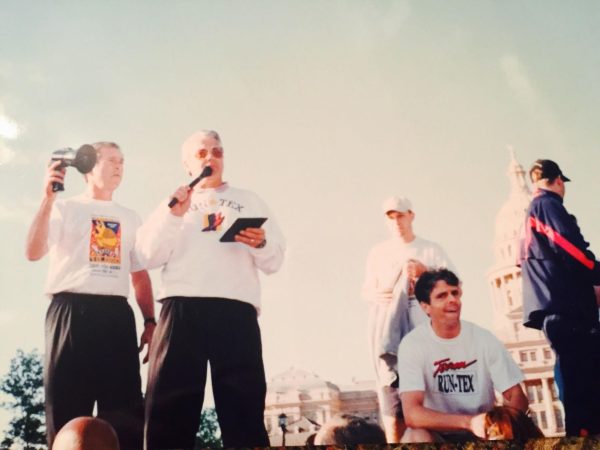
Raised in the Church of Christ, Carrozza understood how churches were organized, he said. It was only natural for him to do the same thing, but with running clubs as the religion, Carrozza said.
“My goal is to have every company in town (and) every school in town to have their own running club,” Carrozza said. “They would sustain it through time, and most of them continue to thrive.”
Many groups evolved from RunTex, often started by former associates who trained others under the moniker. One of these groups was Gilbert’s Gazelles, founded by Burundi-born runner Gilbert Tuhabonye. Tuhabonye worked for RunTex for many years under Carrozza’s mentorship until starting his own group in 2002.
“[Gilbert’s Gazelles] has been growing since, I owe being a part of this community and our kids to [Carrozza],” Tuhabonye said. “[Carrozza] was instrumental. And a mentor still. He’s such a great person.”
Multiple independent training groups emerged around this time, taking advantage of Austin’s natural landscape and outdoor accessibility.
“There’s sort of a genetic tree,” said Cory Mull, a reporter at Austin Fit Magazine. “Somebody at the previous level thought to themselves, ‘Hey, we could do this.’ So they branched off, and they created their own separate entity.”
Texas Running Club, UT’s official student run club, is one of these entities. Carrozza started it in 1999 as part of his effort to bring running to schools and campuses, and it still exists today as one of the many clubs at the University of Texas. Texas Running Club is housed under UT RecSports.
Austin’s running culture continued to grow in the 2000s and 2010s. Corey Yeung, a data analyst who has attended every Austin-area run club, has tracked this growth. Yeung posts his findings on his Instagram account, @atxrunguide. He said Austin’s rise as a tech and entrepreneurial hub, along with developments like the completion of The Boardwalk at Lady Bird Lake, made running more accessible and social.
Yeung said the COVID-19 pandemic poured gasoline on the fire, igniting growth in a trend already inching upwards. LeBlanc said people that had never run before began the sport during the pandemic.
“It’s their social network,” LeBlanc said. “It’s a huge part of their life.”
In following years, a new wave of run clubs emerged across Austin. People like Yeung moved to the city for remote work and the opportunity to be part of its fitness community. These newcomers created new groups and used social media to bring hundreds of runners together at a time. Groups like RAWDAWG have become national brands, expanding far beyond Austin’s local running community. Now, the group hosts events in different cities across the country, according to its Instagram.
“(There are) the run clubs you would think of from the new era … the ones that really popped off,” Yeung said. “But then ones that are staples, the ones that have existed for a long time, because RAWDAWG is adding a new kind of culture and element to running clubs that didn’t exist in the past.”
Yeung said that while the trend, popularized by social media in the last couple of years, may die down, the run clubs will always have a presence in Austin.
“I think you’ll see that narrow down to, again, the essence of people who want to stick around for what run clubs used to be, or just because they found a new love and interest for run clubs,” Yeung said. “ Running is here to stay in Austin.”