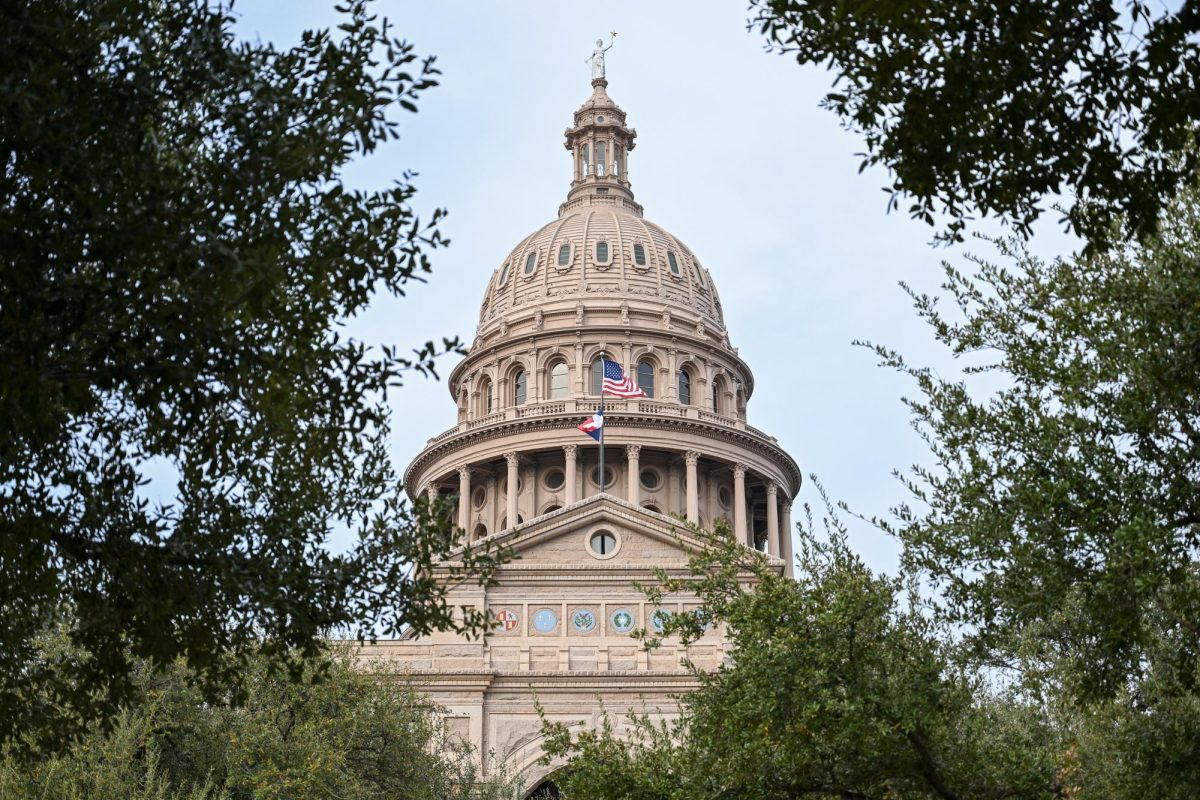
Gov. Greg Abbott signed a bill on May 27 establishing a Higher Education Research Security Council to promote secure academic research at R-1 institutions in Texas.
The council will comprise research security officers from each R-1 university system, as appointed by Texas Senate Bill 1565 in the previous legislative session. Carnegie designates an institution R-1 if it has reached at least $50 million in research spending and provides 70 doctoral research programs. As of February, Texas leads the country with 16 institutions designated with R-1 research status, the highest of any state, according to the Texas Higher Education Coordinating Board.
Texas Senate Bill 1273 tasks the council with identifying the best practices for research security and developing a security policy for all R-1 institutions to adhere to, specifically focusing on mitigating intellectual property theft and foreign interference.
Common research security practices can include oversight of export control, international collaborations and restricted research, including classified and proprietary research, according to the Texas Research website.
“Many of these practices have been in place for a long time — long before we started talking about research security,” said Michelle Stickler, associate vice president for research in the Office of Research Support and Compliance.
Stickler said UT began to consolidate these “research security” practices in 2020 after the federal government increased its focus on protecting sponsored research projects. In January 2021, a presidential memorandum from President Donald Trump began requiring institutions receiving more than $50 million in federal funding for research to implement standardized security policies.
“As research dollars become more and more scarce, it can only help us to demonstrate that we are particularly vested in protecting the intellectual property that’s the outcome of the federal dollars that we do get,” Stickler said.
Texas House Rep. Terry Wilson, chair of the Higher Education Committee and sponsor of SB 1273, said it builds upon the previous legislation to create the “best practices, training and accreditation” for R-1 research institutions.
“It will make our research institutions in the state of Texas far more competitive,” Wilson said. “In other words, Texas would become the destination point.”
The council will be responsible for meeting quarterly, providing annual research security training and developing an accreditation process to recognize research security excellence, according to SB 1273.
Though UT does participate in restricted research, Stickler said most of the research conducted at UT is considered “fundamental” research.
“The objective of fundamental research is to publish and make it openly available to benefit the larger knowledge base in the profession,” Stickler said. “However, there are some potential gaps.”
Elements of research security that could be strengthened include cybersecurity, international collaborations, institutional collaborations and awareness, said Kevin Gamache, associate vice chancellor and chief research security officer for the Texas A&M University System, in a statement.
“Research security is not just a compliance issue — it’s a cultural one,” Gamache said. “Institutions should provide regular role-specific training that helps researchers understand the risks.”
The council’s first presiding officer will be the research security officer from the Texas A&M University System, according to SB 1273. The council will have its first meeting by January 1 of next year, after which it will meet at least once each quarter to prepare and submit a report to the governor, attorney general and relevant legislative committees.
Wilson said many of the practices outlined in another bill, Texas House Bill 127, which was sent to Abbott on June 2, will serve as a “tool” for the council in terms of their responsibilities.
“What we try to do is make sure that there are tools in place to screen those individuals and to screen those tools that may touch the research itself to make sure that they are secure, and that we prevent espionage or proprietary information theft,” Wilson said.
Gamache said the “institutional support” shown by legislation like SB 1273 reinforces Texas’s leadership in research.
“By establishing a coordinated approach to research security, Texas sets a model for other states to follow,” Gamache said.