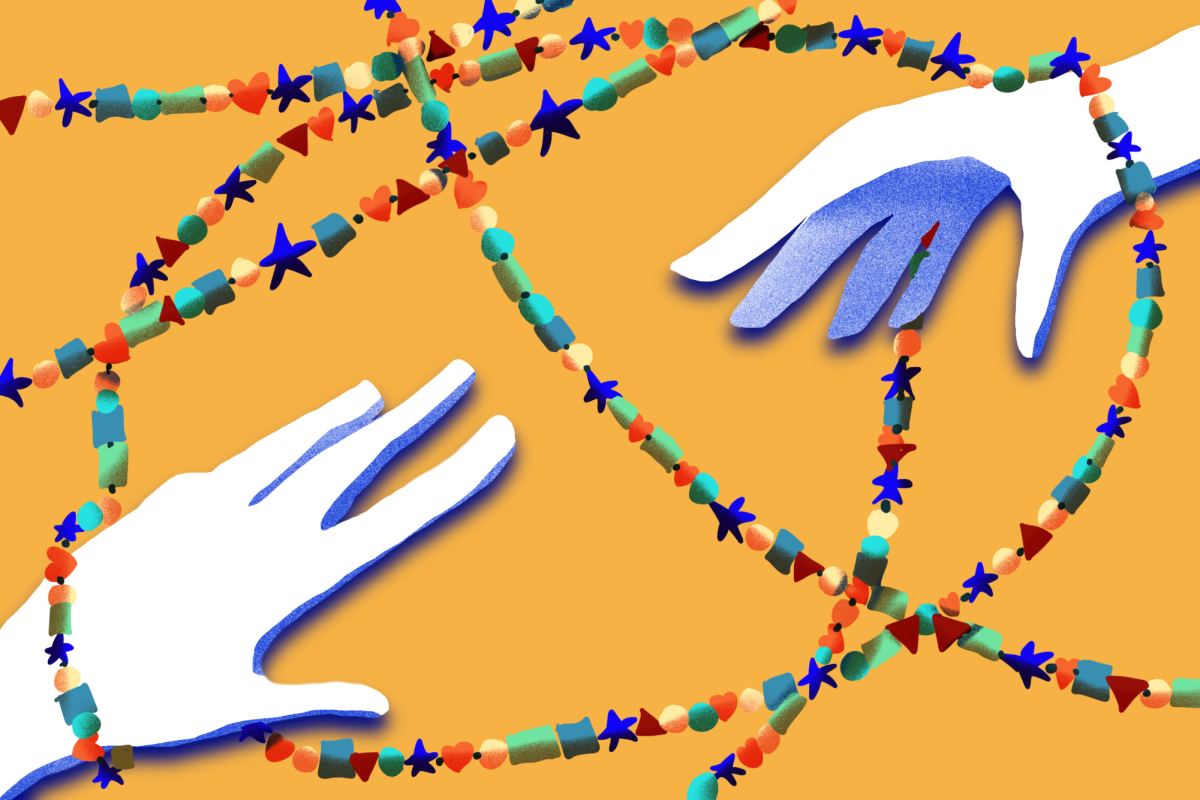
Just as an airplane pilot relies on their skilled crew to soar through the sky and the President relies on their trusted cabinet, you too need a strong support system to help you reach your greatest heights.
Challenges and obstacles are inevitable, so having a personal board of directors, or a support network, is essential to navigating turbulent times and rising above adversity. No one can do life alone; we need mentors and friends to guide us.
Create a list of reliable people and include subsections for personal, academic and professional matters. Reflect on who you trust, how well they know you and how their expertise can help you reach your goals.
Philosophy senior Haley Linscott recently completed her graduate school applications. While writing her application essay, she realized the importance of having supportive professors in her circle.
“As a student, you’re much less familiar with the material and how to write professionally than (professional mentors) are,” Linscott said. “It’s good to have one or multiple people helping.”
Who you know and how well they know you can make a huge difference when facing unknown territory.
“I help teach one of our professional development courses, and part of the topics that we talk about are networking and building your brand,” said Michelle Sanchez, a career coach at the Liberal Arts Career Center. “A quote that I resonate with is by Porter Gayle, he says, ‘Your network is your net worth.’ It’s not just who you know. It’s who knows what you know.”
The Liberal Arts Career Center can be a good resource to help improve your networking skills and build your board of directors.
While connections are extremely valuable and rewarding, it’s also crucial to remember that establishing them takes time and effort — it won’t happen overnight.
“You’ve taken all this time to build your personal and professional brand,” Sanchez said. “Don’t you think you’d ask yourself, ‘Who is someone or who are certain individuals that I think are going to highlight and showcase that uniqueness that I bring to the table?’”
Having a board of directors to consult when you don’t know how to approach something can help alleviate some of the burden. Find your people early on in your college career so that you’re not scrambling for help when it’s too late.
“If you need people, getting to them at the last minute is not always going to work in your favor,” Linscott said. “For one, they might be busy. Two, if they’re writing letters of recommendation for you (and) you haven’t built rapport with them and they don’t know you or your work, then it’s harder for them to advocate for you.”
For many, finding reliable people can be challenging. However, investing time in making friends, attending social events, joining clubs and even attending office hours can help establish the relationships necessary to develop your board.
I’ve taken the time to build my personal board of directors — a list of people I trust for guidance across different areas of my life. It includes professors I rely on for academic advice, feedback and recommendation letters, as well as family and friends who offer perspective and emotional support when life feels overwhelming. Knowing that I have a reliable network of advocates to rely on is motivating because I never feel alone.
Don’t wait until you need advocates. The question isn’t whether you’ll need them, but when. Start building your personal board of directors now, and invest time and effort into nurturing those relationships. A strong network cultivated with care will be your greatest asset in life.
Mendoza is a philosophy senior from El Paso, Texas.