The Texas House heard testimony on Thursday regarding congressional redistricting, one of the agenda items for the special legislative session. Out of the five hours of public testimony heard by the House Select Committee on Congressional Redistricting, no one testified in favor of the rare push to redistrict mid-decade.
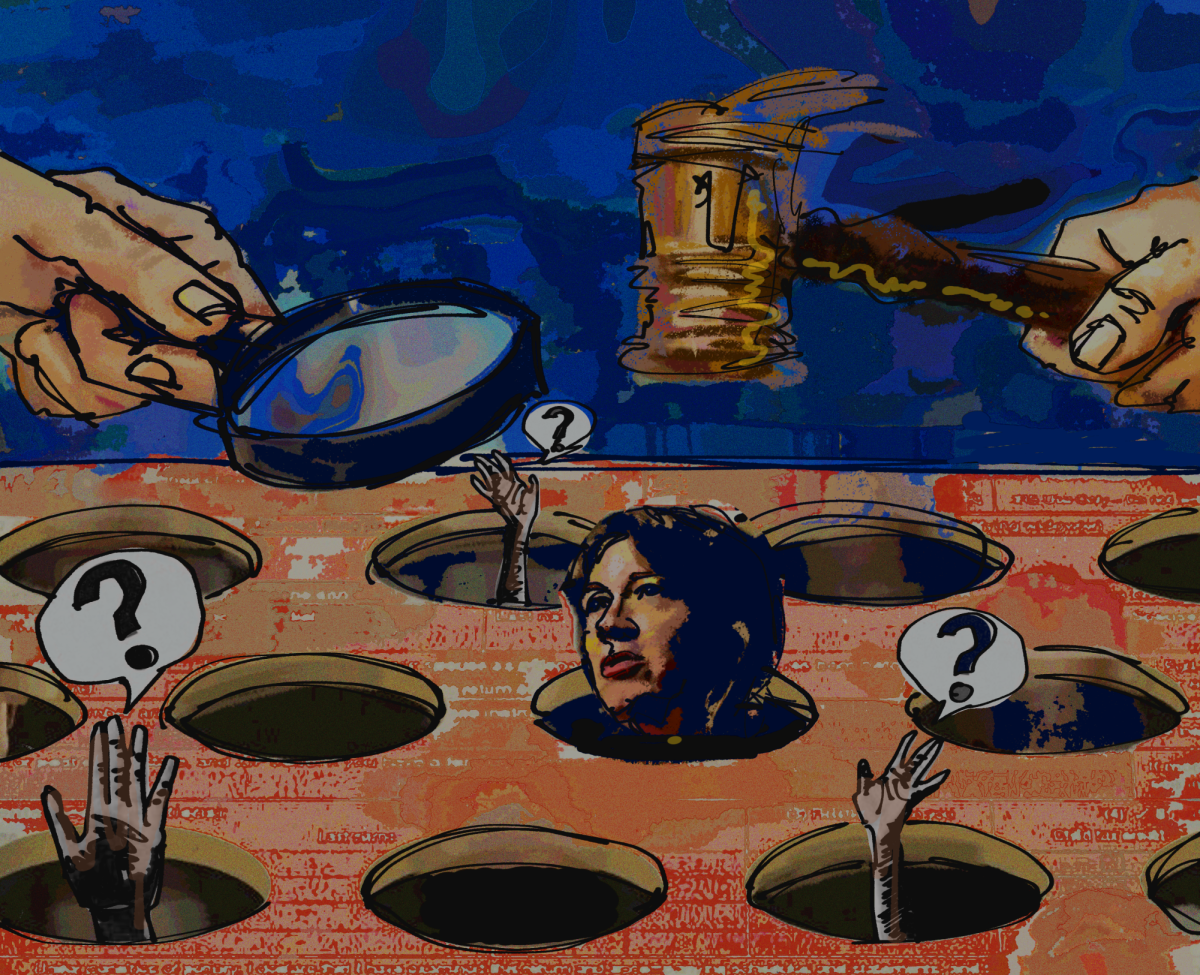
In a packed hearing room, Texans urged lawmakers to reject plans to redraw the congressional maps. Some speakers expressed confusion over the decision to hold hearings without a proposed map, while others critiqued redistricting being made a priority alongside flood relief.
Redistricting is the process of distributing voters evenly across districts to ensure each person’s vote has equal power, said Joshua Blank, research director for the Texas Politics Project. Redistricting is required every ten years following the U.S. Census.
According to the Texas Tribune, Gov. Greg Abbott was under pressure from President Donald Trump to place redistricting on the special session agenda to pick up more Republican seats in the U.S. House of Representatives. Alicia Perez-Hodge, who testified on behalf of the League of United Latin American Citizens, said Texans should not “bend the knee to anyone in Washington.”
Although redistricting is meant to level the playing field for a person’s voting power, it is not an apolitical process, Blank said.
“Redistricting is often engaged in by politicians who are drawing the lines in which they will run for reelection,” Blank said. “It’s maybe one of the most political processes because it is an event in which elected officials, political people themselves, get to choose the lines of conflict and competition.”
Mark Strama, a former state representative and current director of the Annette Strauss Institute for Civic Life, said congressional maps are meant to stay in place until the next census count because there is no new population data to justify a new map in between censuses. The first time Texas tried to redistrict mid-decade was in 2003, and the Texas House Democratic Caucus fled the state to break quorum, the minimum number of lawmakers needed to conduct business, he said.
Now, Texas Democrats are considering similar options to prevent mid-decade redistricting. At a rally outside the Texas Capitol before the Thursday hearing, Texas Rep. Gina Hinojosa, D-Austin, who represents UT, said she is prepared to break quorum should the time come.
Some student organizations, such as UT’s Young Conservatives of Texas chapter, are optimistic about redistricting. Ethan Xu, the executive director of the chapter, wrote in an email that while congressional districts may look different, every student at UT will still be represented by a member of Congress.
However, Ally Flores, president of University Democrats, and Nathaniel Reed, chair of the University Democrats’ Disability Caucus, testified on Thursday in opposition to redistricting. Reed said redistricting could be “the end of an era in partisan politics,” while Flores’ testimony focused on the effect redistricting may have on young people.
“(Mid-decade redistricting) doesn’t just cause confusion; it makes participation harder in a system that already isn’t built for young people,” Flores said during her testimony. “We’re balancing classes, jobs, financial aid deadlines, and now we’re expected to keep up with last-minute shifts and political lines too.”