Wanting to go into education, specifically a career in teaching, has been the hardest journey of my senior year. While it’s something I’m passionate about and the impact the profession has on the local community and its students is clear, the state of the public education system is more glaring now than ever. This year has come with newfound fears about pursuing teaching, as I have noticed the differences in my younger siblings’ classrooms compared to when I went to the same school.
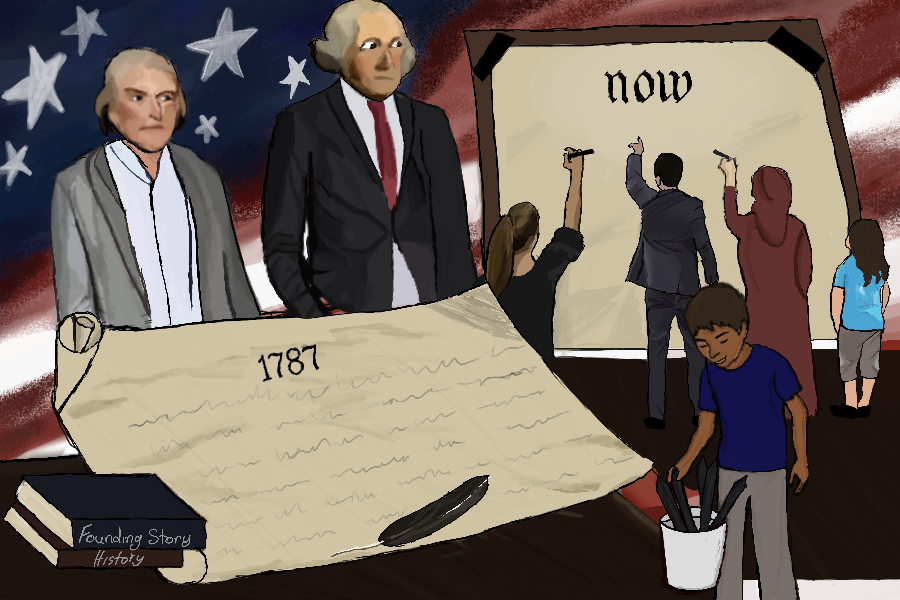
With the increased political oversight in the classroom through laws banning diversity, equity and inclusion, there is more discourse about what can be taught or said in a classroom than ever before. With teachers being fired for reading certain books in classrooms, classroom content seems more difficult to navigate, since my majors consistently discuss the importance and utilization of DEI in education.
The basis of some class lessons naturally circulates around cultural, gender or identity-based topics, specifically in writing or history classes. It’s now more difficult to teach within parameters without feeling the heavy weight of censorship, often seen in the form of book bans. Book bans have extended to include books that many other students grew up with or were part of the curriculum for a long time before these changes.
Besides the issues raised by so many regulatory changes in political oversight, there is also fear surrounding the career’s sustainability. While it varies by state, the often low-paying, stressful work environments can be discouraging compared to other career paths.
While these considerations feel overwhelming, especially after the time and effort I put into getting my degree at UT, it feels ignorant to use this reasoning to discourage my path into the education system. You can’t fix the system from the outside, and now more than ever, students need passionate and interested teachers who can provide them with the education to go beyond their grade school years.
However, yet another fear that can’t be overlooked is the prevalence of school shootings, making it scary to consider being in a classroom. Gun violence in classrooms brings fear for teachers going to work every single day. School shootings are an increasingly common issue that impacts thousands of people every year.
All of these issues and fears contribute to the teacher shortage, as fewer students are interested in pursuing the career. Yet, teachers play one of the most important roles in a child’s development, as they consistently work with students to grow their academic and social capabilities before they leave the classroom. I can still recall the “treat others the way you wanna be treated” slogan at our elementary school, or the middle school student government activities that played a huge role in who I am now.
These issues are also consistently growing and changing as the U.S. Department of Education recently got rid of the Special Education department this week, impacting student resources and access within a classroom and emphasizing how these barriers and challenges may likely worsen. Special education programs offer an abundance of resources and accommodations for students. Without these, students may struggle to keep up with their peers, conform to classroom expectations and prepare to leave school.
As someone who was in special education and had a 504 during my time in school, a lack of resources like this will be detrimental to the education of children today, especially with already underfunded schools or minimal resources allocated toward individualized student plans. Disabilities are also a topic with a lot of stigma surrounding them and are often overlooked or not properly taught, and there’s a risk of making the representation minimal to none without a structure for schools to follow.
Generally, being a teacher has been something I’ve been warned against, and it’s been difficult to consider pursuing something others look down on, especially as the battle continues and the field continuously changes as it adapts to the changing political landscape. However, as the state and federal systems continuously fail us, teachers will be the ones at the forefront of this battle, helping provide access, advocacy and accommodations where they can. As a student with a disability, a student at UT in the deteriorating Texas educational system and a student of a low-income community, it doesn’t feel right to look the other way.
Rail is an English, anthropology and rhetoric and writing senior from El Paso, Texas.