Personally, whenever I think about college football, one figure comes to mind: the infamous Nick Saban, possibly one of the greatest coaches of all time.
There were several things unique to Saban that made him such an impactful coach — the hiring of a psychiatrist on his team, the total control he maintained over his programs (specifically Alabama), his recruiting prowess, etc.
But one thing I’ve always been interested in is what Saban used to call “The Process.” Put shortly, it’s falling in love with the literal process of things.
“The Process” isn’t easy. It isn’t gratuitous. It requires hard work, discipline and a willingness to put others before yourself — to prioritize the team as a whole instead of money or playing time or viewership.
“The Process” was revolutionary, but compared to today, it was relevantly simple to build. Saban recruited a bunch of talented, yet vulnerable, freshmen to a school where buying into the locker room culture was not a choice. It was a privilege and simultaneously a necessity.
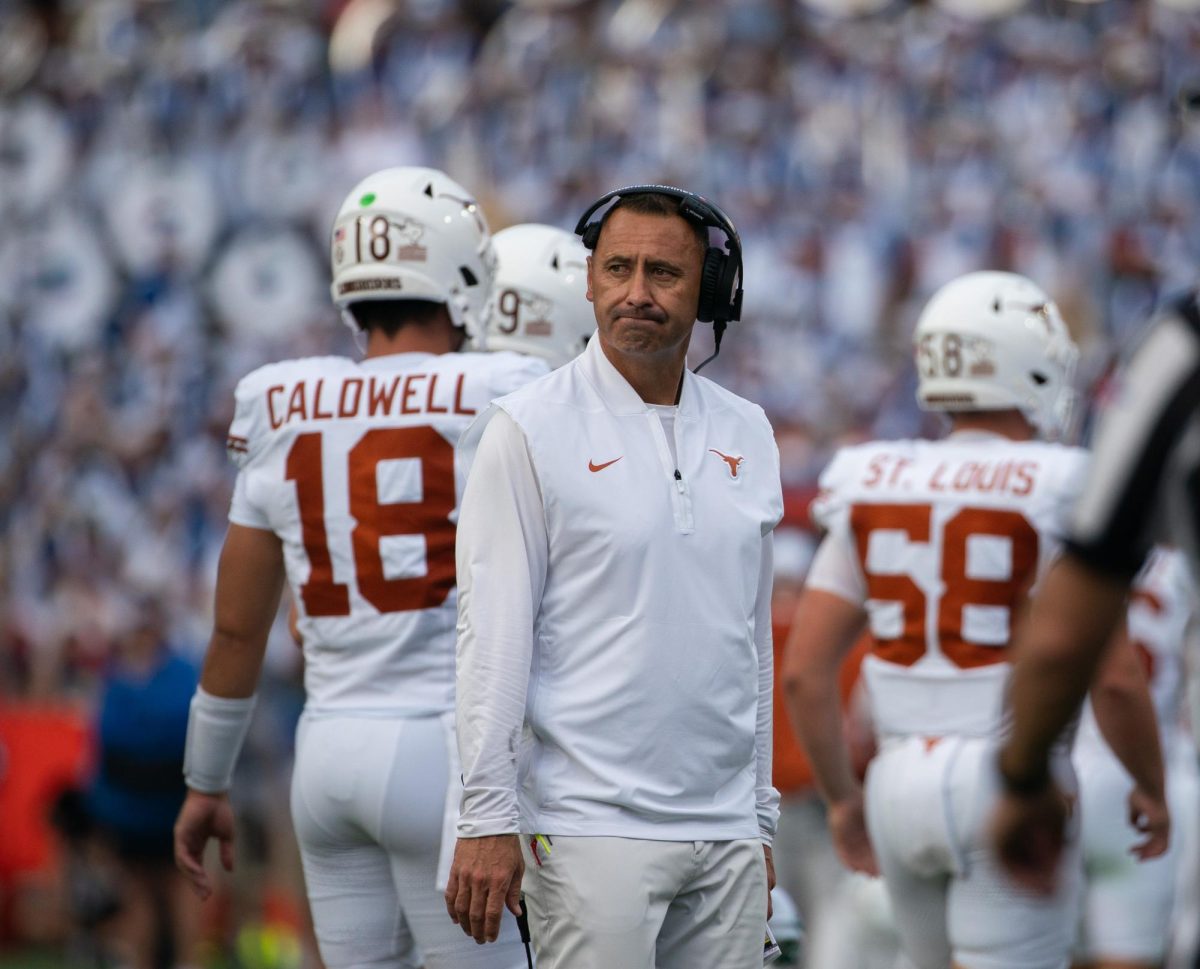
Today, Saban has multiple coaching descendants in the men who coached under him during his time at Alabama — notably Ole Miss head coach Lane Kiffin, Georgia head coach Kirby Smart and Texas head coach Steve Sarkisian.
All three have developed their own form of “The Process,” but in an era of college football where everything circles money, revenue, media deals and name, image and likeness, how do they get their players to buy in?
The media narrative in the press room makes it obvious that Sarkisian has adapted some key details from “The Process” to his locker room heavily. It’s almost second nature for each player coming to the mic to talk about the importance of taking things day-by-day.
“Just keep on going, one day every week, not really worrying about who we’re playing, but focus on us,” redshirt freshman wide receiver Parker Livingstone said after the win against Oklahoma. “Focus on the mission.”
But Sarkisian also has a young team and although it seems the veterans have bought in, it also seems that it’s taking a bit more for the younger members. Even in the press room, the need for younger guys to settle into the culture slips through.
“Last year, we already had established leaders, people who’ve been in the program four or five years. The team chemistry was already there, and so our freshman class added into it, and we just kind of had to buy in,” junior running back Quintrevion Wisner said the Monday before the loss to Florida. “This year, it just took the freshmen a little longer to buy in.”
And in the past game against Kentucky, the need for a culture win was a prevalent point of conversation.
“That was a game that really brought us together as a team. We were saying it after we won, that was a real culture win, and that was the team. It was not talent, it wasn’t individuals, it wasn’t the offense, it wasn’t defense, it wasn’t as good as the special teams played,” senior defensive lineman Hero Kanu said. “It was just everyone coming together and fighting till the very last whistle.”
Which areas are the most inconsistent on this Texas team? The offensive line, the run game and the freshly-minted starting quarterback.
The defense is certainly the strongest point of this game — and it’s also a room filled with veterans and leaders who have as strong an impact off the field as on it.
Inexperience is certainly a factor, but if the Kentucky game was taken entirely as a “culture win,” it does raise the question — how strong is that culture?