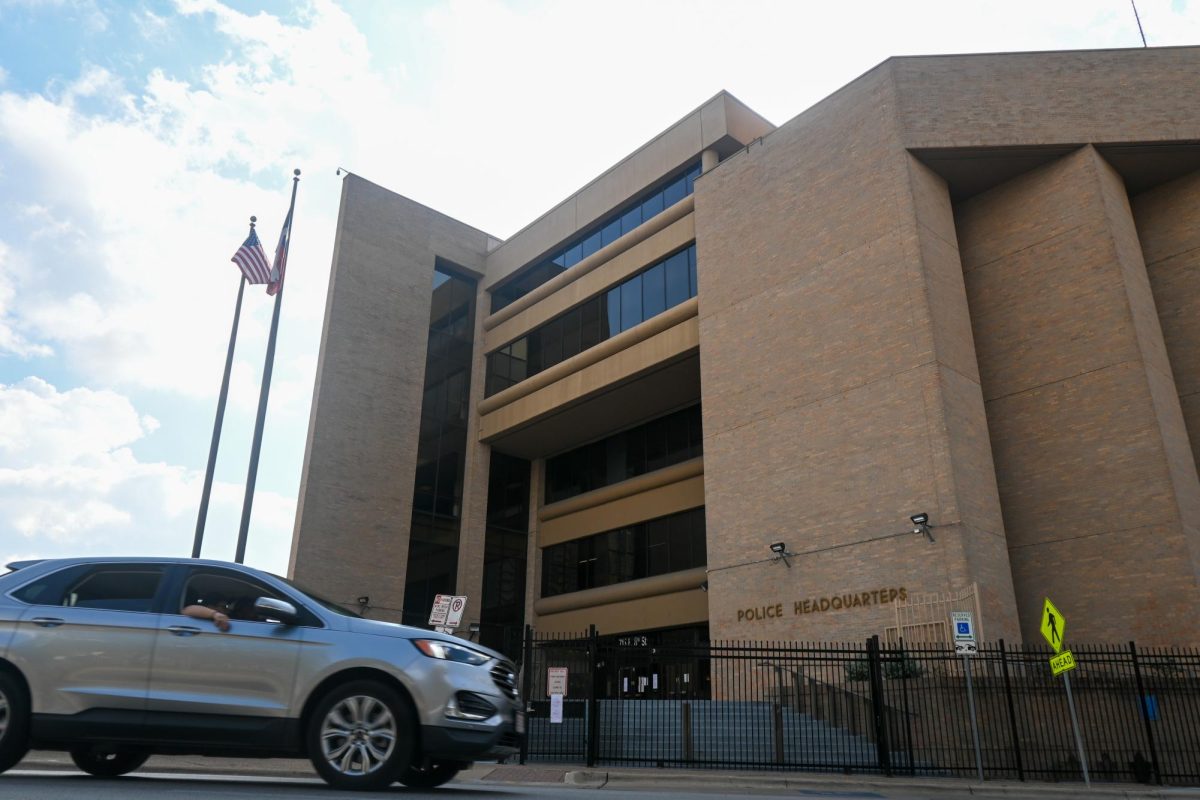
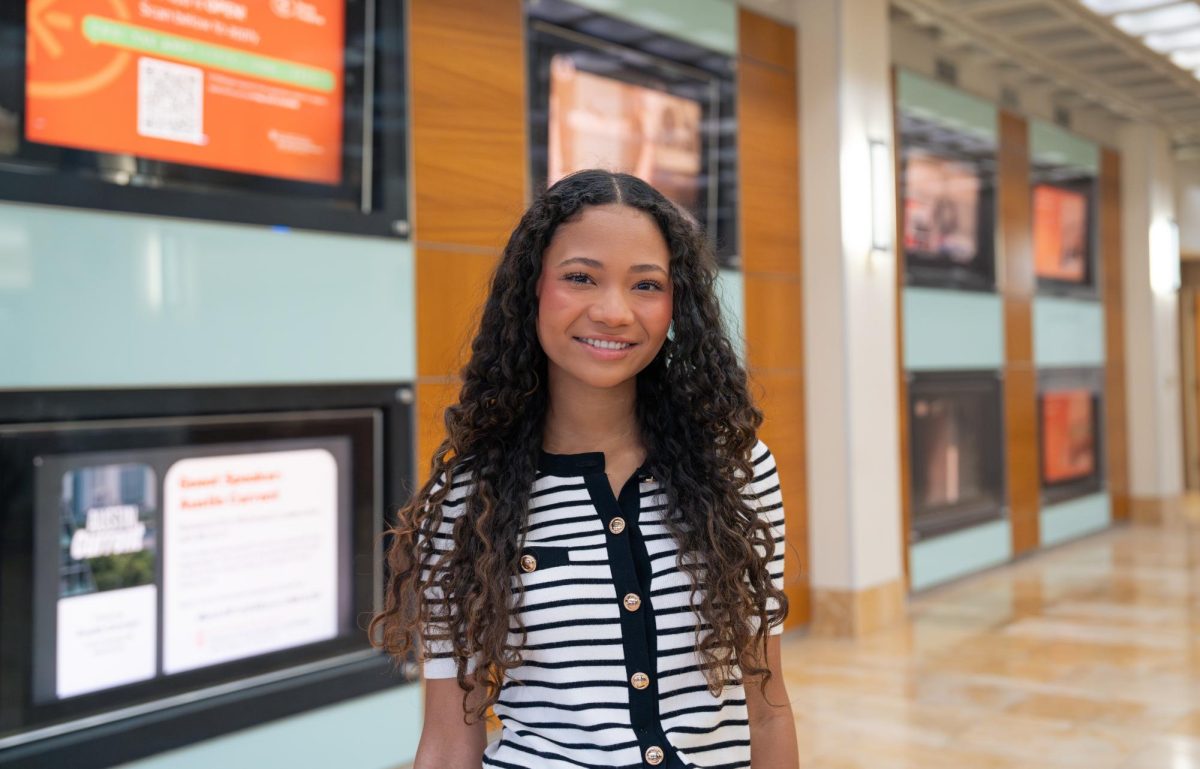
In this episode of The Texan Explains, Audio Editor Hannah Berns sits down with Senior Lecturer Gary Keith to discuss Senate Bill 2972, what it means for UT students, faculty, visitors and its impact on free speech and American democracy.
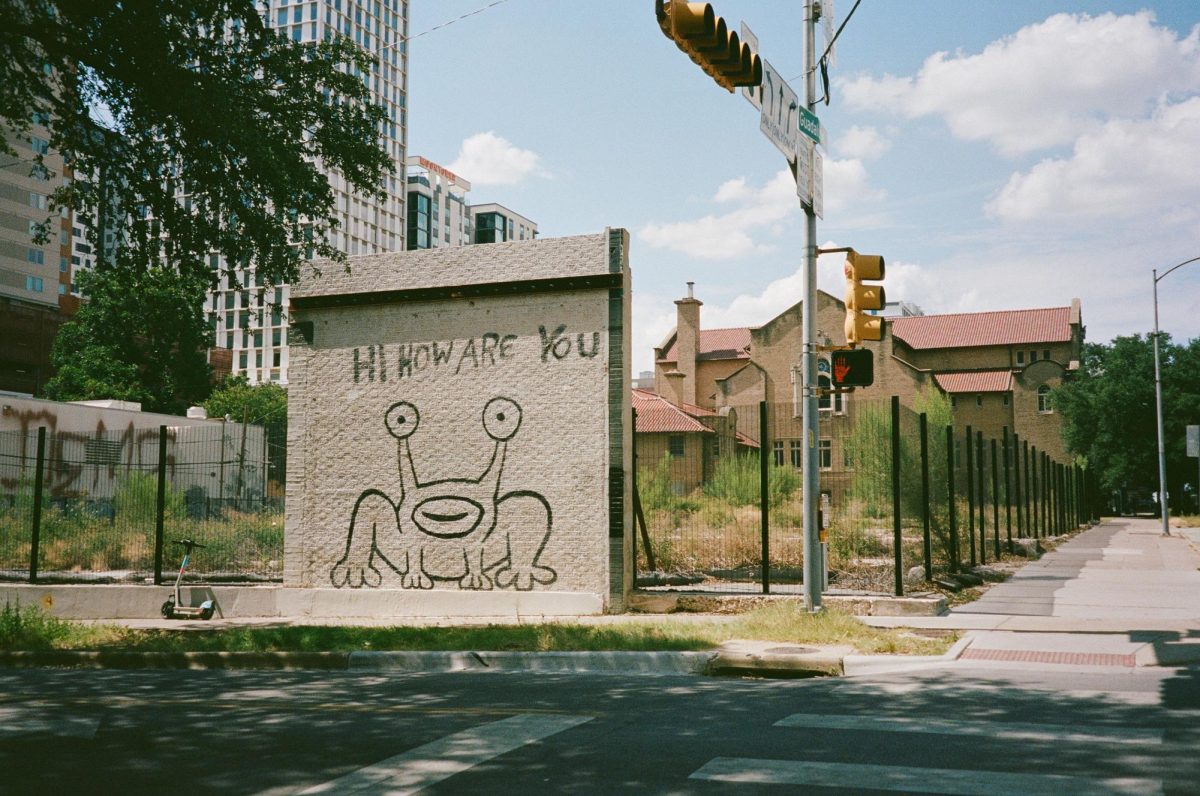
Reported and produced by Hannah Berns. Cover photo by senior photographer Ysa Mendoza. Music by Blue Dot Sessions.
*Intro music*
Hannah Berns: SB 2972, also known as the Campus Protection Act, was passed by the Texas Legislature in June 2025. While a district federal judge in Austin temporarily blocked the enforcement of key parts of SB 2972 on October 14th, UT students and faculty are still grappling with the potential effects. I’m your host, Hannah Berns — and this is The Texan Explains.
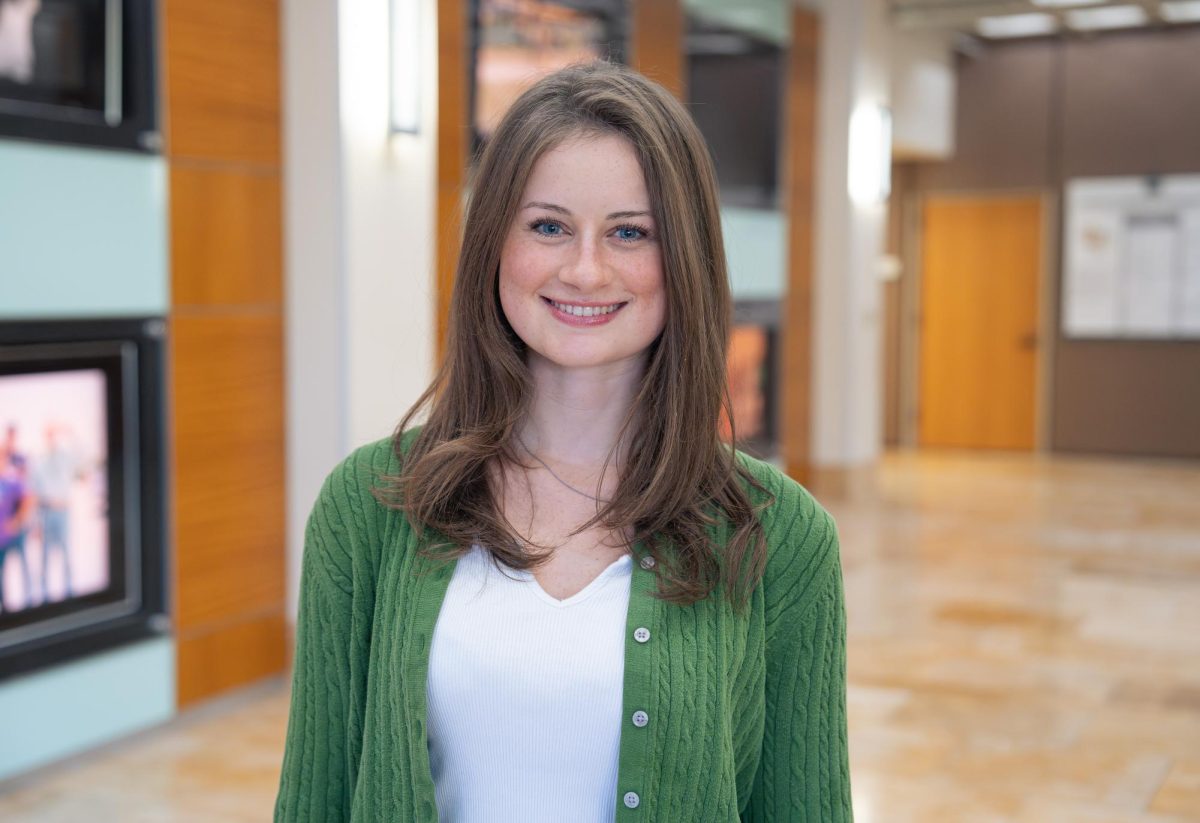
If you could tell me your name and then tell me your official position or title at UT.
Gary Keith: I’m Gary Keith and I’m a senior lecturer in the government department at the University of Texas.
Berns: Awesome. So obviously I brought you here today to talk about the bill SB 2972, which was just passed by the Texas Legislature and has really been, you know, having a big impact on the way people are thinking about free speech on campus and other issues. And so I wanna start by just asking you a little bit about what exactly does bill SB 2972 do?
Keith: So I know that SB 2972 addresses free speech issues at UT in a couple of ways. One is by addressing who can say things on campus and when and where. And the other is who gets to decide who can say things. Um, so this is the government, the state, telling the University of Texas students and faculty and staff and visitors what they may and may not say at particular times and particular places on campus. And the way that I, the reason that I’m putting it that way is that it’s exactly the opposite of the bill that they passed five years ago in 2019. Both the 2019 bill and this 2025 bill come out of the milieu of activity on campus at the time. And so the legislature reacted one way in 2019 because legislators were taking a side. This time legislators are taking a side, it’s the other side, uh, from what they did in 2019.
Berns: Yeah, so I mean, that brings up an interesting point because I have read through other Daily Texan news articles on this issue and just heard from word of mouth that this bill could potentially affect not just protesting on campus, but because of the lack of clarification in the bill, it could also affect what speakers student organizations can bring in, what events they can host, what kinds of activities they can hold and where and when. And I just want to know your perspective on that and the fact that it seems to be something that is going to be wider reaching than just quote, unquote protesting.
Keith: If we go back to the language of SB 2972, it’s a sloppy bill. And when you get sloppy language, you get language that runs up against legal precedents. It’s gonna end up in court—
Berns: Interesting.
Keith: —with judges looking at this and hearing these arguments about what does that mean and is that a narrowly defined restriction enough to pass strict scrutiny that the Supreme Court requires if you are, uh, involving a basic civil right under the Constitution. And sometimes you don’t know when you write it, what complications you are introducing into it, but sometimes you do. And I don’t think that we realize often how deep the tensions are always there between academia and society. And I am hopeful that UT students learn some of the history as they’re seeing what is swirling around them. Now, this is nothing new.
Berns: No.
Keith: Now that should not put us to sleep, because it is not a given that we come out of this. Journalists and students, you know, you’re here to explore the world of thinking and when you have people with power on the outside bust through and say, “No, you can’t do that, you can’t think that, you can’t speak that, you can’t write that,” it’s the opposite of what students should be experiencing at university.
Berns: I’m really interested to hear your perspective on democracy in general and how, you know, this may or may not be an example of—a lot of people right now are talking about the erosion of United States democracy and the erosion of democratic practices and this being a super concerning issue moving forward the next three years of the Trump presidency and even afterwards. And I’m curious to hear, you know, how much you think that this situation kind of represents an erosion of that democracy, or not really, or how much we should be concerned about it, or just anything, you know, any of your thoughts on that?
Keith: One of the books that I’m using in my democracy seminar is by a UT professor who died, again, a year or two ago, named Paul Woodruff. He wrote a book entitled First Democracy, and one of the things that he writes so eloquently about is the role of education in democracy, the critical role of education in democracy. It’s not a sideline. That if you want a democracy to be healthy, you need an educated citizenry. A citizenry that can think. And yes, we, we have basic natural human ability to think, but in education, we learn about our fellow human beings, we learn about relationships in the world, and it helps us to deescalate conflicts, which is what democracy is about. And so if you put strangle holds on education, if you make education indoctrination centers, rather than educational exploration and development of reasoning and thinking skills, you damage democracy.
Berns: Kind of bringing it back towards protesting in Austin. Austin itself hosts different protests. I kind of wanna know, um, do you think that these protests are, you know, for students who want to protest and this SB 2972 might necessarily or might limit that in a way, do you think that these Austin-held protests are a good thing for students to get involved in? Or just what is your perspective on that?
Keith: If students become activated now because of what’s happening with the Trump dynamics or with what’s happening with the Texas legislature and Texas officials and, and UT, that’s the norm. Students have always done that and students will continue to do it.
*Outro music*
Berns: And that’s the Texan Explains for the month of October. I’m Hannah Berns.
The Texan Explains is a production of The Daily Texan Audio Department. If you liked this episode, make sure to subscribe to The Daily Texan on your streaming platform of choice and follow us on Twitter @texanaudio.
Special thanks to Senior Lecturer Gary Keith for joining me today and The Daily Texan news department for the reporting on SB 2972. Cover is by The Daily Texan photo department and music is by Blue Dot Sessions. To read news stories about SB 2972 or see more from the Texan, head on over to www.thedailytexan.com. Thanks for listening.