In grade school, we were taught that biology is the study of life, but it wasn’t until college that I truly understood its depth.
Despite my contributions to the Earth as a living being, I frequently considered myself a separate entity from the world I was studying. The concepts I learned in biology felt distant, to ecosystems and species, but not to me. I memorized facts about cells and systems without realizing that the most fascinating organism I could study was my own brain.
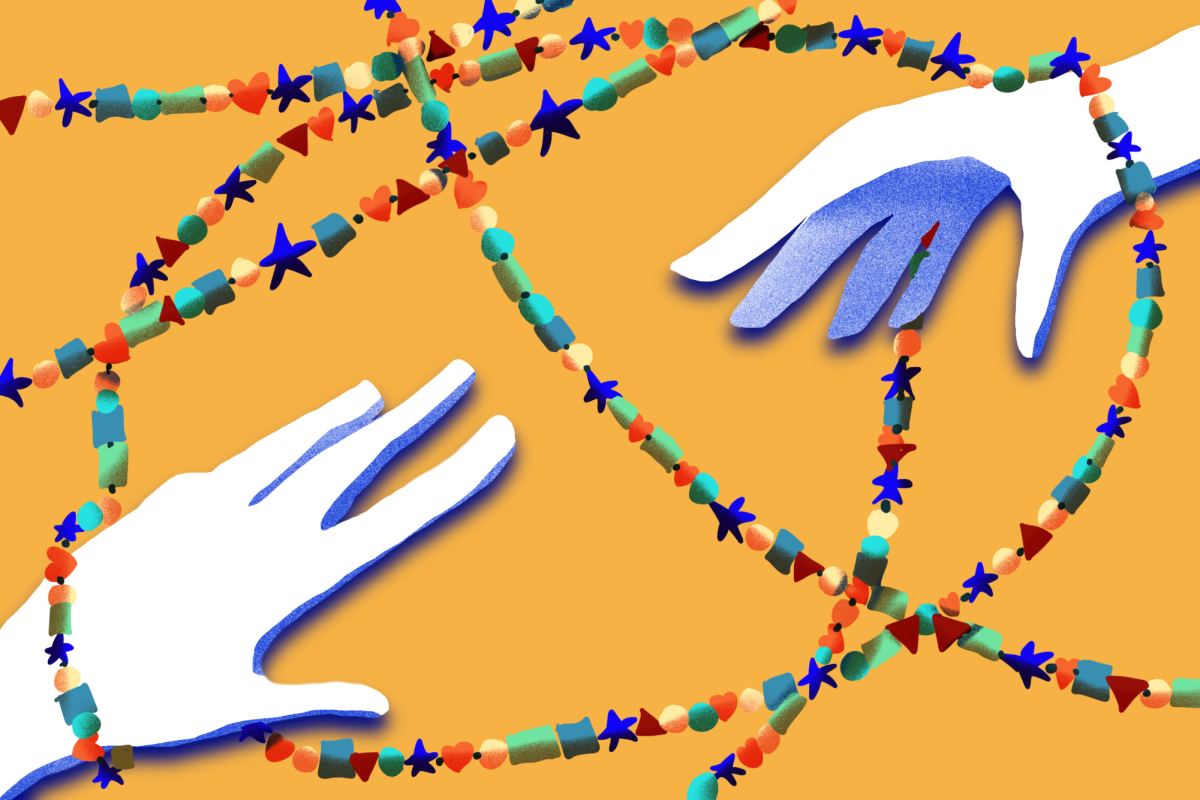
Neuroplasticity, the brain’s ability to change and form new connections, reveals that learning is not a measure of intelligence but a form of adaptability. Historically, scientists believed the brain stopped growing after childhood, but current research reveals that our brain continues to grow throughout our lifespan. By creating new neurons and building new networks, the brain is able to change and adapt over time. Everyday experiences enable our brain to constantly “rewire,” making it easier for humans not only to adapt to their environment but also overcome adversity.
“Our brains are changing throughout our entire life and new experiences can shape the brain at any time … at different phases of life,” said Frances Champagne, professor of psychology and associate dean for research in the College of Liberal Arts. “It’s something that’s quite malleable.”
This realization changed the way I approached my studies. Learning wasn’t about proving I was smart enough; it was about giving my brain the chance to adapt. Every frustration, late-night study session at the PCL and every small victory became evidence of transformation.
However, students often restrict themselves to their limitations. They dawdle on their flaws and define themselves by their weakness: “I’m bad at math,” “I’m bad at studying.” We may strive for growth amongst our faults, but rarely acknowledge the science that makes it possible. When things feel too difficult to understand, our default is to interpret it as failure, but neuroplasticity is proof that our brains are actively adapting.
“I think that having a positive mindset is what controls your actions and your way (of going) about life,” said Isabella Mann, nursing sophomore. “If I say that I’m dumb or I’m stupid, then I’m teaching my brain those negative words.”
Biology was no longer just the study of life, it was the study of my life, unfolding before my very eyes. If students understood that every challenge reshapes the brain, they might see growth instead of limitation in their learning. Education is less about proving intelligence and more about rewiring possibilities.
Neuroplasticity shows that our brains are constantly changing and rewiring throughout our lifespan. The very neurons that shape our thoughts and actions are continuously forming new connections, helping create newer versions of ourselves.
When students reframe their setbacks from “I can’t” to “I’m learning,” they allow their brain to rewire into an image of academic possibility and empowerment. Understanding the science behind our comebacks allows students to understand that change is biologically possible and our limitations are not ourselves.
In the end, biology truly is the study of life. Every moment of effort rewires who we are becoming. Perhaps the most empowering truth of all is this: Who we are is never who we must remain.
Huerta is a government junior from Victoria, Texas.