On a breezy Friday night, Sixth Street is filled with its usual hum. The bass from music bleeds outside bars, blending with the shouts of bouncers and constant footsteps while thousands of people bar hop and dance on table tops in the city’s most famous entertainment strip.
For decades, this was where the “live music capital of the world” lived and breathed. As an assistant manager for The Aquarium on Sixth, Madison Zarzour said the district is a staple of the city.
“It’s like Broadway in Nashville or Bourbon Street in New Orleans,” Zarzour said. “It’s just one of those things that, when you think about Austin, Texas you think about that. … It’s just one of those iconic spaces.”
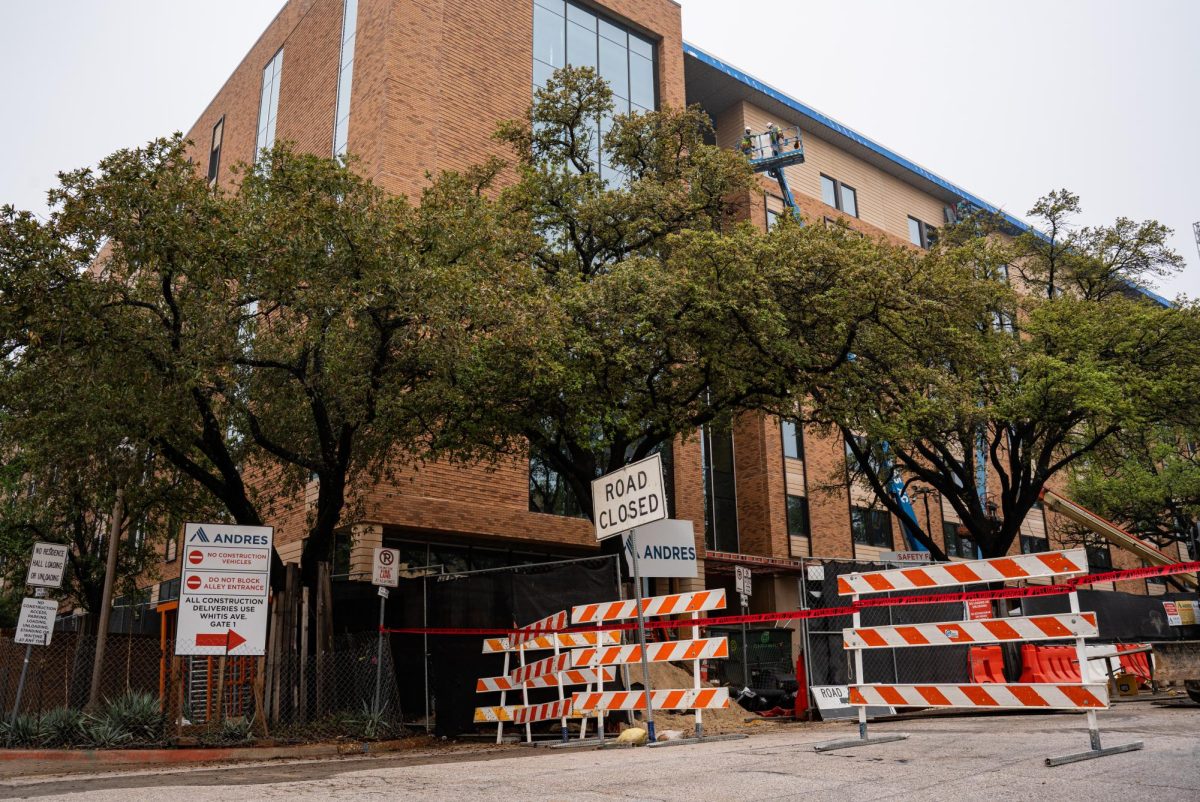
Now, the city of Austin has pitched and begun implementing its Sixth Street Mobility and Revitalization Project, a public-private partnership meant to use rezoning and new safety ordinances to encourage redevelopment within the next few years. The city aims to increase safety and work with developers to revitalize the district. In January, East Sixth Street was reopened to westbound vehicular traffic from Red River Street to Brazos Street, Thursday through Sunday. Concrete barriers replaced water-filled plastic barricades along both sides of the street for two blocks in August.
Developers like Stream Realty Partners have bought out dozens of buildings across Sixth Street, pitching plans for restaurants, boutique hotels and upscale retail in place of bars and music venues. City officials and developers said it will reimagine the street for daytime use.
However, the bartenders, artists and small business owners who built this district don’t feel so certain.
“Austin used to be a place that had culture, had character, had a lot of really cool institutions that embodied what people would call, ‘Keep Austin Weird,” said Marc Maddox, a general manager at Cheers. “There’s nothing weird about hotels and strip centers, and all these old-school Austin institutions have fallen. The city has done nothing to protect them.”
In the 1970s, Sixth Street began growing into a center for live music and counterculture. The Sixth Street Historic District, stretching from Brazos to Interstate 35 and better known to locals as “Dirty Sixth,” was aimed to preserve the area’s unique 19th-century Victorian architecture and spirit.
Now, however, developers simply view the area as prime real estate, Maddox said.
“Developers and private equity, private real estate, they all see dollar signs,” Maddox said. “And the city has been more than happy … to sell out the culture here and the integrity of the city for those development dollars.”
Redevelopment Arrives
One major company has played a visible role in the transformation of East Sixth Street. Since 2019, Stream Realty Partners has purchased more than 30 properties in the area.
Stream Realty has publicly announced its goals to make the district more family oriented and usable during the daytime without changing its soul. Though, not everyone is excited about it.
“These are people who I think are very out of touch with what their ideas for Sixth Street are and what the real problems are facing the street,” Maddox said.
Still, Stream Realty said their plans don’t intend to entirely reshape Sixth Street. Other statements made contradict that.
“Our opinion is food and beverage is more complementary to what is currently on Sixth Street,” Paul Bodenman, senior vice president of investments said in a January 2024 Austin Monitor article That obviously helps people come down the street in general. The experience that somebody has going to a great restaurant and then being able to go see a show or go to the bar down the street or go to East Sixth Street is more impactful.”
Steam Realty Partners did not respond to requests for comment.
Inside the Bars Facing the New Sixth Street
Inside the bars of East Sixth Street, that change is being felt in real time. At Wild Greg’s Saloon, managers Madison Herbst and Mason Hansen said the transformation isn’t welcomed by all.
“We’re all scared, honestly,” Herbst said. “Especially considering there’s gonna be boutiques and things like that. I feel like we already have The Domain, other shopping areas. Why do we need another shopping area? This is supposed to be a bar district.”
Workers say the city’s safety plans don’t match what they see on the ground.
“I spoke with about three or four different officers,” Maddox said. “They were all very candid with me and said, ‘We hate it. We don’t like this’… ‘We have more cops down here now, so we’re spending more resources, so we’re stretched even thinner.’”
These plan’s outlines for safety don’t quite add up, Hansen said.
“How is it going to be safer and cleaner when they haven’t done anything about the homeless people in the alleys?” Hansen said. “Granted, for the population down here, per capita, there’s not a lot of fights whatsoever.”
A few blocks away at the Aquarium on Sixth, Zarzour said she’s seen the ongoing changes with the policing and layout of Sixth Street. She said each new “safety measure” seems to create a new problem, such as the barricades, which have created bottlenecks that make the street feel more chaotic, not less.
“Even this past weekend those barricades completely ruined us,” Zarzour said. “ There were so many people at the door. … They were smushed between the barricade and the door. And there’s no flow, it’s impossible … it is more dangerous.”
The Austin Police Department did not respond to requests for comment.
A Culture on the Line
For corporate communications junior Riley Ellis, those changes aren’t just logistical, they’re cultural. He said he isn’t excited about the changes being made to the nightlife he loves.
“A lot of people come to Austin for Sixth Street.” Ellis said. “I think kind of keeping it a little trashy is like its character, which is kind of fun in college as well as just like having an absolute rager of a weekend when you’re 35.”
He said that as a risk manager for his fraternity chapter the barricades didn’t make him feel better.
“It makes me a lot more nervous when we have events down there just drinking and cars (are) flying,” Ellis said.
Public affairs freshman Julia Wells said the changes developers aim to bring don’t make Sixth Street more attractive to her.
“There are plenty of parks and restaurants and fun shopping places … in Austin,” Wells said. “I don’t think Sixth needs to be part of a family daytime itinerary in Austin. … If it became daytime oriented and they tried to shift the times earlier, I’d probably go less.”
In the city’s effort to sanitize its nightlife, something human will be lost, Hansen said. Sixth Street has never been clean. But to Austinites, that’s the magic of it — it’s imperfect, it’s scrappy, but it has a strong pulse. It’s not high-end and it’s definitely not classy, but it’s alive.
“They’re buying up massive swaths of land, massive swaths of businesses, and they’re turning them into things that work for them and not everybody else,” Maddox said.
The city of Austin closed its period for public feedback on Oct. 19. If the redevelopment succeeds, Maddox, among other Austinites, fears the city will just become another postcard-polished destination and Austin will out-class the culture that built it.
“It feels like this city, and everything it stood for and everything it was, has been hijacked and co-opted and is now being taken in a direction that does not represent most of the people who live here,” Maddox said.