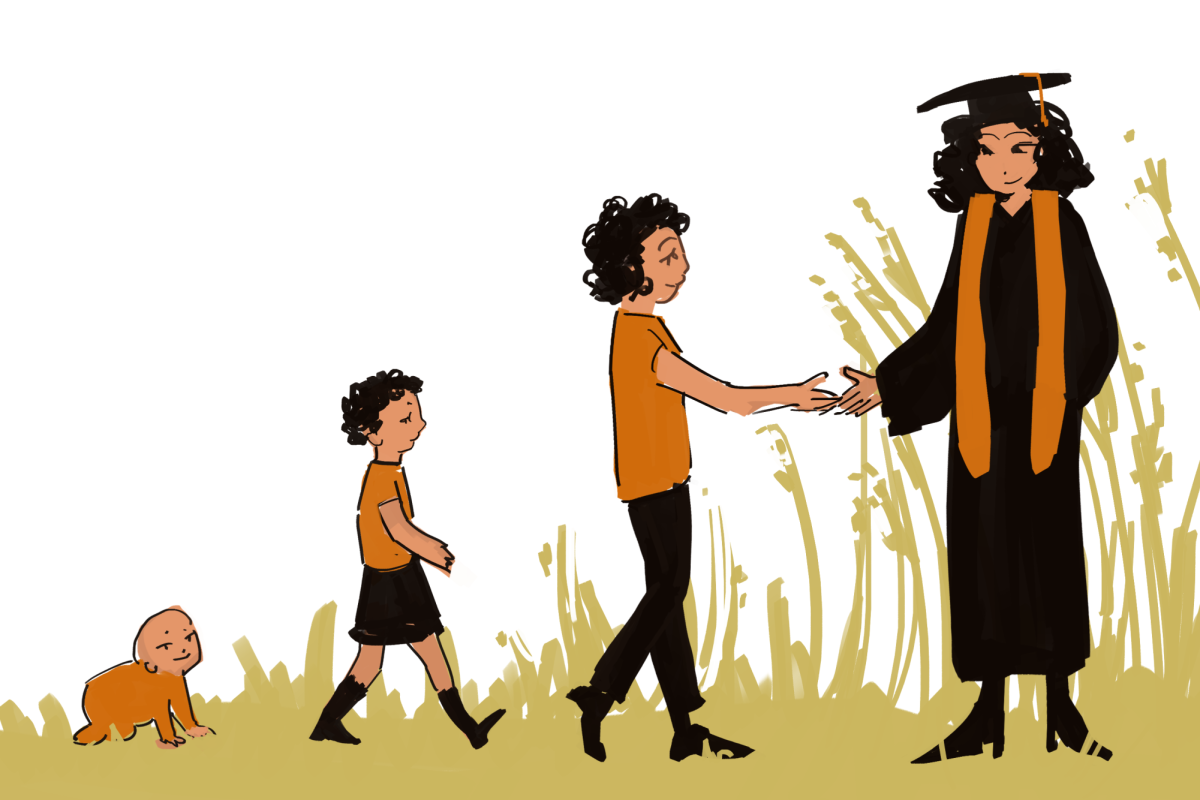
While navigating stressful academic workloads and newfound adulthood, it’s easy for students to lose sight of the importance of serving others, particularly the youth. College students are essential for relating to and educating youth, not only by lending a supportive ear but also by providing valuable life lessons.
In the last decade, a mentor gap has left one in three young people to grow up without an adult mentor. College students can address this problem by investing time with today’s youth. Many students may fear that they don’t have the appropriate achievements or experience to be a mentor, but mentorship is a skill that can be learned.
“You can very quickly learn the right way to mentor …, so I don’t think you either are or aren’t a good mentor,” said David Yeager, psychology professor and author of 10 to 25: The Science of Motivating Young People. “ The trick is to be okay making mistakes and then having do-overs.”
With the right training, college students can teach younger generations to overcome obstacles and take accountability when their advice doesn’t produce the expected results. Mentorship programs provide a space to practice a beneficial adviser role while volunteering in a subject they’re passionate about.
Project Yellow, a nonprofit student organization, teaches Austin elementary and middle-school children about mental health. Through brief lesson plans, college students introduce kids to important life skills like coping mechanisms and managing expectations.
Before students volunteer, Project Yellow teaches them to treat younger students as equals. College students are especially adept at relating to youth’s struggles because they serve as a balance between peers and role models.
“From a young mind, if they see a teacher, they might automatically check out of whatever they’re being taught,” said Carissa Merchant, psychology senior and Project Yellow co-president. “When they see a younger face, even a college-level student, I think they’re really excited to see what we have in store for them because they look up to us … (and) we’re old enough to where they know that we can teach them something meaningful.”
A 2024 economic impact study found that mentees matched with stable adult mentors are 20% more likely to enroll in college and earn a 15% higher income than non-mentored peers. Consistent mentoring bonds in which adult mentors offer empathy and support can also improve adolescents’ self-esteem and social relationships.
Celeste Molina, international relations and global studies sophomore, is a mentor for UT’s Refugee Student Mentorship Program (RSMP), initiated by the Department of Middle Eastern Studies in collaboration with Austin Independent School District (AISD). RSMP pairs UT students with refugee Arabic, Persian and Pashto-speaking students, among other languages, at AISD schools to support them in navigating school dynamics and English language comprehension.
“It’s a very enlightening (experience) that pulls people out of their ignorances,” Molina said. “If you’re speaking and communicating with certain refugees from certain countries, then you realize their lifestyle from there or you realize a part of their country through them.”
Regardless of whether you’re supporting mentees with schoolwork or helping them acclimate to a new way of life, there’s something valuable to learn from their personal experiences. To get the most out of mentorship, we need to see youth as people who can be learned from just as much as they can be taught. Mentorship that’s built on the right foundations transcends a background in youth volunteering, so you don’t need to be an expert to make an impact as a mentor.
Williams is a psychology freshman from Richmond, Texas.