Growing up, my parents told me that you are who you surround yourself with. At the time, my brain couldn’t fully comprehend the weight of their words.
It wasn’t until I was mimicking my friends’ everyday diction and spewing out their personal mantras that I realized I was becoming a product of my environment. I wasn’t exactly transforming into their carbon copies, but I became reliant on their gospel.
For some time, I wouldn’t concern myself with this phenomenon because, as sociology taught us, humans tend to prefer interactions and connections with individuals who are like them in some way. Fundamentally, I shared similarities with my friends, meaning I wasn’t at risk of losing my individualism because all I did was surround myself with like-minded individuals.
Despite all my personal affirmations that soothed my worries, I detected a shift in my relationships.
There is a level of comfort associated with surrounding yourself with people who see the world the same way you do. To know that they’ll likely agree with you before a statement is spoken aloud. However, students may not realize that comfort can quietly turn into complacency. Those shared beliefs that rooted your friendship can begin to replace independent thought, making it detrimental to an individual’s decision-making process. This becomes especially harmful with the primary elections quickly approaching.
“When (young voters) leave home and go to college, it’s this first opportunity to really define who you are away from where you grew up,” said Rachel White, associate professor in educational leadership and policy. “I went through this as a young person. I felt like my political views reflected those of my parents. … Once I left (for) college, I got to decide what I believed and what my values were, and many times, that’s influenced by your peer group or what you see on social media.”
Our political beliefs aren’t just shaped by our surroundings, but by the media we consume. Our perfectly crafted feeds are littered with our interests and reinforced with silent affirmations. Our “For You” pages don’t just reflect our beliefs; they shape them by affirming our fermented thoughts.
“Social media has (an algorithm), so your feed is going to show you more of what you engage with. And so we want to just be careful there,” White said. “The goal is to understand the platforms of all of the candidates. If you’re just staying in a tunnel and only understanding the platform of one candidate, (you’re) not doing the due diligence of (being) open to hearing the platforms of everyone.”
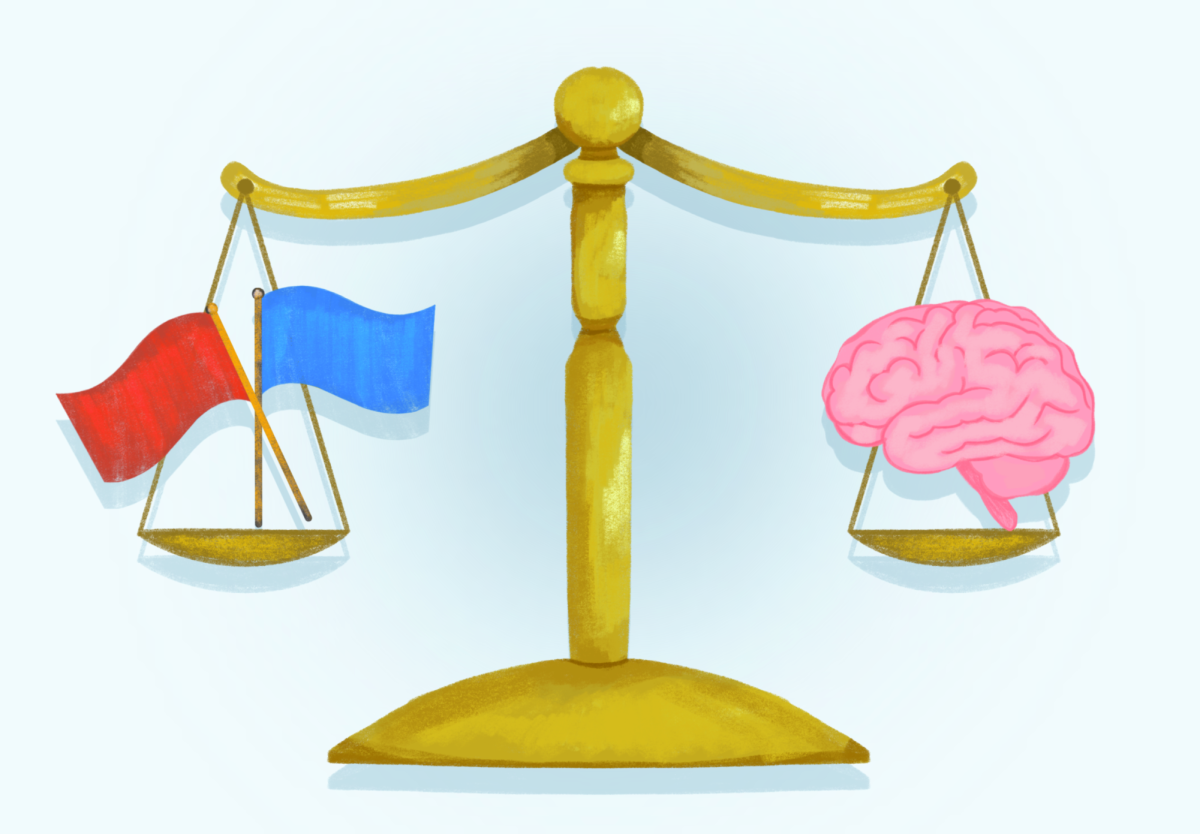
Democracy relies on our ability to question our surroundings. When we rely on our friends and the media we consume, we surrender our ability to think critically. At UT, we’re trained to analyze texts, question assumptions, create and defend arguments. However, many of us refuse to translate these skills outside the classroom.
“I definitely think it’s difficult, especially in this day and age, to form (an) original opinion on politics … but I (do) think it’s important to carry your own ideas as much as you can,” said Emma Wheatfall, human development and family sciences junior. “It’s important to just try and do your own research on the topic, instead of just taking into account (what) your friends say and things you see on social media.”
While some may argue that our friends and social media are valuable assets when becoming more politically informed, they fail to account for how harmful convenience can be during decision-making. Our friends and media can lay the groundwork for our curiosity, but any further research should not be skewed; it must be independent.
Thinking independently and critically are the most powerful tools as residents of a democratic society. As the primaries approach, students must step out of their comfort zone and choose their political alignments based on their beliefs, not anyone else’s.
Huerta is a government junior from Victoria, Texas.